
Blog
36V vs 48V Lithium Forklift Batteries: Cost, Runtime, Charging & ROI Comparison (2026 Guide)

Introduction
Selecting the correct forklift battery voltage is one of the most important decisions when upgrading from lead-acid to lithium technology. While both 36V and 48V lithium forklift batteries deliver faster charging, longer lifespan, and lower operating costs than traditional lead-acid batteries, they serve different forklift classes and operational requirements
In this guide, the CMX Battery engineering team compares:
✔ Forklift compatibility
✔ Purchase cost
✔ Runtime and energy efficiency
✔ Charging performance
✔ Total Cost of Ownership (TCO)
✔ Return on Investment (ROI)
✔ Cold-storage performance
✔ Safety and certifications
By the end, you'll know exactly whether a 36V forklift lithium battery or 48V forklift lithium battery is the right investment for your fleet.
Quick Answer: 36V or 48V Lithium Battery?
Choose a 36V Lithium Forklift Battery if:
- Your forklift is designed for 36V systems
- Typical load capacity is 1–3 tons
- You use pallet jacks
- Reach trucks
- Order pickers
- Electric stackers
- Light-duty counterbalance forklifts
Choose a 48V Lithium Forklift Battery if:
- Your forklift requires a 48V battery
- Loads regularly exceed 3 tons
- You operate counterbalance forklifts
- Heavy-duty reach trucks
- Turret trucks
- Multi-shift warehouse operation. The battery voltage must always match the forklift manufacturer's specification.
Related Reading:
Before choosing a battery voltage, learn why many warehouse operators are replacing lead-acid batteries with lithium:
➡ 36V Lithium Forklift Battery vs Lead-Acid Battery: Complete Comparison Guide
What Does Forklift Battery Voltage Mean?
A lithium forklift battery is made by connecting multiple LiFePO4 cells in series.
Each lithium iron phosphate cell provides approximately 3.2V nominal voltage.
36V Lithium Battery
- Typically 12 LiFePO4 cells
- Nominal Voltage: 38.4V
- Working Range:
- 30V–43.8V
48V Lithium Battery
- Typically 16 LiFePO4 cells
- Nominal Voltage: 51.2V
- Working Range:
- 40V–58.4V
Because power equals voltage multiplied by current:
Power (W) = Voltage × Current
A 48V system can deliver approximately 33% more power than a comparable 36V system at the same current level.
This makes 48V batteries ideal for heavier forklifts and more demanding duty cycles
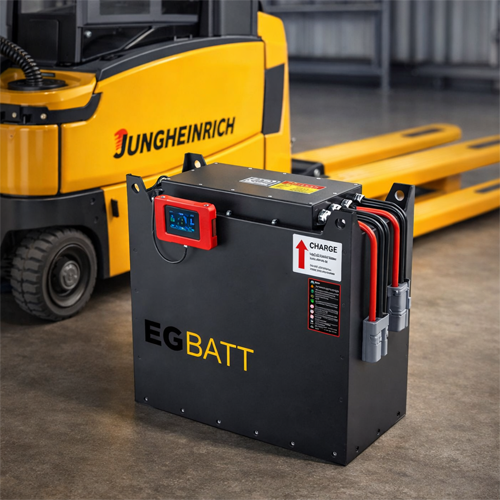
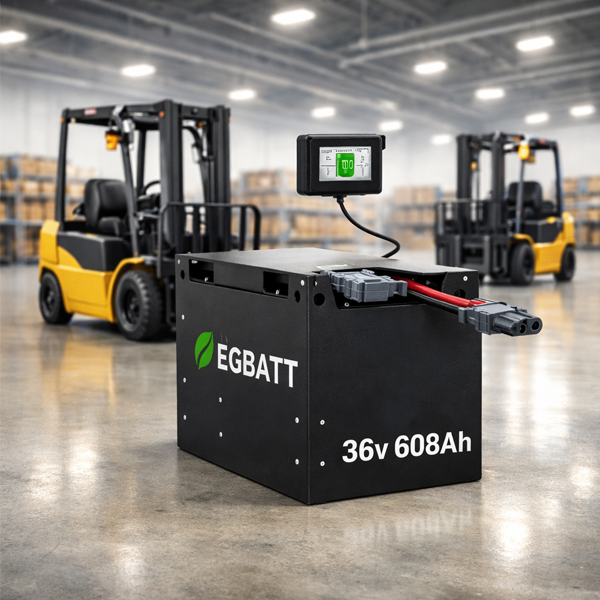
Forklift Compatibility: Which Voltage Fits Your Truck?
| Voltage | Typical Equipment | Load Capacity |
|---|---|---|
| 36V | Pallet Jacks, Reach Trucks, Order Pickers, Stackers | 1–3 Tons |
| 48V | Counterbalance Forklifts, Turret Trucks, Large Reach Trucks | 3–5+ Tons |
How to Identify Your Forklift Voltage
Check the Data Plate
Most forklifts display:
- Battery voltage
- Battery weight
- Capacity requirements
Check the Operator Manual
The manual specifies:
- Required battery voltage
- Battery dimensions
- Charger specifications
Contact the Manufacturer
If information is unclear, verify specifications before ordering a replacement battery.
Explore Our Solutions
➡ 36V Lithium Forklift Batteries
➡ 48V Lithium Forklift Batteries
36V vs 48V Performance Comparison
| Performance Factor | 36V Lithium | 48V Lithium |
|---|---|---|
| Peak Power | Moderate | High |
| Torque Output | Good | Excellent |
| Lift Speed | Standard | Faster |
| Acceleration | Smooth | Strong |
| Voltage Sag | Minimal | Minimal |
| Best Application | Light Duty | Heavy Duty |
Torque and Lifting Performance
For warehouses handling loads above 3 tons, a 48V system offers:
- Faster lifting
- Better ramp performance
- Stronger acceleration
- Reduced strain on motors
A 36V battery remains an excellent solution for:
- Pallet movement
- Picking operations
- Warehouse stacking
- General material transport
Cost Comparison: 36V vs 48V Lithium Batteries
Typical Purchase Price
| Battery Type | Typical Price |
|---|---|
| 36V 300–400Ah | $2,000–$4,000 |
| 36V 600Ah+ | $4,000–$5,000 |
| 48V 400–600Ah | $5,000–$6,000 |
| 48V 600Ah+ | $6,000–$7,000 |
Prices vary depending on:
- Capacity (Ah)
- Battery dimensions
- Integrated heating systems
- CANBUS communication
- UL certification requirements
Generally, a comparable 48V lithium battery costs 20–40% more than a 36V battery.
Runtime, Charging Speed & Efficiency
Energy Capacity Example
36V 600Ah Battery
36V × 600Ah = 21.6kWh
48V 600Ah Battery
48V × 600Ah = 28.8kWh
The 48V battery stores approximately:
33% more energy
However, larger forklifts consume more power, so actual runtime may be similar
Charging Performance
| Charging Metric | 36V | 48V |
|---|---|---|
| Full Charge | 1–2 Hours | 1–2 Hours |
| Opportunity Charging | Yes | Yes |
| Charging Efficiency | 95–98% | 95–98% |
| Cooling Requirement | None | None |
Both systems support:
- Fast charging
- Opportunity charging
- Multi-shift operation
- No battery swapping
Total Cost of Ownership (TCO)
Example: Five-Year Ownership Cost
| Cost Item | 36V Lithium | 48V Lithium |
|---|---|---|
| Battery Purchase | $4,000 | $6,000 |
| Charger | $300 | $500 |
| Maintenance | $0 | $0 |
| Electricity | $4,000 | $5,000 |
| Replacement Battery | $0 | $0 |
| Total 5-Year Cost | $8300 | $11,500 |
Lithium batteries typically provide:
- 3,500–6,000+ cycles
- Zero watering
- Zero equalization
- Minimal maintenance
Compared with lead-acid batteries, most operations achieve ROI within 12–36 months.
ROI Analysis: Which Delivers Better Return?
The answer depends on your workload.
Best ROI for 36V
- Single-shift operations
- Pallet transport
- Light warehouse work
- Loads under 3 tons
Best ROI for 48V
- Multi-shift operations
- Heavy lifting
- Loading docks
- Long-distance transport
- Loads above 3 tons
Choosing more power than necessary increases capital cost. Choosing insufficient power reduces productivity.
The best ROI always comes from matching battery voltage to forklift specifications
Cold Storage Performance
| Temperature | Available Capacity |
|---|---|
| 25°C (77°F) | 100% |
| 0°C (32°F) | ~88% |
| -20°C (-4°F) | 72–85% |
| -40°C (-40°F) | Self-heating Recommended |
For freezer applications, consider:
- Self-heating batteries
- Insulated battery enclosures
- Low-temperature BMS programming
These features are available for both 36V and 48V lithium forklift batteries
Safety & Certifications
When purchasing a lithium forklift battery, verify compliance with:
- UL 2580; UN38.3
- IEC 62133
- CE Certification
- MSDS Documentation
Modern lithium forklift batteries include:
✔ Intelligent BMS
✔ Overcharge protection
✔ Over-discharge protection
✔ Short-circuit protection
✔ Thermal protection
✔ Real-time monitoring
Both 36V and 48V systems are considered low-voltage industrial battery systems and offer significantly safer operation than traditional lead-acid batteries.
Final Verdict: Which Forklift Battery Voltage Should You Choose?
Choose 36V Lithium If
Loads below 3 tons
Reach truck applications
Order picking operations
Pallet jack fleets
Lower initial investment preferred
Choose 48V Lithium If
Forklift requires 48V
Loads exceed 3 tons
Counterbalance forklifts
Multi-shift operation
Maximum productivity required
Heavy-duty warehouse environments
For Mixed Fleets
Many modern warehouses successfully operate:
- 36V lithium batteries for reach trucks and pallet jacks
- 48V lithium batteries for counterbalance forklifts
This approach maximizes productivity while minimizing total fleet operating costs.
Frequently Asked Questions
Can I replace a lead-acid battery with lithium?
Yes. Most forklifts can be upgraded to lithium batteries with the correct voltage, dimensions, connector, and charger configuration.
Can I install a 48V battery in a 36V forklift?
No. Voltage must exactly match the forklift manufacturer's specification.
Can I install a 36V battery in a 48V forklift?
No. The forklift will experience poor performance and may trigger fault codes or shutdowns.
Do lithium forklift batteries require maintenance?
Virtually none. No watering, equalization, acid checks, or battery room maintenance is required.
How long do lithium forklift batteries last?
Most LiFePO4 forklift batteries deliver 3,500–6,000+ cycles, equivalent to 8–10 years in many warehouse applications.
Which charges faster: 36V or 48V?
Both support fast charging and typically reach full charge in 1–2 hours using a compatible lithium charger.
Are lithium forklift batteries safe?
Yes. High-quality batteries include advanced BMS protection and certifications such as UL2580 and UN38.3.
Can lithium batteries operate in freezers?
Yes. With self-heating technology, lithium batteries can reliably operate in temperatures as low as -40°C.
Do I need a new charger when switching to lithium?
In most cases, yes. Lithium batteries require chargers with a lithium charging profile.
Which battery voltage provides the best ROI?
The best ROI comes from using the voltage specified by the forklift manufacturer and selecting the appropriate battery capacity for your workload.
Related CMX Battery Solutions
Frequently Asked Questions
36V vs 48V lithium forklift batteries – which should I choose?
Match your truck’s nominal voltage. 36V suits lighter Class II-III trucks; 48V suits heavier Class I trucks with higher power demand. Never mix voltage classes.
Does 48V give longer runtime than 36V?
Runtime is set by watt-hours (V x Ah), not voltage alone. A 48V 600Ah and 36V 800Ah hold similar energy; pick capacity to the truck’s duty cycle.
Is 48V more cost-efficient than 36V?
At comparable energy, 48V carries lower current, slightly improving efficiency and cabling, but the bigger cost driver is Ah and BMS rating, not the voltage tier.
Can I retrofit a 36V truck with 48V lithium?
No – the motor, controller, and charger are voltage-specific. Only replace like-for-like voltage unless the OEM supports a conversion.
What about charging and ROI?
Lithium’s opportunity-charging and long cycle life beat lead-acid ROI in multi-shift use; confirm the charger matches the chosen 36V or 48V lithium profile.