
Wholesale LiFePO4 Batteries
Quick answer: CMX Battery supplies container-level wholesale of Grade-A LiFePO4 cells and packs to distributors, large installers and regional wholesalers. The minimum is container-level, and the value is not just unit cost: every container is capacity- and IR-matched, ships with per-cell test data, and is traceable from batch to serial number. You can buy stock SKUs for fast turn, or run a private-label programme for your own brand. Export documents (UN38.3, MSDS, CE/RoHS where applicable) are prepared with the shipment, not after it.
What is CMX Battery’s wholesale programme?
Wholesale is where volume meets consistency. CMX Battery serves distributors and large buyers with container-level volume of LiFePO4 cells and packs at pricing that reflects scale. The value is not just unit cost: every container is matched on capacity and internal resistance, carries per-cell test data and batch traceability keyed to serial numbers, and ships with UN38.3 and the export documentation your market needs.
Two commercial models are available. Stock wholesale is catalog SKUs shipped as-is — fastest turn, lowest administrative load, good for distributors who need shelf-ready product. Private-label or custom wholesale puts your brand, labels, packaging and documentation on product built to your mix — slower to start, but it is your differentiator rather than a commodity you compete on price with.
Which product lines can you buy wholesale?
All eight CMX Battery lines can be mixed inside one container, which is the practical way to build a container assortment that matches how your market actually buys.
| Product line | What you get | Typical wholesale use |
|---|---|---|
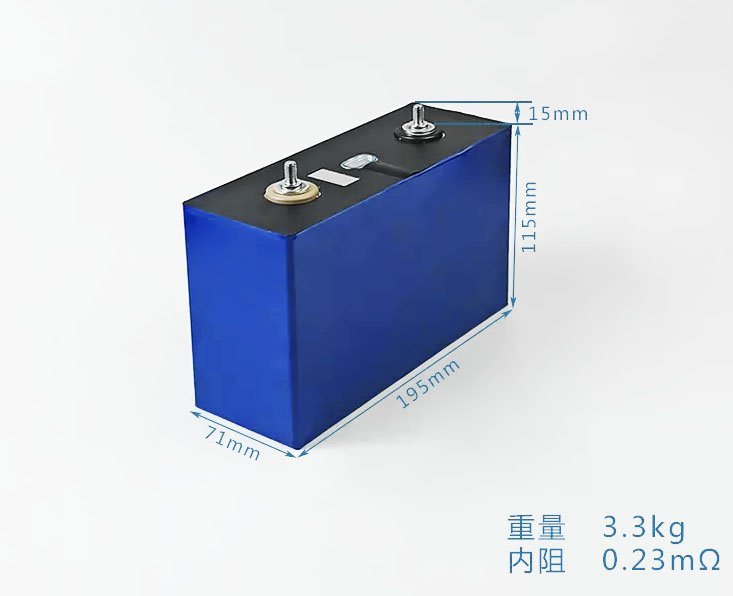
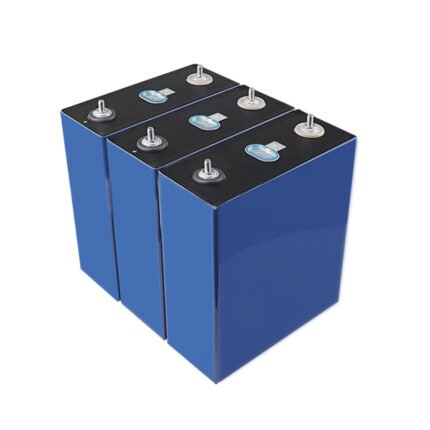
| LiFePO4 Cells | Grade-A prismatic and cylindrical cells, 50–340 Ah, supplied in matched batches with per-cell test data. | Cell-level buyers, pack assemblers |
| Battery Modules | Rack and wall-mounted modules, 12 V–48 V, drop-in LiFePO4 replacements. | Installers, system integrators |
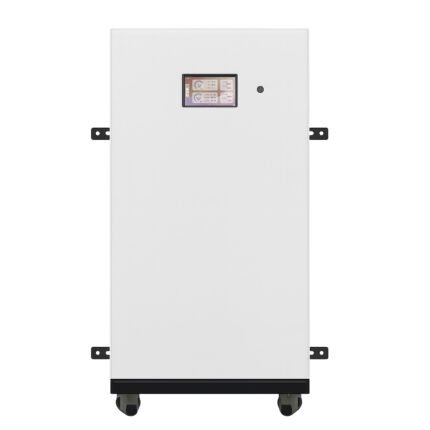
| Residential ESS | All-in-one home storage, 5–20 kWh, hybrid-inverter ready. | Distributors, solar wholesalers |
| C&I ESS | Cabinet and container systems, 100 kWh to MWh scale, with liquid-cooled options. | Project EPC, C&I developers |
| Portable & Specialty | Power stations, marine, RV, golf-cart and low-temperature packs. | E-commerce, outdoor and mobility channels |
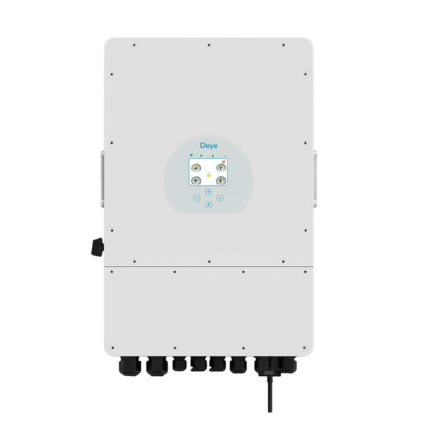
| Inverters | Hybrid inverters and inverter-chargers with MPPT, grid-tie and off-grid modes. | Bundle with battery for full-system sales |
| BMS | Smart BMS with RS485 / CAN communication, active balancing and full protection set. | OEMs building their own packs |
| Sodium-Ion Batteries | Low-temperature, high-safety alternative chemistry for harsh climates. | Cold-climate markets |
Why buy wholesale from CMX Battery?
Volume pricing only matters if every unit is consistent. Here is what ships in the container.
| What you get | What it means in practice |
|---|---|
| Scale-rewarded unit cost on cells and packs | Pricing follows volume: single-container pricing differs materially from LCL or sample quantities. |
| Capacity and IR matched, with per-cell test data | Cells are graded and matched before assembly, so packs in the same container behave like one batch — this is your incoming-QC baseline. |
| Batch → serial numbers for warranty and recall | Every unit is traceable. If a field issue appears, you can isolate it to a batch instead of recalling everything. |
| Catalog SKUs for fast turn, or private-label programmes | Either buy shelf-ready stock or put your own brand on product built to your mix. |
| UN38.3, MSDS, CE/RoHS and batch traceability | Export and compliance documents are prepared with the shipment so your customs clearance is not blocked. |
Stock SKUs vs private label: which wholesale model fits you?
| Decision factor | Stock wholesale | Private-label / custom wholesale |
|---|---|---|
| Lead time | Fastest — ships from existing catalog SKUs | Adds sampling, artwork, label and packaging approval |
| Minimum | Container-level, mix-and-match allowed | Container-level, usually committed per SKU |
| Upfront work | Minimal | Brand assets, label files, manual artwork, certification holder decision |
| Unit cost | Lowest administrative overhead | Slightly higher unit cost, far stronger differentiation |
| Best for | Distributors testing a market or needing fast turn | Established brands protecting margin and channel |
| Certification | Uses existing CMX Battery certificates | May require re-testing if you become the certificate holder |
If you are not sure, the common path is to start with stock, then convert the fastest-moving SKUs to private label once you know what actually sells. That is where the OEM/ODM process begins.
Wholesale specifications at a glance
| Specification | Value | Why it matters |
|---|---|---|
| Volume | Container-level pricing | Scale rewards — unit cost drops with volume. |
| Consistency | Matched batches, per-cell test data | Your incoming QC baseline; prevents mixed-batch field failures. |
| Traceability | Batch → serial numbers | Warranty handling and targeted recall instead of blanket recall. |
| Mix | Cells and packs, stock or custom | You build the assortment your market buys. |
| Documents | UN38.3 + MSDS + CE/RoHS + export papers | Market-ready on arrival. |
| Chemistry | LiFePO4 (sodium-ion on request) | 2,000–5,000+ cycles at 80–90% usable DoD. |
How to buy wholesale from CMX Battery
Step 1: Send your product mix, volumes and destination
List the SKUs or specs, target quantity per SKU, and destination port. Container pricing follows from scale — a mixed container is normal, so send the full assortment rather than one line.
Step 2: Require matched batches with per-cell test data
Ask for capacity and internal-resistance matching plus the per-cell test report. This is the single specification that most affects field consistency, and it is the one most often skipped.
Step 3: Confirm the certification path for your market before booking
EU buyers expect IEC 62619 and CE; North America expects UL 1973 and often UL 9540A for stationary systems; every cross-border lithium shipment requires UN38.3. Confirming this at quote stage avoids re-testing later — see the certification guide.
Step 4: Decide stock vs private-label / custom
Stock gets you to market fastest. Private label protects your margin. Many buyers start with stock and convert the top movers.
Step 5: Approve samples and packaging
Approve a production sample plus label, carton artwork and manual files before the run starts. Changes after production begins are the most common cause of delay.
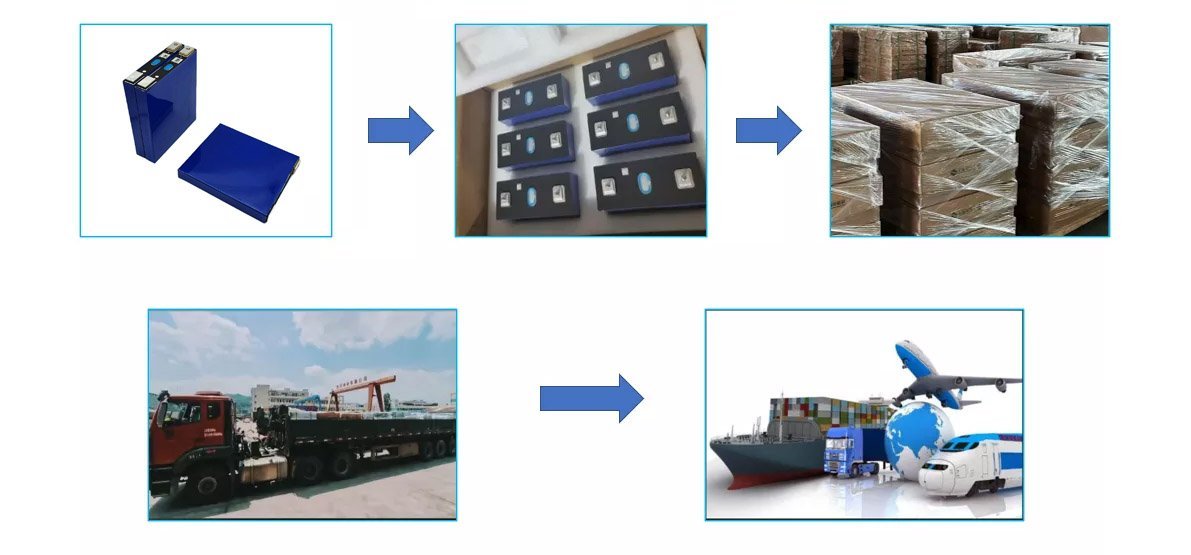
Step 6: Book the container and schedule production
Lithium batteries are DG cargo: shipping lines require UN38.3 test reports, MSDS and dangerous-goods declarations, and DG space is allocated in advance. Book space early, especially on peak-season lanes.
Container economics: what actually drives your landed cost
Wholesale buyers are often surprised that battery containers hit the weight limit before they hit the volume limit. A 20 ft container holds roughly 33 m³ and around 18–22 t of payload depending on the lane. A 3.2 V 280 Ah LiFePO4 cell stores about 0.9 kWh and weighs roughly 5.5 kg, so a weight-limited 20 ft container of cells lands in the 2.5–3 MWh range — long before the pallets run out of floor space.
That has a practical consequence: compare cell and pack quotes on Wh/kg and cost per usable kWh, not on piece price alone. A heavier pack of the same nameplate capacity leaves less energy per container, so the freight and duty per usable kWh go up even if the unit price looks lower. The cost per kWh analysis walks through the comparison in detail.
- Product cost — cells, BMS, enclosure, labour; dominates at wholesale volume.
- Certification — amortised across the run; a small run pays far more per unit for the same test report.
- Freight and DG surcharge — lithium DG space costs more than general cargo and must be booked early.
- Insurance and duty — varies by destination and by how the HS code is declared.
- After-sales reserve — spare units or modules kept in your market for warranty handling.
Rule of thumb: freight, insurance and duty typically add 8–15% on top of FOB value for a full container on a major lane. If a quote looks 20% cheaper but ships as LCL or without DG handling included, it is not cheaper.
Quality and consistency: what “matched batches” really means
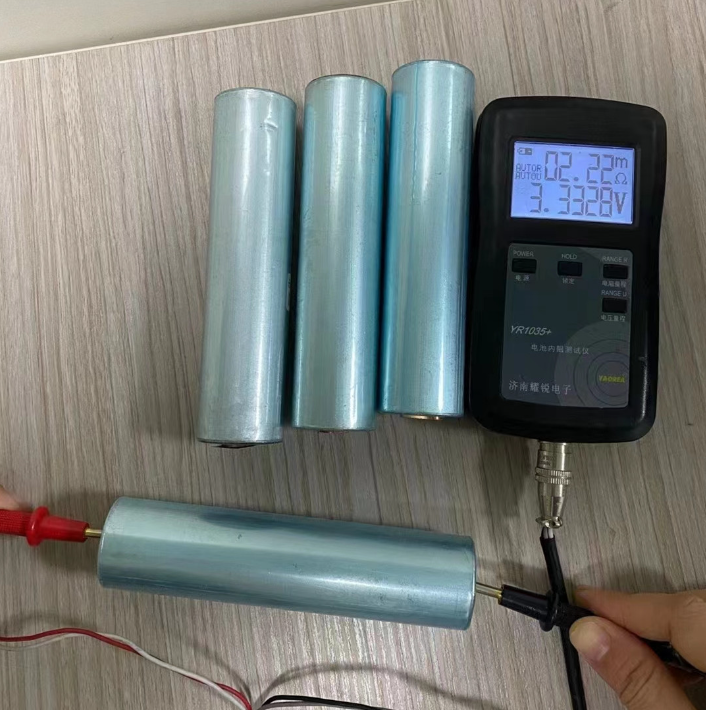
Two cells with the same nameplate capacity can still diverge in the field if their internal resistance (IR) differs. In a series string, the highest-IR cell heats more, drifts in SoC, and becomes the cell that trips protection first — the whole pack is then limited by its worst cell.
CMX Battery grades and matches cells before assembly, and ships the per-cell test data with the container: open-circuit voltage, ACIR, and measured capacity per serial number. Matched batches mean your incoming QC is a verification step, not a sorting exercise.
Typical wholesale applications
- Distributors — container assortments across several product lines to cover a catalogue.
- Large installers — bulk volumes for a defined project pipeline, often one or two SKUs per container.
- E-commerce sellers — stock SKUs for fast turn, private label once volumes justify it.
- Regional wholesalers — local stock held against installer demand, with spares reserved for warranty.
Engineering and manufacturing at CMX Battery
CMX Battery designs and builds lithium battery products under one quality system, with cell grading, pack assembly, BMS firmware and testing all in-house. We work from your specification and document every unit for your target market.
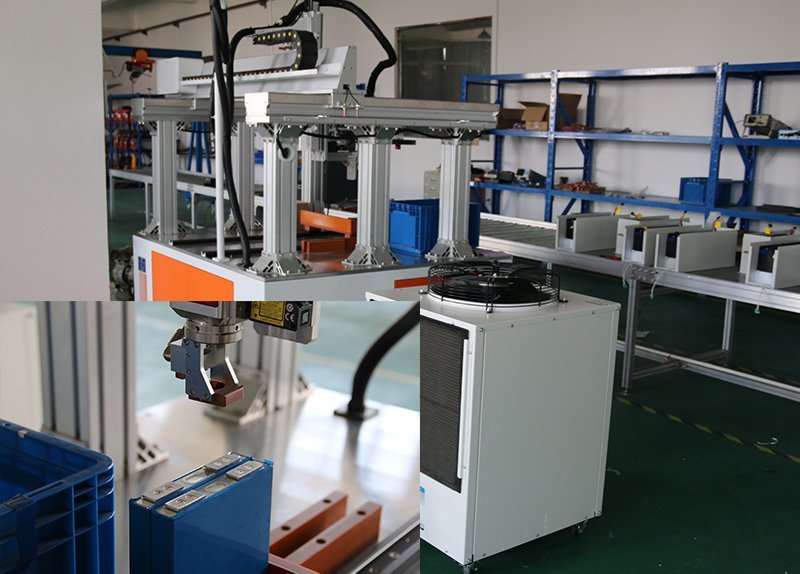
If you build packs yourself rather than buying finished ones, the pack building guide covers topology, cell matching, BMS selection and validation testing.
Certifications and export documentation
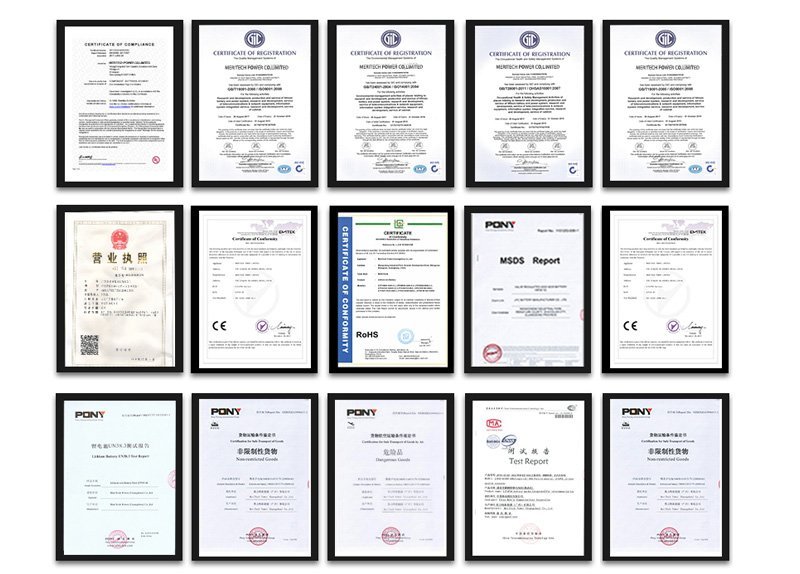
- UN38.3 — mandatory lithium battery transport test (altitude, thermal, vibration, shock, external short). Required for any cross-border shipment.
- IEC 62619 — international safety standard for industrial Li-ion cells and batteries; expected by EU and most APAC buyers.
- UL 1973 — North American safety standard for stationary lithium battery systems.
- UL 9540A — thermal runaway propagation test method, increasingly required by AHJs for stationary installations.
- CE — EU declaration of conformity for the applicable directives.
- RoHS — restriction of hazardous substances in the battery and BMS.
- ISO 9001 — quality management system certification of the manufacturing process.
Confirm which of these your market requires before booking production. Re-testing an already-built container is the most expensive way to discover a compliance gap — the certification guide lists requirements by market.
Frequently asked questions
What is the wholesale minimum?
Container-level. Tell us the product mix and destination and we quote — mixed containers across several product lines are normal.
Are batches matched?
Yes — matched on capacity and internal resistance, supplied with per-cell test data and batch-to-serial traceability. This is what keeps packs from the same container behaving identically in the field.
Can it be private label?
Yes. Private-label and custom wholesale programmes are available, covering brand labelling, carton artwork, manuals and documentation. Lead time is longer than stock because of sampling and artwork approval.
What documents ship with a wholesale order?
UN38.3 test report, MSDS, CE/RoHS declarations where applicable, batch traceability records, commercial invoice and packing list. For DG sea freight we also provide the dangerous-goods declaration and DG booking support.
Can I mix different products in one container?
Yes. Most distributors do — a mix of cells, modules, residential ESS and inverters in one container is common. Send the full assortment so we can optimise the load against both weight and volume limits.
How long does a wholesale order take?
Stock SKUs can usually be consolidated and shipped within a few weeks of order confirmation. Private-label or custom runs add sampling, artwork approval and production scheduling — plan for a longer cycle and confirm the schedule at quote stage.
Why is matching more important than unit price?
Unmatched cells diverge in the field: the highest-IR cell in a series string heats, drifts and trips protection first, so the whole pack is limited by its worst cell. Fixing that in the field costs far more than buying matched cells up front.
Do you ship lithium batteries by sea?
Yes. Lithium batteries ship as UN3480 (batteries alone) or UN3481 (packed with or contained in equipment) as DG cargo. UN38.3 test reports and MSDS are mandatory, and DG space must be booked in advance — which is why early booking matters on peak-season lanes.
What payment terms are typical for wholesale?
Telegraphic transfer with a deposit against order confirmation and the balance against bill of lading is the common structure for container orders. Terms are confirmed per order and scale with the relationship.
Can I evaluate CMX Battery before placing a container order?
Yes — and you should. Ask for the per-cell test data format, the batch traceability records and copies of the actual certificates with their report numbers. A supplier who can produce these on request is materially different from one who cannot; see the supplier evaluation checklist.
Get a container quote
Tell us your product mix, volumes and destination — we return a container quote with a certification path, matched-batch test data format and an estimated production and shipping schedule. You can also start an RFQ with your voltage, capacity, dimensions, certification target and annual volume.
Wholesale-ready products
Below are the product ranges most often ordered at container level. Full catalogues and specifications are available on request.
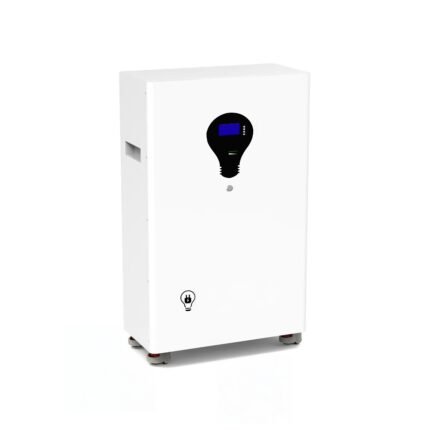
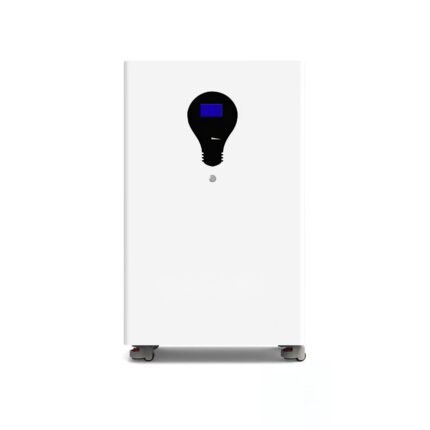
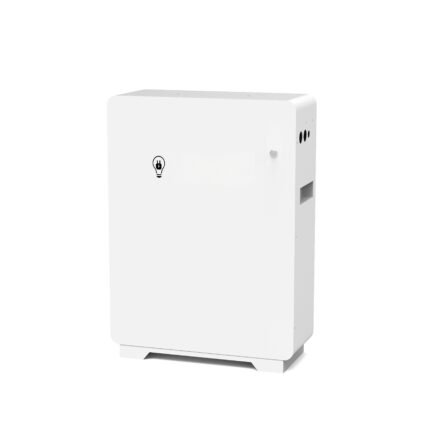
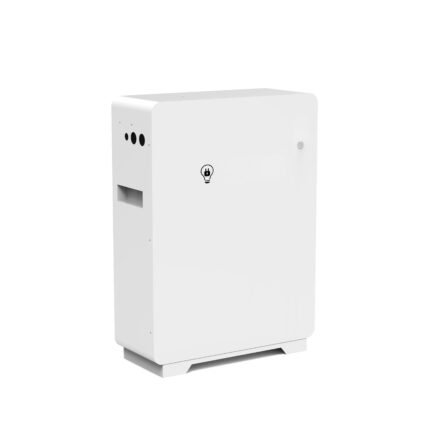
CMX 51.2V 460Ah 25kWh LiFePO4 Battery for Home Energy Storage
- 51.2V · 460Ah · 25kWh usable
- 6000+ cycle life · 5-year warranty
- Long lifespan: 6000+ cycles @80%DOD 25℃
- Efficient performance: 200A Smart BMS
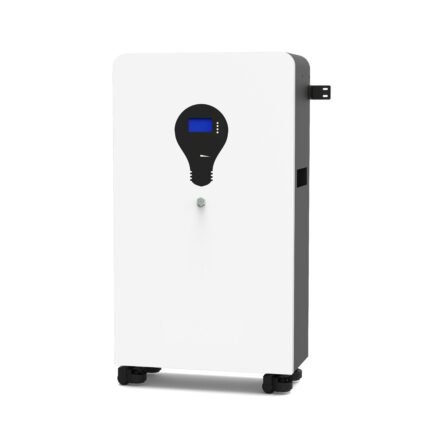
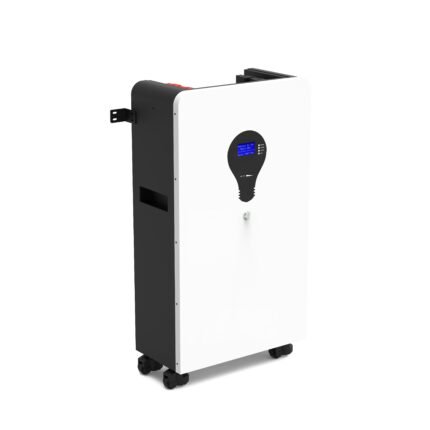
CMX 51.2V 280Ah 15kWh LiFePO4 Battery for Home Energy Storage
The CMX 51.2V 280Ah 15kWh LiFePO4 Battery for Home Energy Storage is a LiFePO4 battery for home and residential energy storage. Engineered for long service life, a protected smart BMS, and safe, low-maintenance operation.
- 51.2V · 280Ah · 15kWh usable
- 6000+ cycle life · 5-year warranty
- Long lifespan: 6000+ cycles @80%DOD 25℃
- Efficient performance: 200A Smart BMS
CMX 51.2V 280Ah 15kWh LiFePO4 Solar Battery with Grade A Cells
- 51.2V · 280Ah · 15kWh usable
- 6000+ cycle life · 5-year warranty
- Long lifespan: 6000+ cycles @80%DOD 25℃
- Efficient performance: 200A Smart BMS
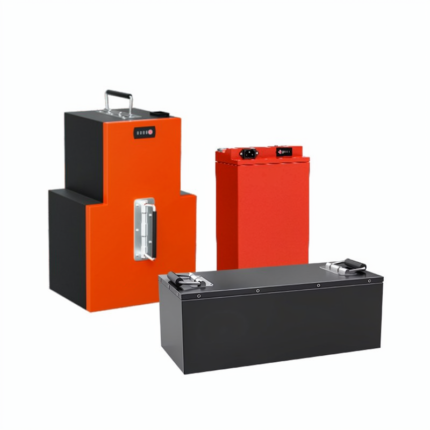
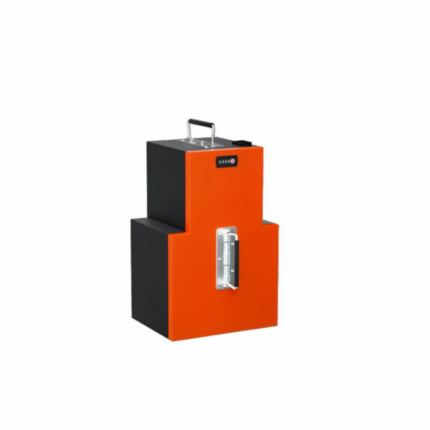
CMX 72V 180Ah 12.96kWh LiFePO4 Battery for Electric Tricycle, IP63
The CMX 72V 180Ah 12.96kWh LiFePO4 Battery for Electric Tricycle, IP63 is a LiFePO4 battery for electric vehicles featuring IP63 protection. Engineered for long service life, a protected smart BMS, and safe, low-maintenance operation.
- 72V · 180Ah · 12.96kWh usable
- 6000+ cycle life · 5-year warranty
- Long Range: 72V/180A, 12.96KWh for extended power.
- Durable: Over 1800 cycles for lasting performance.
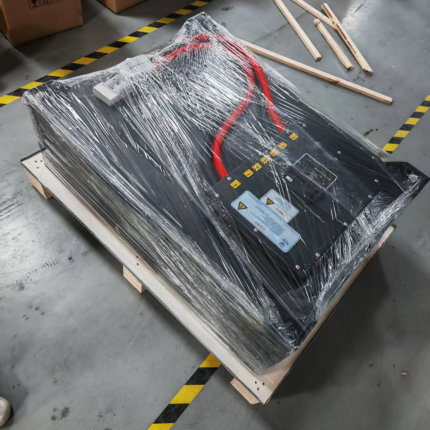
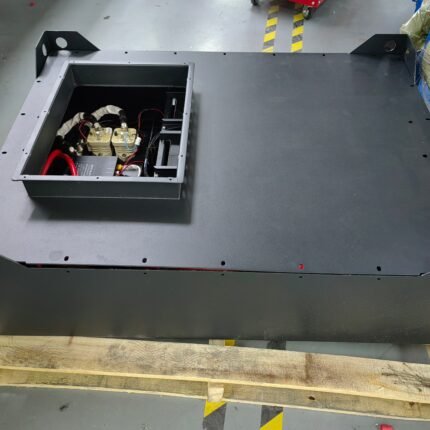
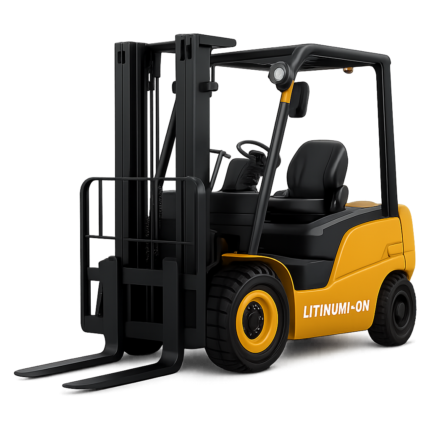
CMX 51.2V 660Ah LiFePO4 Battery for Mini Forklift and Electric Vehicle
- 51.2V · 660Ah
- 6000+ cycle life · 5-year warranty
- Agriculture/Marine: Long endurance, resistant to harsh environments, and stable power output to ensure prolonged and efficient operations.
- Marine: Waterproof and anti-corrosion, safe and reliable, with strong power to guarantee stable navigation on water.
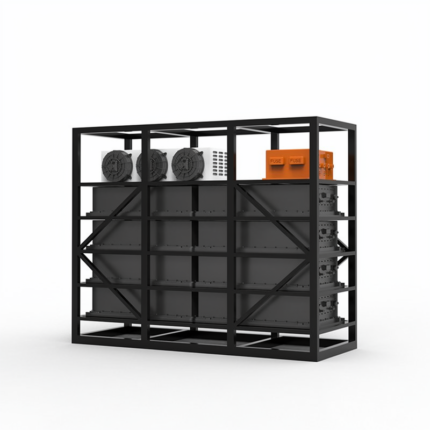
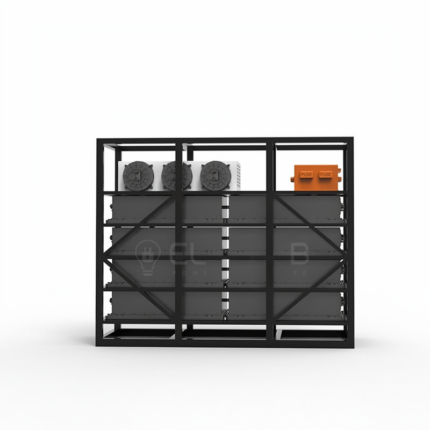
CMX 614.4V 690Ah LiFePO4 Battery for Light Electric Trucks
The CMX 614.4V 690Ah LiFePO4 Battery for Light Electric Trucks is a LiFePO4 battery for light commercial trucks. Engineered for long service life, a protected smart BMS, and safe, low-maintenance operation.
- 614.4V · 690Ah
- 6000+ cycle life · 5-year warranty
- Long lifespan: 6000+ cycles @80% DOD
- High-voltage architecture (614.4V) for commercial EV drivetrains
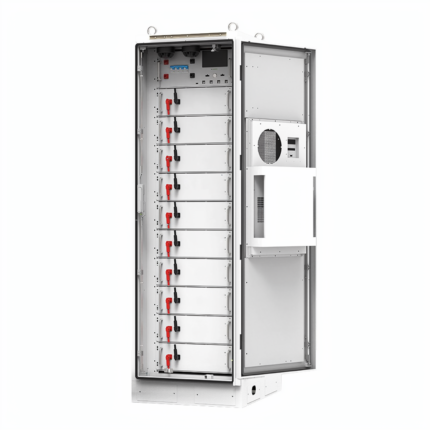
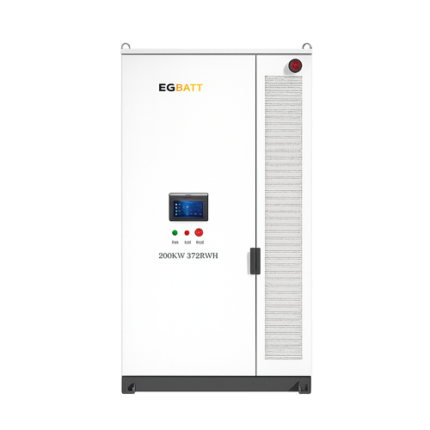
CMX 25kW PCS with 25kWh Lithium Battery Energy Storage System
The CMX 25kW PCS with 25kWh Lithium Battery Energy Storage System is a LiFePO4 battery for industrial and commercial energy storage featuring built-in PCS. Engineered for long service life, a protected smart BMS, and safe, low-maintenance operation.
- 25kWh usable
- 6000+ cycle life · 5-year warranty
- 25/50 kW peak power for demanding commercial and industrial applications
- Advanced BMS for enhanced performance and battery life
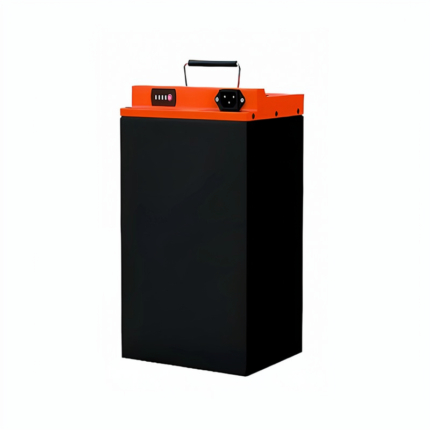
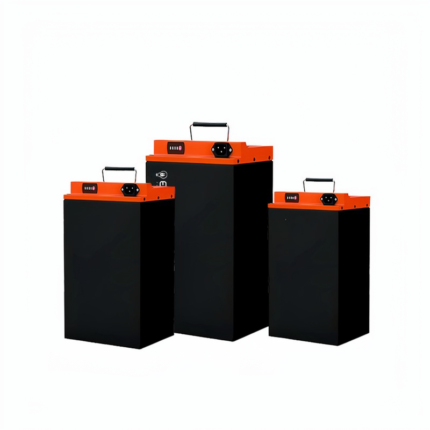
CMX 60V 20Ah LiFePO4 Battery for Two-Wheel Vehicle, IP63
The CMX 60V 20Ah LiFePO4 Battery for Two-Wheel Vehicle, IP63 is a LiFePO4 battery for electric vehicles featuring IP63 protection. Engineered for long service life, a protected smart BMS, and safe, low-maintenance operation.
- 60V · 20Ah
- 6000+ cycle life · 5-year warranty
- IP63 Waterproof, Ride Worry-Free in Rain: High-level waterproofing ensures safe operation even in heavy rain, effectively preventing water ingress and safeguarding the battery and your ride.
- Sealed Against Dust and Mud, Adapts to Complex Environments: The precision-sealed design not only waterproofs but also protects against dust and mud, extending the battery’s lifespan.
Related resources
- OEM & ODM process — how a private-label programme actually runs, step by step.
- Battery certifications explained — which standard your market requires and what a real test report looks like.
- Cost per kWh — how to compare wholesale quotes on lifetime cost rather than unit price.
- How to evaluate battery manufacturers — a supplier checklist and the red flags.
- Shipping, storage and maintenance — UN3480/3481 rules, storage SoC and incoming inspection.
- Battery sizing calculator — for sizing the systems your customers will buy.
- Energy storage solutions — application-matched systems by use case.
- Resource library — all CMX Battery guides in one place.