

Battery Sizing Calculator & Method
Quick answer: Capacity (kWh) = daily energy use (kWh) ÷ depth of discharge — use 0.8–0.9 for LiFePO4. For off-grid, multiply by days of autonomy. Power (kW) = peak load plus motor-start surges, divided by inverter efficiency; that sets the inverter size and the C-rate the cells must support. Size energy and power separately — they are different constraints.
Sizing a battery is arithmetic once you have the load list — CMX Battery shares the exact method we use so your quote and your real need line up.
LiFePO4 Battery Sizing Calculator
Enter your load profile and get the bank size, system voltage, C‑rate check and a matched configuration in seconds. Built from the same method our engineers use to write proposals.
How this is worked out
This calculator gives an engineering estimate for budgeting and RFQ preparation. Final sizing must be confirmed against your actual load profile, local code and the inverter manufacturer’s DC-voltage window.
What four numbers do you need to size a LiFePO4 battery?
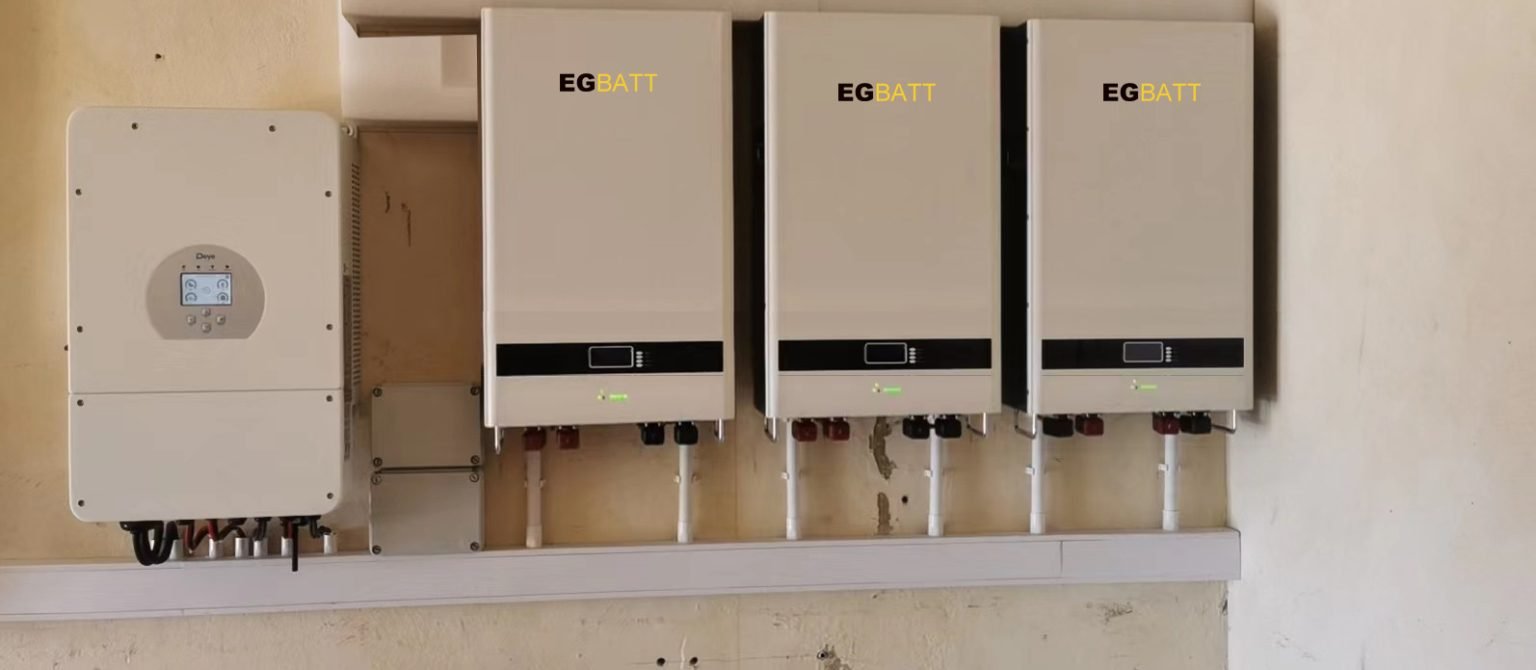
To size a LiFePO4 battery you need four numbers: daily energy use (kWh), allowable depth of discharge (use 80–90% for LFP), days of autonomy (off-grid), and the peak power (kW) the inverter must supply. The capacity formula is daily kWh ÷ DoD = usable bank kWh; for autonomy multiply by days. The power side is peak load (plus motor surges) ÷ inverter efficiency, and it sets the C-rate the cells must support. CMX Battery applies this to every proposal; do it yourself first and your RFQ will come back faster and closer.
| Step | What you do | Why it matters |
|---|---|---|
| 1 | Load list → daily kWh: sum device watts × hours ÷ 1,000 | Guesses blow up the design; measure or nameplate it. |
| 2 | Capacity = daily kWh ÷ DoD (0.8–0.9) | Gives usable bank size, not nameplate marketing kWh. |
| 3 | × autonomy days (off-grid) | Reserve for cloudy days or grid outage duration. |
| 4 | Peak kW + surges → inverter size & C-rate | Sets power capability, not just energy. |
| 5 | Match system voltage (12 / 24 / 48 V) | Cable size and resistive-loss trade-off. |
How do you size a home backup battery? (worked example)
Step 1 — Build the load list
| Load | Watts | Hours/day | Wh/day |
|---|---|---|---|
| Refrigerator (cycling) | 150 | 8 | 1,200 |
| LED lighting | 100 | 6 | 600 |
| Wi-Fi / network / security | 50 | 24 | 1,200 |
| Laptop + monitors | 200 | 6 | 1,200 |
| Well pump (1/2 hp, intermittent) | 1,000 | 1 | 1,000 |
| Total | — | — | 5,200 |
Step 2 — Convert to daily energy
Total is 5,200 Wh/day = 5.2 kWh/day. Add 10% for inverter standby and ageing: 5.7 kWh/day.
Step 3 — Apply depth of discharge
At 90% DoD: 5.7 ÷ 0.9 = 6.3 kWh usable bank. If you want two days of autonomy, multiply by 2 = 12.7 kWh. Round up to a standard module — a 14 kWh or 15 kWh pack is the practical choice.
Step 4 — Size for power, not just energy
The well pump is the constraint: 1,000 W running with a 3× start surge = 3,000 W. At 90% inverter efficiency you need 3.3 kW of inverter, and the pack must sustain roughly 3,000 W ÷ 51.2 V = 59 A, or about 0.4C on a 14 kWh pack — well inside LiFePO4 capability, but it rules out a small 12 V bank where the same power would be 250 A.
What depth of discharge should you design to?
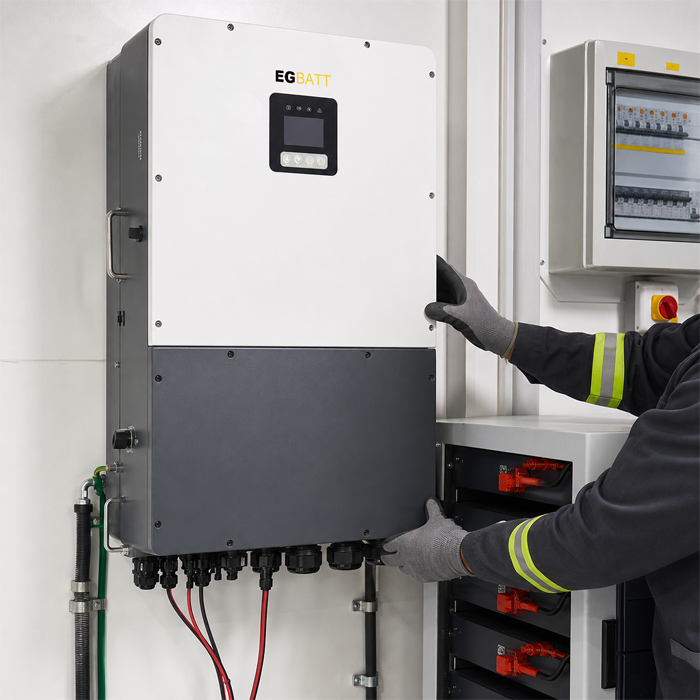
Use 80–90% for LiFePO4. This is far deeper than lead-acid's 50% limit, and it is why an LFP bank can be roughly half the nameplate size of a lead-acid bank for the same delivered energy. Designing to 100% DoD leaves no reserve for cold mornings, ageing or an unexpectedly long outage; 90% is the usual engineering compromise.
Should you choose 12 V, 24 V or 48 V?
Higher voltage carries power at lower current, which means smaller cables and fewer losses above a few kW. Practical rule: 12 V up to about 1 kW, 24 V to about 3 kW, 48 V above that, and high-voltage (200–800 V) stacks for commercial C&I. At 3 kW, a 12 V bank would draw 250 A versus 63 A at 48 V — 16× the resistive loss.
Which applications change the calculation?
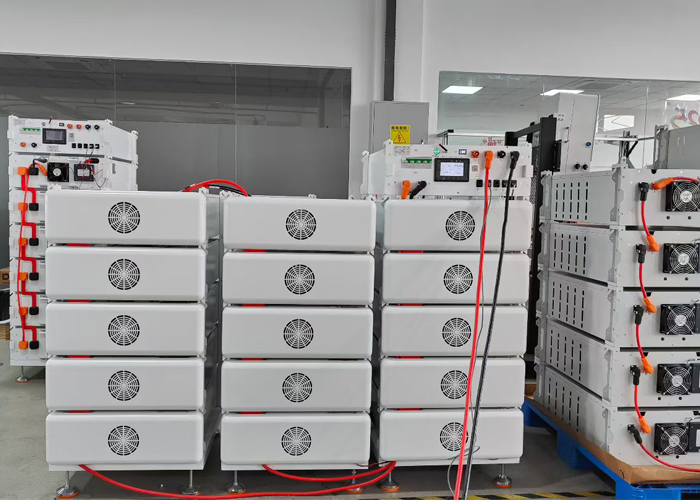
- Home storage — daily cycling plus a backup-hours target; size on both.
- Off-grid — add autonomy days; 2–3 is typical for a cloudy-week margin.
- C&I peak shaving — peak kW drives power; the discharge window (2 h vs 4 h) drives energy.
- PV pairing — the array must refill the bank: check kWh of generation against daily draw, not just peak watts.
How do you specify the battery correctly?
- Build the load list in watts × hours before anything else — guesses blow up the design.
- Use 80–90% DoD for LFP; lead-acid's 50% will undersize a lithium replacement.
- Do not forget motor-start surges when setting inverter kW — a 3× surge is common on pumps and compressors.
- Pick voltage by power: 12 V small, 24 V mid, 48 V above a few kW.
- State the duty (cycles/year, target backup hours, minimum ambient temperature) in the RFQ — it changes cell selection and the BMS current rating.
Engineering & manufacturing at CMX Battery
Our guides are written by the same engineering team that grades the cells and builds the packs. They are meant to help importers, installers and procurement specifiers make defensible decisions — not to rank for a keyword.
What certifications & compliance apply?
- UN38.3 — Mandatory lithium battery transport test (altitude, thermal, vibration, shock, external short). Required for any cross-border shipment.
- IEC62619 — International safety standard for industrial Li-ion cells and batteries; expected by EU and most APAC buyers.
- CE — EU declaration of conformity for the applicable directives.
Frequently asked questions
What is the battery sizing formula?
Capacity (kWh) = daily kWh ÷ DoD; for off-grid multiply by autonomy days. Power is sized separately: peak load plus motor-start surges, divided by inverter efficiency, which sets the inverter and the C-rate.
What depth of discharge should I design to?
80–90% usable for LiFePO4 — far deeper than lead-acid's 50%. Leaving a 10–20% reserve protects against cold mornings, ageing and longer-than-expected outages.
How do I size the inverter?
Peak load plus motor-start surges, divided by inverter efficiency. A 1,000 W pump with a 3× surge needs about 3.3 kW of inverter at 90% efficiency.
Should I choose 12 V, 24 V or 48 V?
Higher voltage carries power at lower current — smaller cables and fewer losses above a few kW. Use 12 V to about 1 kW, 24 V to about 3 kW, 48 V above that.
How many days of autonomy do I need?
Grid-tied backup usually needs hours rather than days. Off-grid typically uses 2–3 days to cover a cloudy stretch without generator support.
What C-rate should I specify?
Divide peak watts by pack voltage to get amps, then divide by amp-hour capacity. Most LiFePO4 systems sit at 0.2–0.5C; confirm continuous and surge capability with the supplier.
Related products & resources
Request a LiFePO4 quote
Tell us your product, volume and specs — our engineering team returns a proposal within three working days. Or review our custom pack capabilities.