

Marine LiFePO4 Batteries
Quick answer: CMX Battery marine batteries are 12V / 24V / 36V LiFePO4 packs in sealed, splash- and vibration-resistant enclosures, built for house banks and trolling motors. They outlast flooded and AGM marine batteries by 3–5x, need no ventilation or watering, and hold voltage through the discharge. The two things to get right: an IP65 enclosure for wet locations and a DC-DC charger for the alternator.

Why boats punish batteries
A marine battery faces a combination few other applications see at once: constant vibration and slamming, salt-laden humidity, deep and repeated discharges, long periods away from shore power, and the safety expectation that nothing in the bilge gives off gas. Flooded lead-acid copes by being heavy, needing ventilation and being replaced often. LiFePO4 copes because it is sealed, does not gas, and treats deep discharge as normal duty.
House bank vs start battery: do not mix them
| House bank | Start battery | |
|---|---|---|
| Job | Run loads for hours | Deliver a short high-current burst |
| Key rating | Amp-hours and cycle life | CCA / cranking amps |
| Typical discharge | 0.1–0.5C continuous | 3–5C for a few seconds |
| Chemistry fit | LiFePO4 deep-cycle | AGM or an LFP unit rated for cranking |
| Installed | Secured, fused, ventilated space not required | Near the engine, ignition-protected |
The usual blue-water arrangement is an LFP house bank plus a separate lead-acid or cranking-rated start battery, joined by a voltage-sensitive relay (VSR), an automatic charging relay (ACR) or a DC-DC charger. That way a flat house bank never strands the engine.
Trolling motor banks: 12V, 24V or 36V
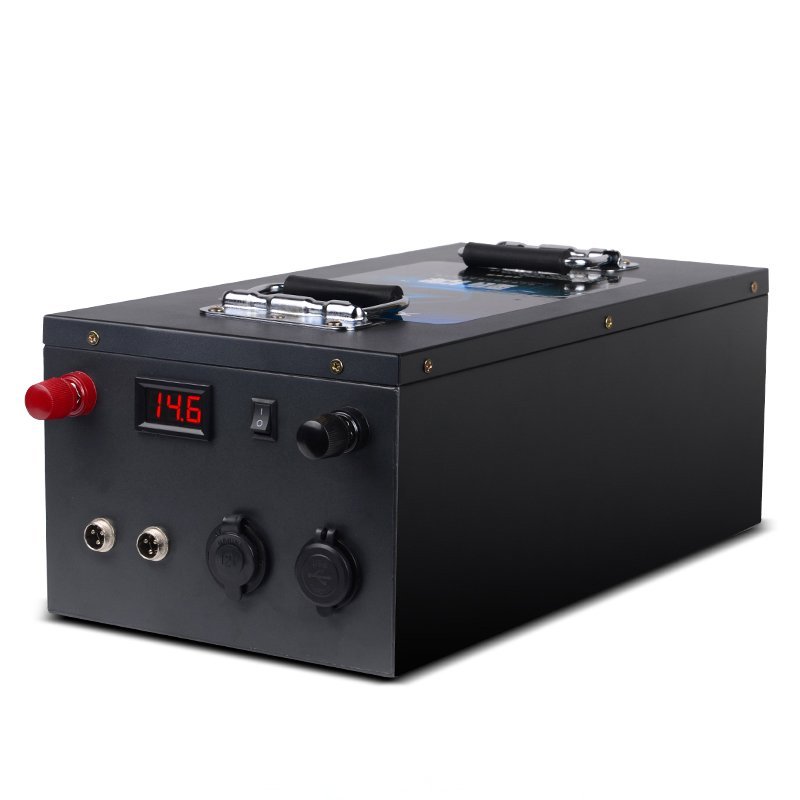
| Motor system | Bank voltage | Typical capacity | Best for |
|---|---|---|---|
| Small electric outboard / 12V trolling | 12.8V | 50–100Ah | Kayaks, tenders, small freshwater boats |
| Mid-size trolling motor (55–80lb thrust) | 25.6V | 100–200Ah | Bass boats, aluminium fishing boats |
| Large trolling motor (100lb+ thrust) | 38.4V | 60–120Ah | Offshore and big-water fishing |
| Electric propulsion | 48V+ | Custom | Full electric drive — talk to us for a custom pack |
If you are replacing a trolling bank specifically, see our trolling motor batteries page.
Key specifications
| Specification | Value | Why it matters |
|---|---|---|
| Voltage | 12.8V / 25.6V / 38.4V | Matches house banks and trolling motor systems. |
| Chemistry | LiFePO4 (LFP) | No gassing, no acid, no ventilation requirement. |
| Enclosure | IP65 sealed | Dust-tight and water-jet resistant for spray and wash-down. |
| BMS | Marine-rated, vibration-tested | Over-current, over-voltage, thermal and low-temp charge protection. |
| Cycle life | 2,000–5,000 cycles | 3–5x flooded or AGM. |
| Usable DoD | 80–90% | Roughly double the usable energy of the same lead-acid rating. |
| Weight | ≈1/3 of lead-acid | Less weight aft, better trim and fuel burn. |
| Certifications | UN38.3, IEC 62619, CE, RoHS | Import-ready and survey-friendly. |
How to size a marine battery bank
- Separate house loads from engine starting. A house bank runs refrigeration, lighting, electronics and pumps. A start battery delivers a short high-current burst. Mixing them is the classic marine mistake — keep them separate with a VSR, an ACR or a DC-DC charger between them.
- Total your daily amp-hour draw. List each load with its current draw and daily run hours. Fridge 4A x 12h = 48Ah; lights 3A x 4h = 12Ah; electronics 5A x 8h = 40Ah; water pump 8A x 0.5h = 4Ah. Total ≈ 104Ah per day.
- Apply usable depth of discharge and recharge margin. Plan for 80% usable and at least one day of autonomy without charging: 104 / 0.8 ≈ 130Ah, x2 days = 260Ah. A 300Ah 12V bank, or a 24V 150Ah bank, covers it.
- Choose the bank voltage from your largest load. Under about 2kW continuous, 12V is fine. Above that — or for a large trolling motor — 24V or 36V halves or thirds the current and lets you use thinner cable.
- Fix the charging side and the fusing. Shore charger with an LFP profile, DC-DC charger for the alternator, MPPT set to lithium for solar, and a class-T or MRBF fuse within 18cm of the battery positive terminal.
LiFePO4 vs marine lead-acid
| LiFePO4 | Flooded lead-acid | AGM | |
|---|---|---|---|
| Usable capacity | 80–90% | 50% | 50–60% |
| Cycle life | 2,000–5,000 | 300–800 | 500–1,000 |
| Maintenance | None | Watering, equalising | None |
| Ventilation | Not required | Required (hydrogen) | Minimal |
| Weight | ≈1/3 | Heaviest | Heavy |
| Charge acceptance | Up to 1C | 0.2C | 0.3C |
| Spill risk | None (sealed) | High | Low |
| Cost over 10 years | Lowest | Highest (replacements) | High |
The alternator problem — and the fix
This is the most expensive mistake in a marine lithium conversion. A lithium bank can draw far more current than a lead-acid bank of the same size, and an alternator sized for lead-acid will run at full output indefinitely trying to satisfy it. Alternators are not designed for sustained full output; they overheat and fail.
- DC-DC charger. Limits charge current to what the alternator can sustain continuously. The standard answer for banks up to about 50A of charge current.
- Alternator-protected regulator. Adds temperature sensing and current limiting to a larger alternator; the right choice for big banks.
- Never connect the bank directly to the alternator. Even with a BMS, the alternator is the component that fails.
Typical applications
| Application | Recommended | Notes |
|---|---|---|
| Sailboat house bank | 12.8V 200–300Ah or 25.6V 150Ah | Weight saving aft improves trim |
| Powerboat house bank | 12.8V 200–400Ah | Refrigeration and inverter loads dominate |
| Trolling motor | 25.6V 100–200Ah / 38.4V | Match motor voltage exactly |
| Electric propulsion | 48V+ custom pack | Engineered per installation |
| Liveaboard | 300Ah+ with solar and DC-DC | Autonomy matters more than peak draw |
Engineering and testing
Marine packs are built and validated for the duty they actually see: vibration to marine profiles, salt-fog exposure on enclosure hardware, thermal cycling, and IP65 verification of the finished enclosure. Cells are grade-A and batch-traced, and the BMS is configured per pack capacity rather than reused across sizes.
Certifications and compliance
- UN38.3 — mandatory lithium transport test; required for any cross-border shipment.
- IEC 62619 — international safety standard for industrial lithium cells and batteries.
- CE — EU declaration of conformity.
- RoHS — restriction of hazardous substances.
- IP65 — dust-tight and water-jet resistant; the practical minimum afloat.
Marine battery FAQ
Can I use a LiFePO4 battery as a starting battery?
Some marine LiFePO4 units are rated for cranking, but most deep-cycle banks are not. Check the cold-cranking amps (CCA) and the maximum discharge current. If your engine needs a high cranking burst, the simplest answer is a dedicated starting battery plus an LFP house bank separated by a VSR or DC-DC charger.
Is LiFePO4 safe on a boat?
Yes, and it is safer than the alternatives in the ways that matter afloat: no gassing, no acid, no spill risk and no ventilation requirement. LiFePO4 is the most thermally stable mainstream lithium chemistry. What it does need is a BMS and correct fusing — which is built in.
Will my alternator charge it?
Not safely on a direct connection. Lithium accepts current far faster than lead-acid, so a direct connection can overheat and destroy the alternator. Use a DC-DC charger or an alternator-protected regulator sized to the alternator’s continuous rating.
What IP rating do I need?
IP65 is the practical minimum for any location that can see spray or wash-down — cockpit lockers, bilge-adjacent spaces and open boats. Below-decks dry locations can use a lower rating, but salt air makes IP65 the safer default on a boat.
How do I size a trolling motor battery?
Read the motor’s maximum draw in amps and multiply by the hours you fish. A 24V motor drawing 40A at cruise uses 40Ah per hour; six hours of mixed use is roughly 150–200Ah usable, so a 200Ah 24V bank is the realistic choice rather than a 100Ah unit.
Does salt water change anything?
Chemically no — LiFePO4 cells are sealed. What salt attacks is terminals, busbars and enclosure hardware. Specify tinned copper cable, marine-grade terminals and a sealed enclosure, and rinse terminals with fresh water periodically.
Can I keep my existing charger?
Usually not. Lead-acid marine chargers apply an equalisation stage a lithium BMS will reject, and their absorption profile undercharges LFP. You need a charger with a LiFePO4 profile and, ideally, an ABYC-compliant ignition-protected rating.
What about lithium and insurance or survey?
Surveyors increasingly look for ABYC TE-13 conformance and a documented installation: correct fusing, secured mounting, a BMS with low-temperature charge protection and manufacturer test data. We supply the test file with every pack to make that conversation short.
Marine and deep-cycle products
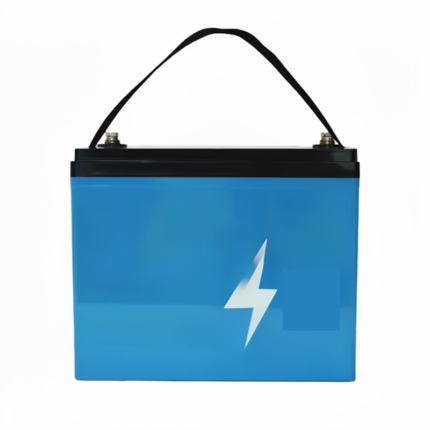
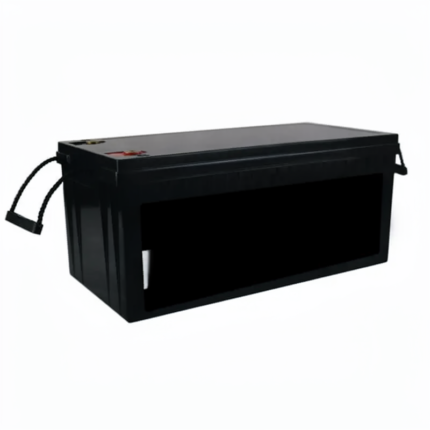
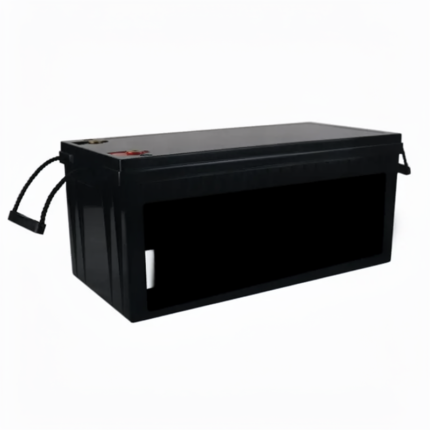
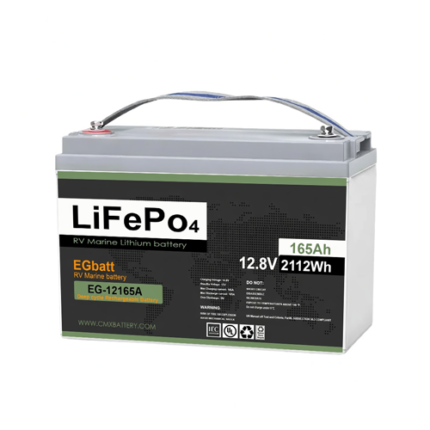
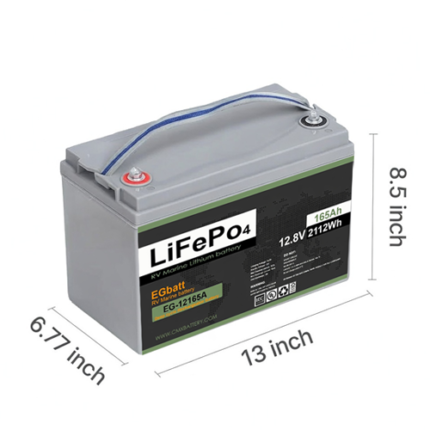
Bluetooth 12V 165Ah Group 31 LiFePO4 Lithium Battery for RV and Marine
More in this series
Explore related solutions
- Residential Energy Storage
- Whole Home Battery Backup
- Off-Grid Solar Systems
- C&I Energy Storage
- Peak Shaving Systems
- UPS Battery Solutions
- Telecom & UPS Backup
- Forklift Lithium Batteries
- RV Lithium Batteries
- Golf Cart Lithium Batteries
- Robot Battery Packs
- Military Battery Packs
- All Solutions
Request a marine battery quote
Tell us your boat, bank voltage, daily amp-hour draw and charging sources — we size the bank and the alternator protection together.