

Peak Shaving Battery Systems
Quick answer: Peak shaving uses stored energy to clip the brief, expensive power spikes that set your demand charge, and to discharge during high time-of-use windows. Sizing has two independent numbers: power (kW) from the peak you want to clip, and energy (kWh) from how long it stays clipped — clipping 250 kW for 4 hours needs 250 kW of PCS and 1,000 kWh. Typical systems are 100 kWh–1 MWh+. Payback is modelled from your tariff and 12-month load profile, never assumed. Use our battery sizing calculator to convert a load profile into kWh, C-rate and pack configuration.
Key facts at a glance
- Typical size: 100 kWh – 1 MWh+ for commercial and industrial sites.
- Two numbers: kW from the peak you clip; kWh from the clip duration.
- Dispatch: EMS-automated against tariff windows and load forecasts.
- Payback driver: your demand charge ($/kW) and how often the peak is hit — not $/kWh.
- Safety: UL9540A test method plus local interconnection rules.
- Cooling: air for lower density; liquid when kWh per cabinet or climate demands it.
What is peak shaving?
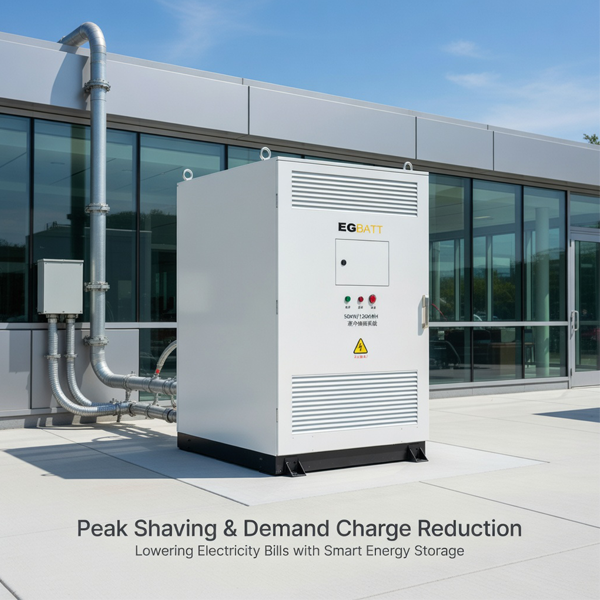
Peak shaving uses stored energy to clip the brief, expensive power spikes (demand charges) and high time-of-use periods that dominate commercial electricity bills. CMX Battery models your tariff and load profile to size the right power (kW to clip) and energy (kWh to ride), then builds a 100 kWh–1 MWh+ LiFePO4 system with PCS, cooling and monitoring. The economics are local: the value is your peak kW and how often it hits, not a generic price per kWh. We show the payback from your actual data before you commit.
How do I size power and energy for peak shaving?
Power (kW) is set by the peak you want to clip; energy (kWh) by how long it stays clipped. Both come from your tariff and 12-month load profile. A worked example: if your monthly peak is 1,200 kW and you want to hold the grid draw at 950 kW, you clip 250 kW. If that peak lasts four hours, you need 250 kW × 4 h = 1,000 kWh.
| Peak you clip | Battery power | Energy for 2 h | Energy for 4 h |
|---|---|---|---|
| 100 kW | 100 kW | 200 kWh | 400 kWh |
| 250 kW | 250 kW | 500 kWh | 1,000 kWh |
| 500 kW | 500 kW | 1,000 kWh | 2,000 kWh |
Payback is modelled from your demand charges and peak window — not assumed. On a typical US commercial tariff with a $15–25/kW monthly demand charge, clipping 250 kW saves roughly $3,750–6,250 per month before energy arbitrage. Bring your tariff and we will run it.
What do we integrate?
How is the battery connected to the grid?
A bi-directional power conversion system (PCS) matched to the kW you clip. The PCS is the grid-facing element — its rating, grid-code compliance and response time determine what the utility sees.
How is dispatch controlled?
An EMS automates dispatch against tariff windows and load forecasts. Manual dispatch rarely captures demand charges reliably, because the peak is set by a single 15-minute window you cannot predict by hand.
What reporting do I get?
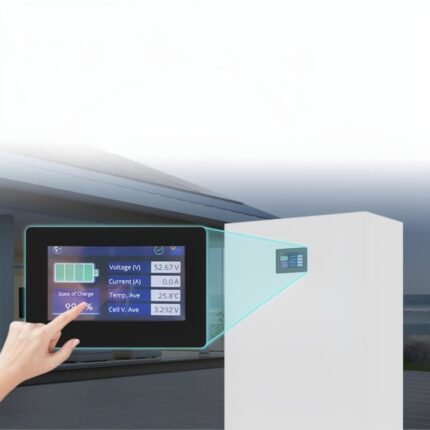
kW, kWh, state of charge and savings reporting in one view — so the finance team can see the demand-charge line move.
What about safety approvals?
Systems documented to UL9540A and your local interconnection rules, so the AHJ and utility review has the test data it needs.
Typical applications
| Application | What it means for the design |
|---|---|
| Demand-charge reduction | Clip peak kW — sizing driven by the single worst 15-minute window each month |
| TOU arbitrage | Off-peak charge, peak use — energy throughput and round-trip efficiency matter more |
| Backup overlap | Ride through outages — adds a transfer/islanding requirement to the PCS |
| Solar self-consumption | At commercial scale — shifts midday surplus into the evening peak |
C&I systems for peak shaving
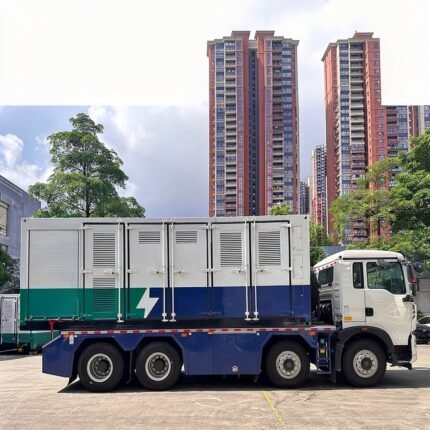
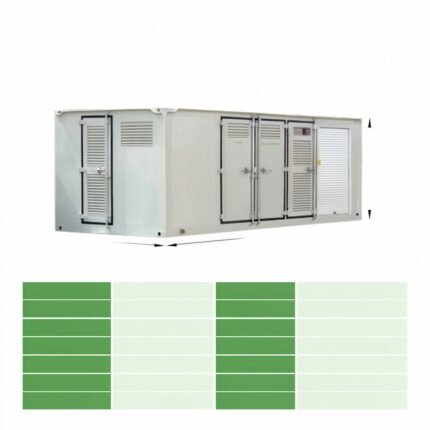
1000kWh Mobile BESS EV Charging Station for Emergency Power & Heavy-Duty Vehicle Fast Charging
CMX 1000kWh mobile BESS EV charging station — a 1 MWh LiFePO4 bank and a 480kW DC fast charger on a heavy-duty truck platform, for fleets with no grid connection. Factory-direct with OEM/ODM options.
- Performance: 480kW DC fast charging, 6,000+ cycles @ 80% DoD, Grade A automotive cells and smart BMS.
- Compliance: CE, RoHS, UN38.3 and IEC62619 (UL available); CAN / RS485 / RS232.
- Best for: Heavy-duty truck, bus and fleet charging; emergency, construction, mining, port and highway sites with no grid.
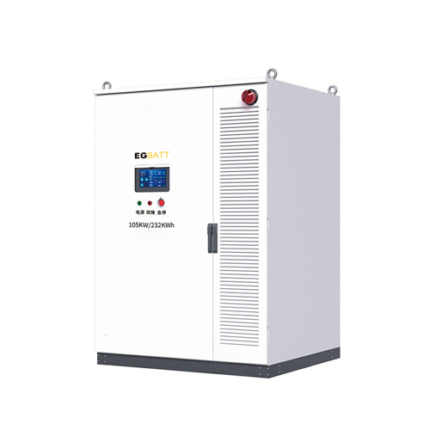
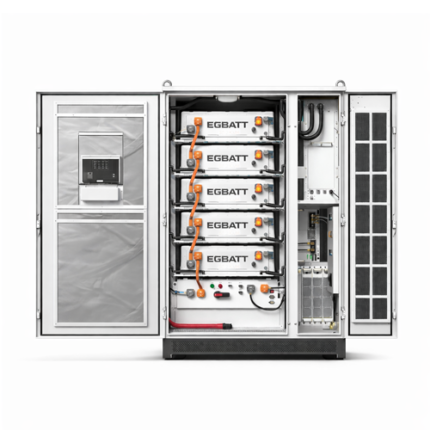
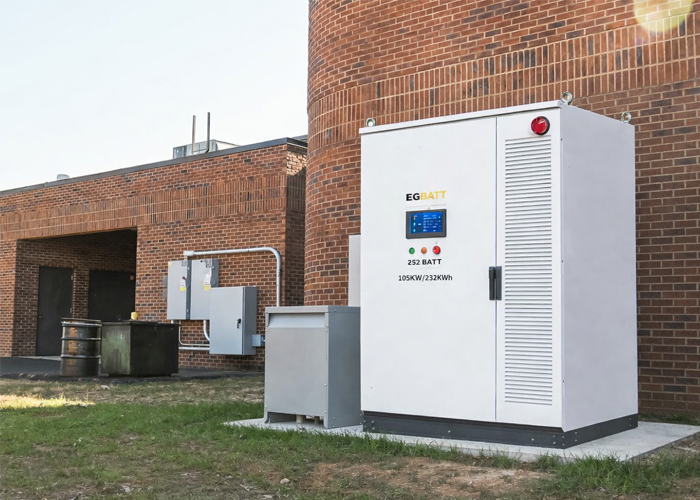
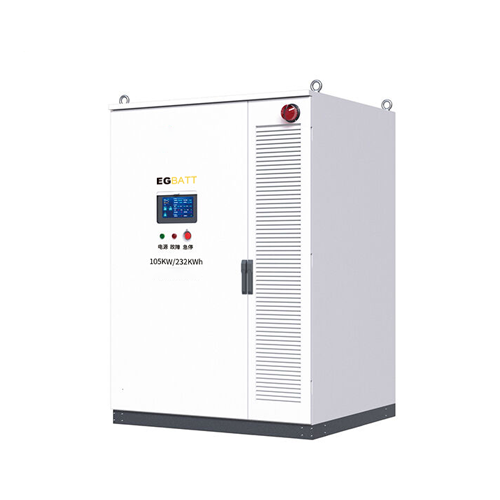
105kW/232kWh Liquid Cooling outdoor ESS | Factory Peak Shaving
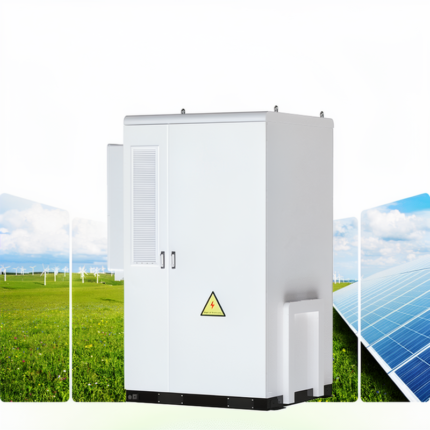
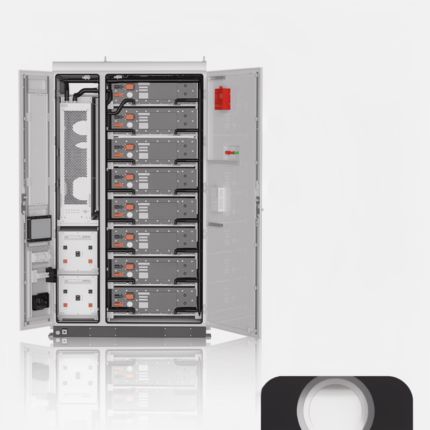
125kW 418kWh Liquid-Cooled BESS | Commercial Solar Battery Storage System Manufacturer
CMX Battery 418 kWh 125 kW commercial energy storage system — factory-direct from a LiFePO4 battery manufacturer and OEM/ODM partner, supplied wholesale and in bulk with private-label options.
- Performance: 6,000+ cycles @ 80% DoD with Grade A automotive cells and smart BMS protection; 5–10 year warranty.
- Compliance: Certified to CE, RoHS, UN38.3 and IEC62619 (UL available); CAN / RS485 / RS232 for inverter and EMS integration.
- Best for: Factory and commercial peak shaving; Microgrid and islanded sites; Solar + storage for warehouses.
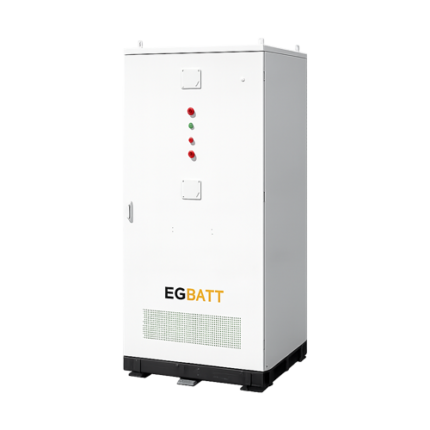
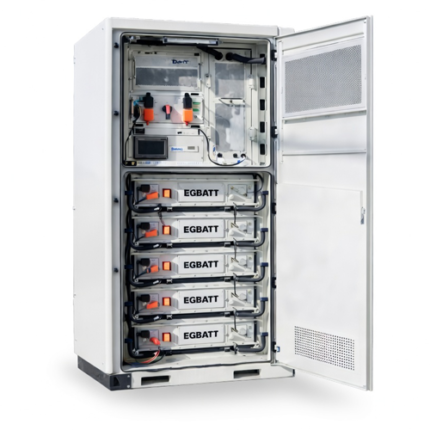
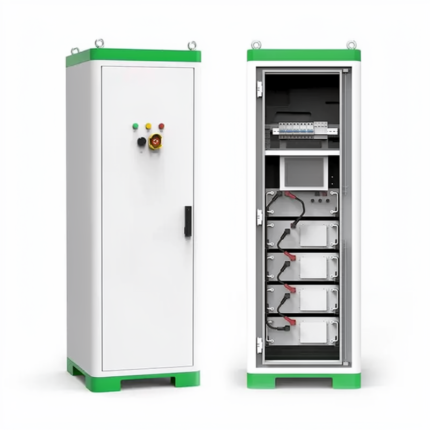
125kW/261kWh Liquid-Cooled Integrated Energy Storage Cabinet
- All-in-one plug-and-play design with factory-integrated PCS, BMS, EMS, and liquid cooling system
- 125KW+261KWh BESS delivering 125 kW power and 261 kWh energy in a single compact cabinet
- Advanced liquid cooling for optimal performance from -30°C to 60°C
- Premium EVE LFP cells with 832V high-voltage architecture and ≥6000 cycles
- Multi-layer hybrid fire suppression using Novec 1230
- IP54 outdoor-rated with surge protection, dehumidifier, and water-leak sensor
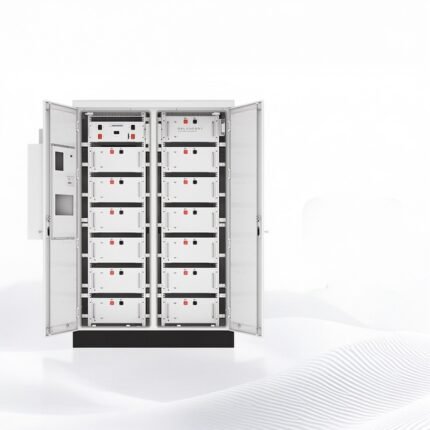
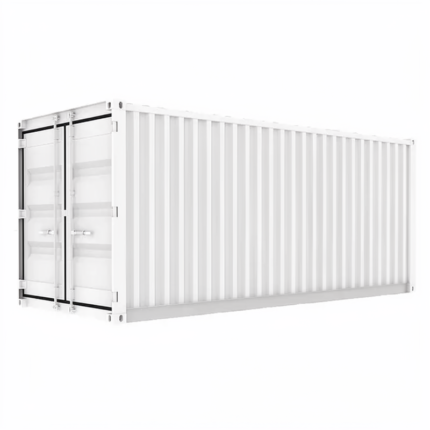
186 KWh Battery, Container Energy Storage System
CMX Battery 186 kWh commercial energy storage system — factory-direct from a LiFePO4 battery manufacturer and OEM/ODM partner, supplied wholesale and in bulk with private-label options.
- Performance: 6,000+ cycles @ 80% DoD with Grade A automotive cells and smart BMS protection; 5–10 year warranty.
- Compliance: Certified to CE, RoHS, UN38.3 and IEC62619 (UL available); CAN / RS485 / RS232 for inverter and EMS integration.
- Best for: Factory and commercial peak shaving; Microgrid and islanded sites; Solar + storage for warehouses.
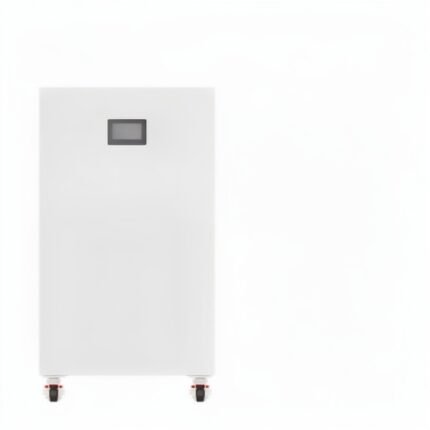
20kWh 51.2V 100Ah Rolling LiFePO4 Battery | Factory Wholesale Manufacturer for Home & Commercial Energy Storage
CMX Battery 51.2V 100Ah 20 kWh commercial energy storage system — factory-direct from a LiFePO4 battery manufacturer and OEM/ODM partner, supplied wholesale and in bulk with private-label options.
- Performance: 6,000+ cycles @ 80% DoD with Grade A automotive cells and smart BMS protection; 5–10 year warranty.
- Compliance: Certified to CE, RoHS, UN38.3 and IEC62619 (UL available); CAN / RS485 / RS232 for inverter and EMS integration.
- Best for: Factory and commercial peak shaving; Microgrid and islanded sites; Solar + storage for warehouses.
How do I specify a peak shaving system?
Step 1: Bring your tariff and 12-month load profile
Payback is modelled from those, not guessed. We need the demand charge in $/kW, the TOU windows, and interval data.
Step 2: Find the peak you want to clip
Read the highest 15-minute demand in each billing month; the gap between that and your target becomes the kW to clip.
Step 3: Set power from peak kW, energy from duration
Power (C-rate) from the peak kW you want to clip; energy from how long it stays clipped. 250 kW for 4 h = 1,000 kWh.
Step 4: Choose cooling and enclosure
Air for lower density; liquid when kWh per cabinet or ambient temperature demands it, or where footprint is constrained.
Step 5: Confirm PCS, grid code and UL9540A with your AHJ
Interconnection and fire-safety review drive the approval timeline more than the battery itself.
Step 6: Automate dispatch with an EMS
Once the system is in, EMS dispatch against tariff windows and load forecasts captures the value reliably.
How CMX Battery builds it
Solutions are where product lines meet an application — backup, off-grid, peak shaving or telecom. We specify the cell chemistry, capacity, inverter and controls as one system, then document the design so your team can deploy and service it.
Certifications & compliance
- UN38.3 — Mandatory lithium battery transport test (altitude, thermal, vibration, shock, external short). Required for any cross-border shipment.
- IEC62619 — International safety standard for industrial Li-ion cells and batteries; expected by EU and most APAC buyers.
- UL1973 — North American safety standard for stationary lithium battery systems.
- UL9540A — Fire safety test method for ESS installations; often required by US authorities having jurisdiction.
- IEC63056 — Safety requirements for stationary lithium battery energy storage systems.
- CE — EU declaration of conformity for the applicable directives.
- IP54 — Protected against dust ingress and splashing water, for indoor C&I plant rooms.
Frequently asked questions
What is the payback period?
From your demand charges and peak window; we model payback from your tariff and load. Sites with high $/kW demand charges and a spiky profile typically see 3–6 years; flat profiles can be much longer.
How do I size the system?
Power from the peak kW to clip, energy from the clip duration — modelled per site. The two numbers are independent and come from your interval data.
Air cooling or liquid cooling?
Air for lower density; liquid when kWh per cabinet or climate demands it. Liquid also holds cell temperature spread tighter, which extends cycle life in hot climates.
Can you work with our existing PCS or EMS?
We integrate or match a PCS and provide EMS hooks. Where you already have a site controller, we supply the battery with open Modbus or CAN mapping.
Does peak shaving also give us backup power?
It can, but it is a design decision made up front. Backup requires islanding capability in the PCS and a transfer scheme — retrofitting it later is expensive.
Related products & resources
More in this series
- Energy Storage Solutions & Applications
- Whole Home Battery Backup
- Off-Grid Solar Battery Systems
- Telecom & UPS Battery Backup
- UPS Lithium Battery Solutions
Talk to an application engineer
Send us your voltage, capacity, dimensions, certification target and annual volume. Our engineering team returns a proposal within three working days.
Request a LiFePO4 quote
Tell us your product, volume and specs — our engineering team returns a proposal within three working days.