
12V vs 48V LiFePO4: Which Voltage to Choose for Solar & Storage
Quick answer: 12 V suits small mobile loads — RVs, boats, small solar and drop-in lead-acid replacement — while 48 V suits anything above roughly 1–2 kW or 5 kWh, because it cuts current by a factor of four for the same power. Lower current means thinner cables, smaller losses, cheaper inverters and less heating. As a rule of thumb: below 1 kW stay 12 V; above 2 kW go 48 V; between them, 24 V is a reasonable middle ground.
- Current for 1 kW: ~83 A at 12 V vs ~21 A at 48 V
- Cable losses: scale with current squared, so 48 V loses roughly 16× less than 12 V at equal power
- 12 V sweet spot: under ~1 kW continuous and under ~5 kWh
- 48 V sweet spot: home backup, off-grid, golf carts, telecom, forklifts, small commercial
- Safety: both are low-voltage SELV; neither requires the precautions of 400 V+ EV packs
Why system voltage matters more than you think
Power equals voltage times current, so doubling voltage halves the current for the same power. Since resistive losses rise with the square of current, moving from 12 V to 48 V cuts cable and connection losses by roughly sixteen times at equal power. That is why no serious home backup system runs at 12 V.
| Load | Current at 12 V | Current at 24 V | Current at 48 V | Practical verdict |
|---|---|---|---|---|
| 500 W | ~42 A | ~21 A | ~10 A | 12 V is fine |
| 1,000 W | ~83 A | ~42 A | ~21 A | 12 V needs very heavy cable; 24 V acceptable |
| 2,000 W | ~167 A | ~83 A | ~42 A | 48 V strongly preferred |
| 5,000 W | ~417 A | ~208 A | ~104 A | 48 V or higher voltage only |
12 V LiFePO4: where it still wins
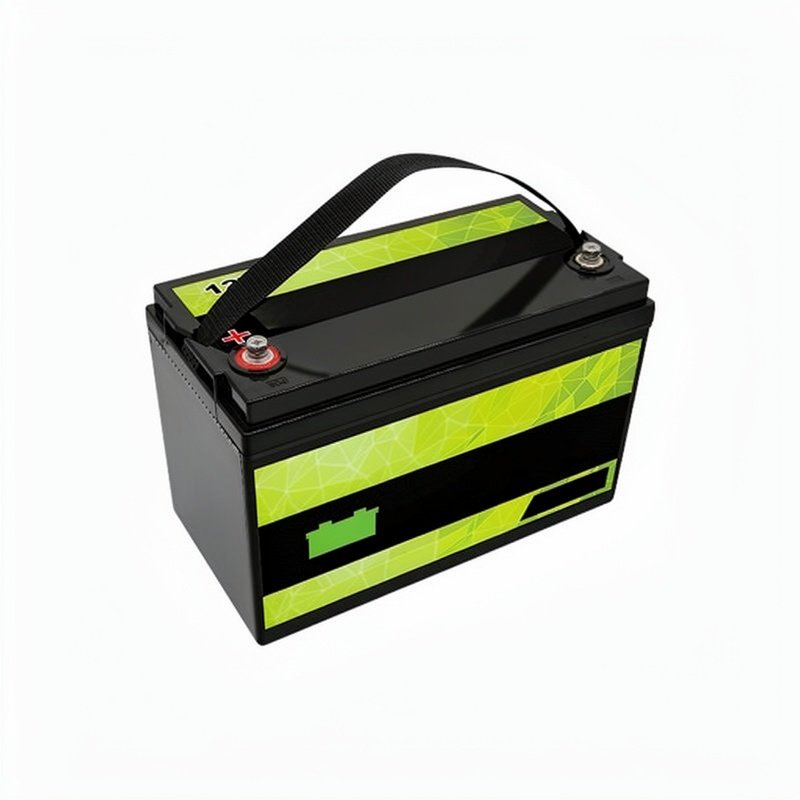
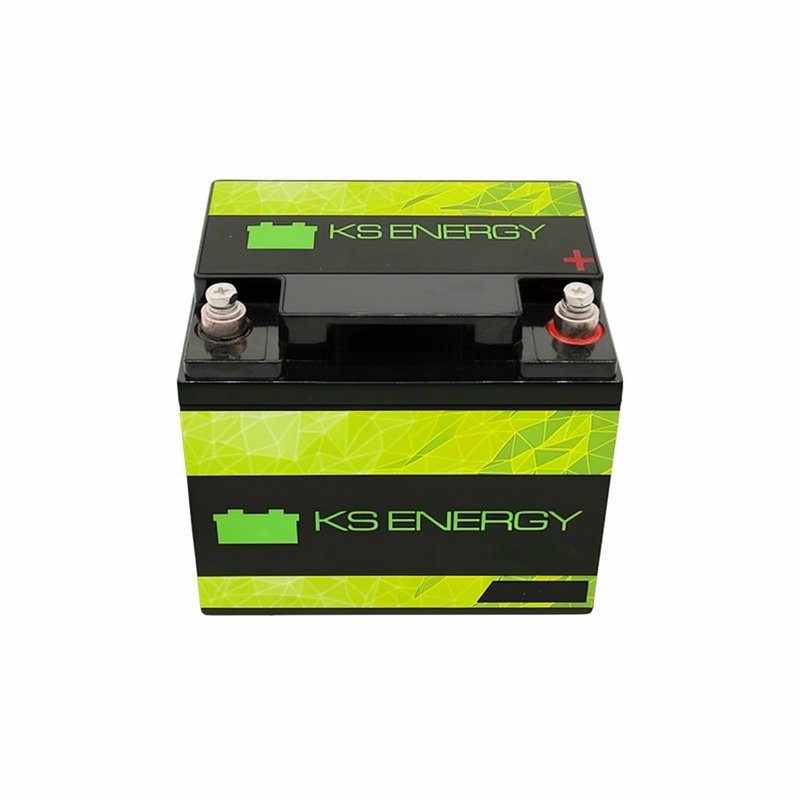
- Drop-in replacement — a 12 V LiFePO4 battery fits Group 24/27/31 and similar lead-acid footprints
- Standard accessories — fridges, pumps, lighting and inverters designed for 12 V vehicles are cheap and plentiful
- Simple wiring — no series string balancing within a single 12 V battery
- Redundancy — several independent 12 V batteries can be paralleled for resilience
48 V LiFePO4: why it scales
- Lower current — thinner cable, smaller losses, cooler connectors
- Smaller inverter — 48 V inverters are cheaper and more efficient at high power than 12 V equivalents
- Longer strings — better matched to high-capacity prismatic cells and to standard rack formats
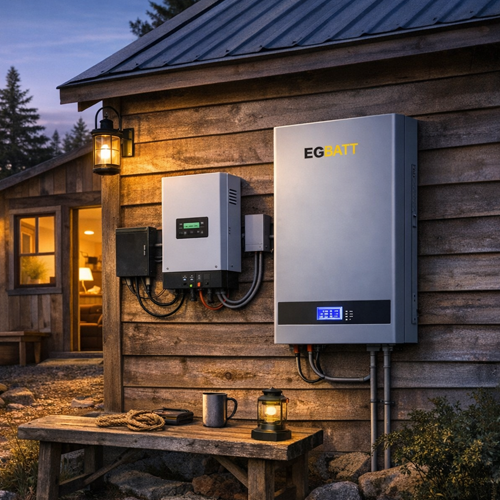
- Industry standard — telecom, UPS, solar hybrid and most home backup equipment is built around 48 V
What about 24 V?
24 V sits between the two and remains common in trucks, marine house banks and smaller off-grid systems. It halves current relative to 12 V while keeping some accessory compatibility. Choose it when you have outgrown 12 V but your loads are still under about 2 kW and you already own 24 V equipment.
How to decide in one step
Take your largest simultaneous load in kilowatts. Under 1 kW, 12 V is usually simplest and cheapest. Between 1 and 2 kW, 24 V is a sensible compromise. Above 2 kW, or any system above about 5 kWh, specify 48 V from the start — retrofitting later means replacing the inverter, the cabling and often the batteries themselves.
Charging and BMS notes
A ’12 V’ LiFePO4 battery is four cells in series (12.8 V nominal); a ’48 V’ pack is fifteen or sixteen (48 V or 51.2 V nominal). Chargers must use a lithium profile — a lead-acid charger’s equalisation stage will push LFP cells past their 3.65 V limit and trip the BMS. In a 48 V string the BMS also has to balance fifteen or sixteen cell groups, so cell matching at build matters more than it does at 12 V.
Frequently asked questions
Can I replace my 12 V lead-acid battery with LiFePO4 directly?
Usually yes, if the lithium battery is a drop-in size and your charger has a lithium profile or is adjustable. Check that the BMS current rating covers your starter or inverter surge, and that the alternator or charger will not hold the battery at an equalisation voltage above 14.6 V.
Why is 48 V better than 12 V for home backup?
Because current is four times lower for the same power, so losses, cable size, connector heating and inverter cost all fall sharply. Above roughly 2 kW continuous, a 12 V system becomes impractical regardless of battery capacity.
Can I put two 12 V LiFePO4 batteries in series to make 24 V?
Only if the manufacturer explicitly approves it and the batteries are the same model, age and state of charge. Otherwise buy a native 24 V battery — series-connected 12 V batteries with independent BMS units can disconnect asymmetrically and damage each other.
What is the real voltage of a 48 V LiFePO4 battery?
Either 48 V (15 cells) or 51.2 V (16 cells) nominal, depending on the design. Both are called ’48 V’ in the industry. Confirm which you are buying, because charger and inverter settings differ.
Do I need a special charger for LiFePO4?
Yes — or a charger with a user-selectable lithium profile. Lead-acid chargers apply an equalisation or float voltage that is too high for LFP and may include a desulphation mode that is unsuitable for lithium.
Is 48 V safe to work on?
Yes. Both 12 V and 48 V are below the 60 V DC extra-low-voltage threshold, so they do not carry the shock hazard of 400 V+ systems. Short-circuit current is still very high, so always disconnect and insulate before working on the terminals.
Choose the right system voltage for your project
Send your largest simultaneous load in kilowatts, your cable run length and the equipment you already own. We will recommend 12 V, 24 V or 48 V with the current and losses calculated, not a rule of thumb.
Also useful: how to size a battery bank and how a BMS works.