

How to Size a Battery Bank: From Load Calculation to System Design
Quick answer: To size a battery bank, convert your load into kilowatt-hours, then divide by the usable depth of discharge and the round-trip efficiency. The formula is kWh = (average load kW × hours) ÷ (DoD × η). For LiFePO4 use DoD 0.9 and η 0.93 as starting points. A 1 kW load running 10 hours needs roughly 11.9 kWh of nameplate capacity, not 10 kWh.
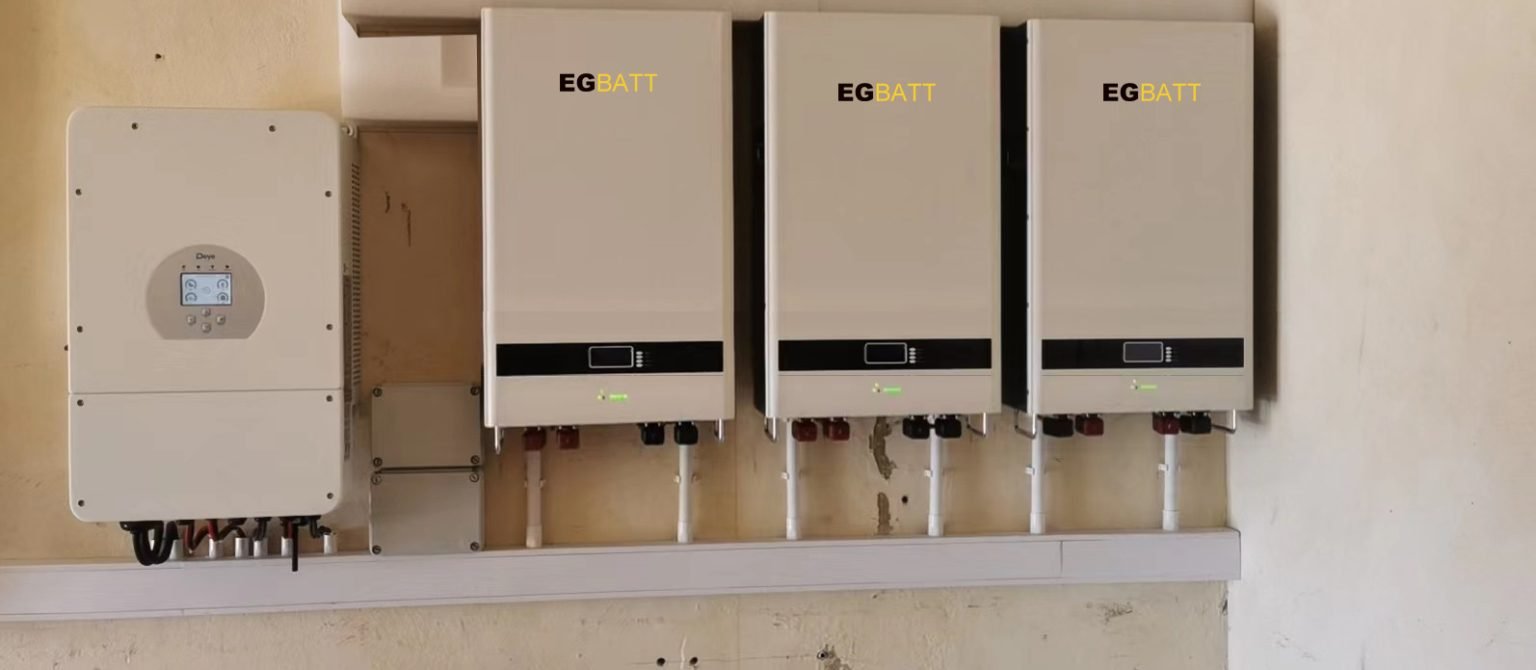
- Core formula: Required kWh = (average load kW × hours) ÷ (DoD × η)
- LiFePO4 defaults: DoD 0.9, round-trip efficiency 0.92–0.95
- Lead-acid comparison: usable DoD is typically 0.5, so a lead-acid bank must be roughly twice the nameplate capacity for the same runtime
- Always size power separately: continuous kW and surge rating are independent of energy capacity
Battery Bank Runtime Calculator
How long will your battery bank actually run this load — and if it is not enough, how much capacity you need to buy.
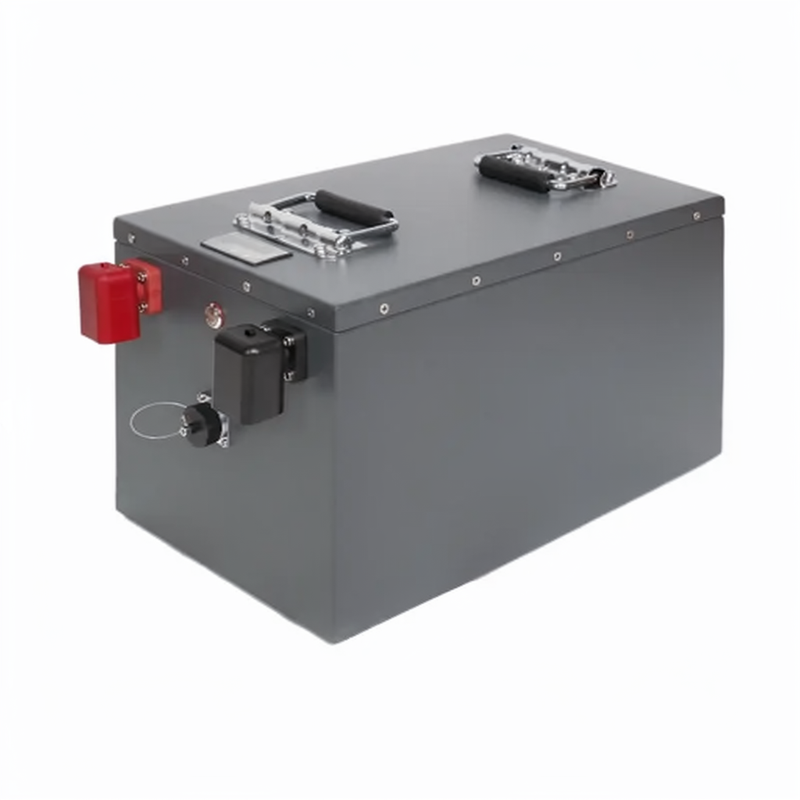
Deep-cycle banks we build
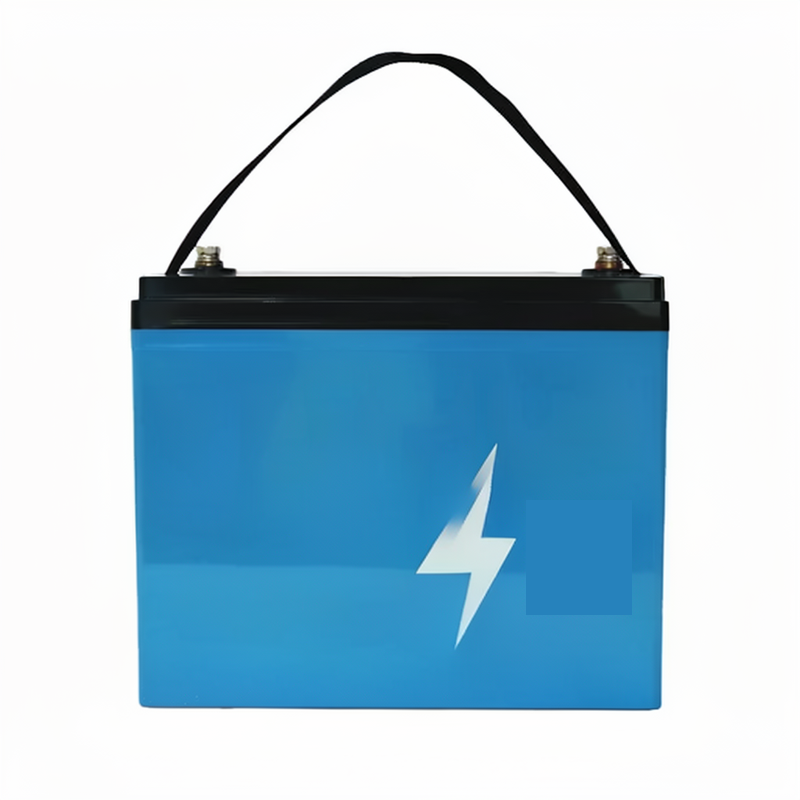
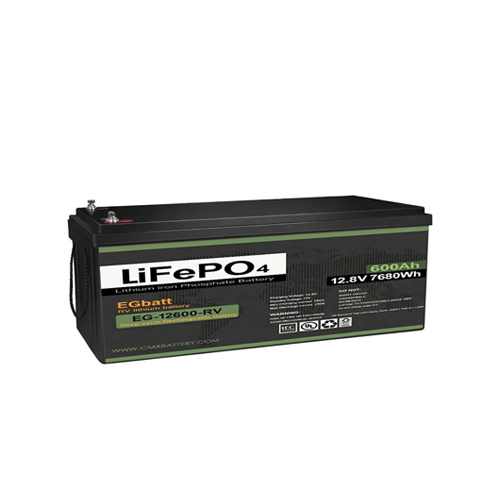
Real product photographs — these are the capacities used in the calculation above.
What information do you need before sizing a battery bank?
Four numbers: average load in kilowatts, how many hours it must run, the peak or surge power in kilowatts, and the chemistry you intend to use. Without the peak figure you can size a bank that holds enough energy but trips the inverter the moment a motor starts.
- Average load (kW) — from a meter reading or appliance list, not from a guess
- Required runtime (h) — backup hours, or autonomy days for off-grid
- Peak / surge (kW) — motor and compressor inrush is typically 2–3× running power
- Chemistry — sets usable depth of discharge and cycle life
How do you calculate battery capacity step by step?
Step 1 — Convert the load to watt-hours
Multiply average load by runtime. A 1 kW load for 10 hours is 10 kWh of delivered energy.
Step 2 — Divide by usable depth of discharge and efficiency
The battery cannot deliver its full nameplate capacity. Using LiFePO4 defaults of DoD 0.9 and η 0.93: 10 ÷ (0.9 × 0.93) = 11.9 kWh. This is the nameplate capacity to specify.
Step 3 — Check the power rating separately
Confirm the inverter and BMS can deliver the peak. A 11.9 kWh bank with a 3 kW inverter cannot start a 6 kW air-conditioner compressor, even though it holds enough energy to run it for hours.
Step 4 — Apply temperature and ageing margins
Capacity falls at low temperature and at high discharge rates, and it fades with cycling. Add 10–20% margin if the bank operates below 5 °C or if you expect to still meet the runtime at end of warranty.
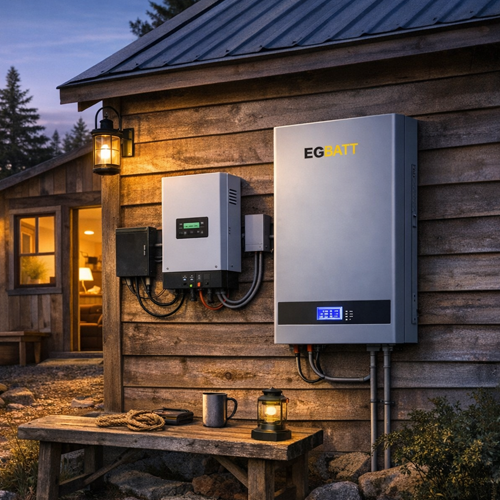
Worked example: sizing a home backup battery
A home with a 1.5 kW critical load (lights, fridge, router, medical device) wants 8 hours of backup at 0 °C minimum.
| Step | Calculation | Result |
|---|---|---|
| Delivered energy | 1.5 kW × 8 h | 12.0 kWh |
| Divide by DoD × η | 12.0 ÷ (0.9 × 0.93) | 14.3 kWh |
| Cold-temperature margin | 14.3 × 1.15 | 16.5 kWh |
| Specified capacity | round up to available size | 16 kWh (e.g. 51.2 V 314 Ah) |
| Power check | surge for fridge compressor | ≥ 4.5 kW inverter |
What capacity do common applications need?
| Application | Typical load | Runtime target | Typical bank size |
|---|---|---|---|
| Essential-home backup | 1–3 kW | 4–12 h | 10–30 kWh |
| Whole-home backup | 3–8 kW | 8–24 h | 20–60 kWh |
| Off-grid cabin | 1–2 kW | 2–3 days autonomy | 20–50 kWh |
| RV / van | 0.5–1.5 kW | 1–2 days | 5–15 kWh |
| Telecom cabinet | 0.5–2 kW | 2–8 h | 2–10 kWh |
| Commercial peak shaving | 100 kW–1 MW | 1–4 h | 100 kWh–MWh |
Why lead-acid and lithium banks of the same Ah are not equivalent
A 200 Ah lead-acid bank typically delivers about 100 usable Ah because discharging below 50% sharply shortens its life. A 200 Ah LiFePO4 bank delivers roughly 180 usable Ah. Comparing on Amp-hours alone overstates lead-acid by close to a factor of two — always compare usable kilowatt-hours.
Frequently asked questions
How do I size a battery bank for my home?
Add up the wattage of the loads you want to keep running, multiply by the number of backup hours, then divide by 0.9 × 0.93 for LiFePO4. A 1.5 kW critical load for 8 hours needs about 14.3 kWh of nameplate capacity, or roughly 16 kWh once you add a cold-weather margin.
What does depth of discharge mean and why does it matter?
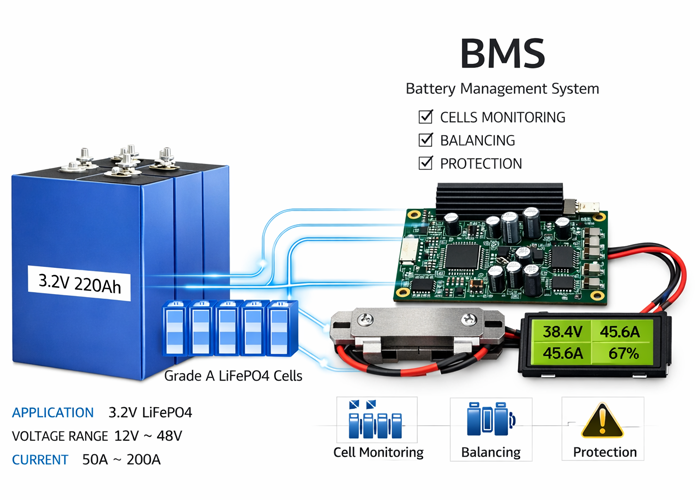
Depth of discharge is the fraction of a battery's capacity you actually use. LiFePO4 is routinely specified at 90% DoD, while lead-acid is usually limited to 50% to avoid rapid degradation. The same nameplate capacity therefore delivers roughly twice the usable energy in lithium.
Do I need a bigger inverter or a bigger battery?
They solve different problems. Battery capacity (kWh) sets how long you run; inverter power (kW) sets what you can start. Size capacity from load × hours, then size the inverter from the largest simultaneous load plus motor inrush, which is typically 2–3× running power.
How much capacity do I lose in cold weather?
LiFePO4 delivers noticeably less usable capacity below about 5 °C and should not be charged below 0 °C without a low-temperature cut-off or self-heating. Add a 10–20% capacity margin, or specify a pack with thermal management, if the bank will operate in an unheated space.
Should I oversize to protect against battery ageing?
Yes, if the runtime is contractual. LFP typically retains about 70–80% of original capacity after 10 years of daily cycling, so sizing to end-of-warranty rather than day-one conditions avoids a shortfall later.
Can I mix old and new batteries in one bank?
Avoid it. Mixing cells or modules of different age, capacity or internal resistance forces the BMS to balance around the weakest unit and accelerates degradation across the whole bank.
Get your battery bank sized by an engineer
Send your load list, required runtime and operating temperature range. We will return a sized specification with usable-kWh calculations, inverter sizing and a cold-weather margin — normally within two working days.
You can also use our battery sizing calculator, or send the details for a quotation.