

How to Build a LiFePO4 Battery Pack
Quick answer: A LiFePO4 pack is cells in series (for voltage) and parallel (for capacity), a BMS to protect and balance them, busbars rated for the current, and an enclosure matched to the duty. The discipline that separates a good pack from a dangerous one is cell matching: every parallel group should have near-identical capacity and internal resistance, or the pack drifts and one cell carries the load. Match within about 0.2 mΩ IR and a tight capacity band, size the BMS to the series count and peak current, and validate the finished pack on capacity, IR balance and thermal rise.
Building a LiFePO4 pack is mostly discipline — CMX Battery lays out the steps our own line follows so your build is safe, balanced and repeatable.
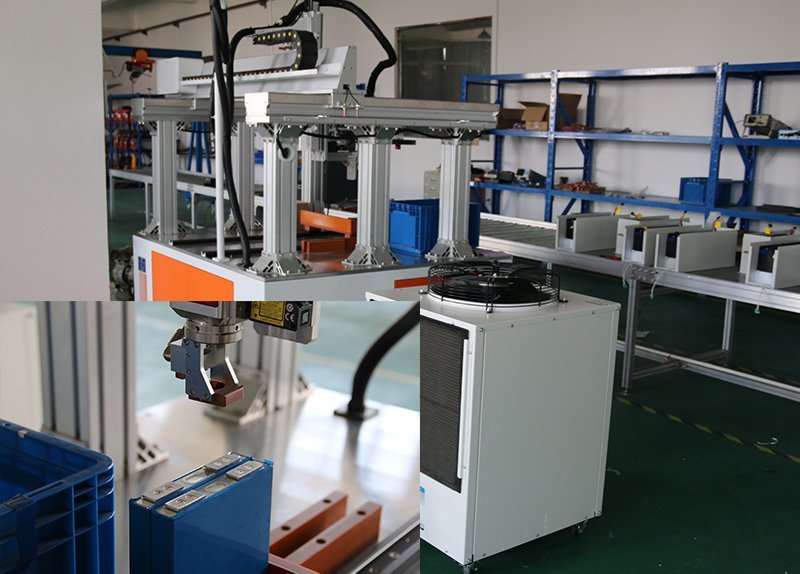
What makes up a LiFePO4 pack?
A LiFePO4 pack is cells arranged in series (voltage) and parallel (capacity), a BMS to protect and balance them, busbars to carry current, and an enclosure rated for the duty. The discipline that separates a good pack from a dangerous one is cell matching: every parallel group should have near-identical capacity and internal resistance, or it drifts and one cell carries the load. CMX Battery grades cells, spot-welds or bolts busbars to spec, integrates a BMS matched to the topology, and validates on capacity, IR balance and thermal behaviour. Below is the method, whether you build in-house or have us build it.
| Element | Design rule | Why it matters |
|---|---|---|
| Topology | Series = voltage, parallel = capacity | 4S = 12.8 V, 8S = 25.6 V, 16S = 51.2 V. |
| Cell matching | Equal capacity and IR per parallel group | Prevents drift and one cell carrying the load. |
| BMS | Protects and balances; matched to S-count and current | The safety device — not the place to save money. |
| Busbars | Rated for continuous and fault current | Low-loss, non-heating connections. |
| Enclosure | IP rating and thermal path per duty | Stationary versus mobile is a different design. |
How is a pack actually built? (six steps)
Step 1: Define the topology
Choose series count for the target voltage (4S = 12.8 V, 8S = 25.6 V, 16S = 51.2 V) and parallel groups for the target amp-hour capacity.
Step 2: Grade and match the cells
Measure capacity and internal resistance for every cell, then group them so each parallel group matches within about 0.2 mΩ IR and a tight capacity band.
Step 3: Build the interconnects
Spot-weld nickel or laser-weld/busbar bolt to the specified torque, keeping connection resistance consistent across the pack.
Step 4: Integrate the BMS
Fit a BMS matched to the series count and peak current, wire the balance leads correctly, and configure protection thresholds for the chemistry.
Step 5: House and protect
Fit the enclosure to the duty — IP rating, strain relief, fusing and, for mobile or cold duty, thermal management.
Step 6: Validate before service
Run a full capacity test, check IR balance and thermal rise under load, and record per-pack test data against the serial number.
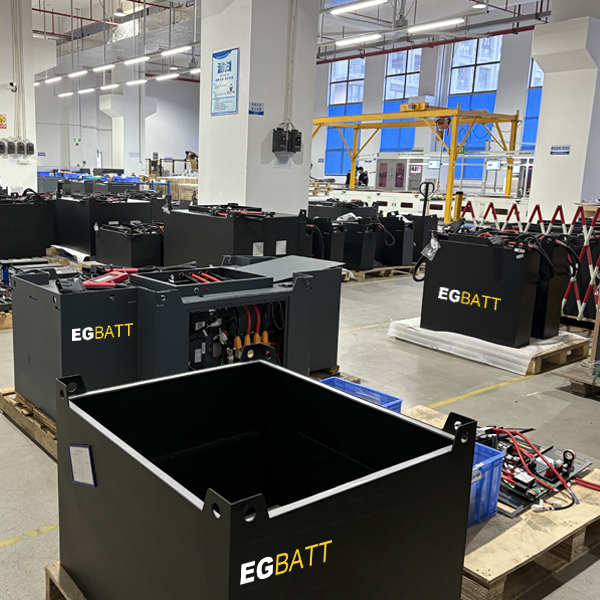
Why is cell matching the critical step?
Cells in a parallel group share current according to their internal resistance. If one cell has higher IR, it contributes less and the others work harder; over hundreds of cycles the imbalance grows until one cell is regularly over-charged or over-discharged while the BMS thinks the pack is fine. Matching new Grade-A cells within about 0.2 mΩ and a tight capacity band — and recording it in a matching report — is what keeps a pack balanced for thousands of cycles.
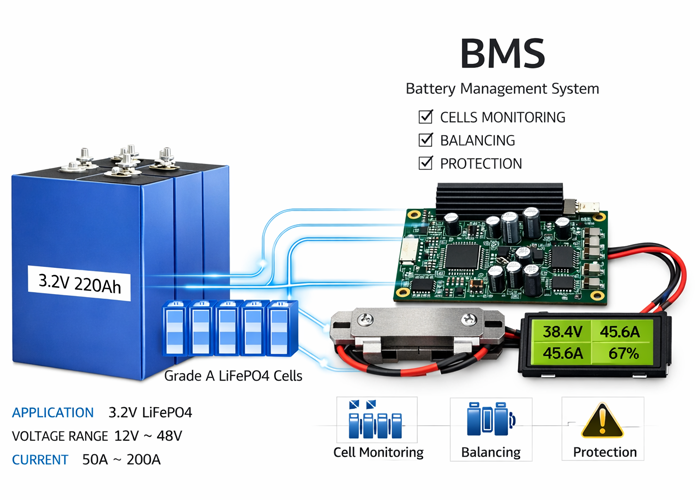
How do you choose the BMS?
- Match the series count exactly — a 16S BMS for a 16S pack; do not adapt with jumpers.
- Size continuous current to the load and peak current to the surge, with margin.
- Choose passive balancing for typical packs; active balancing for large series strings or mixed cells.
- Confirm the protection thresholds suit LiFePO4: about 3.65 V per cell over-voltage and 2.5 V under-voltage, plus a low-temperature charge cut-off near 0 °C.
- Confirm communications (RS485 / CAN) match the inverter or monitoring you plan to use.
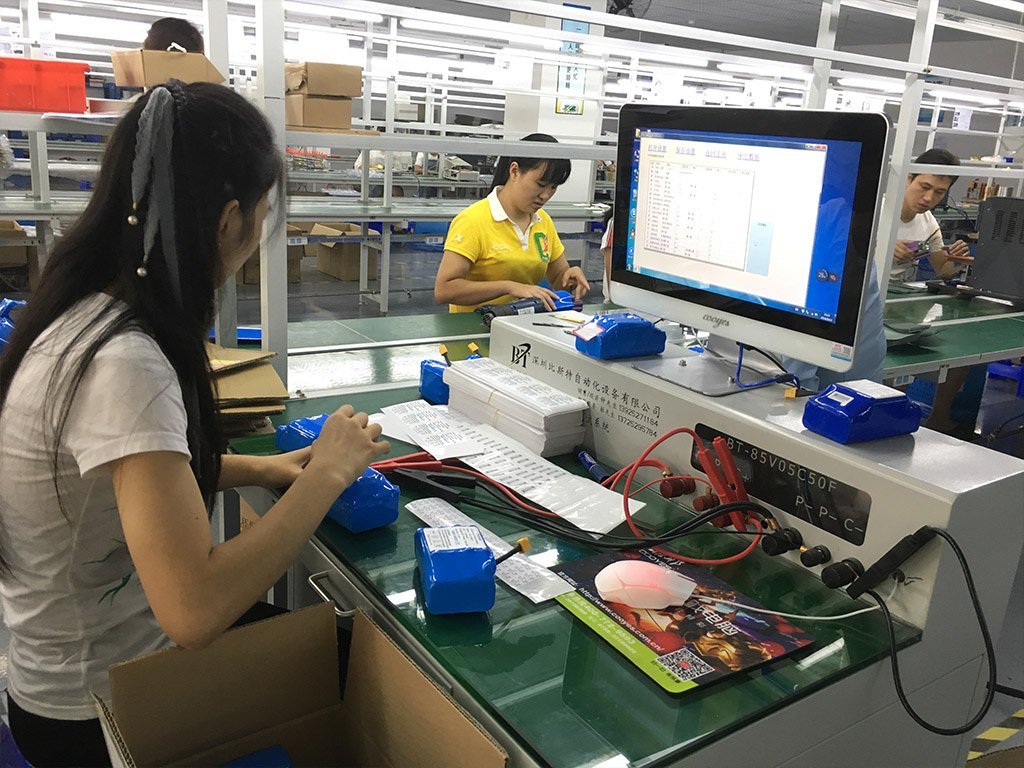
How do you specify a pack build?
- Match cells within 0.2 mΩ IR and a tight capacity band per parallel group.
- Size the BMS to the series count and peak current; pick passive versus active balancing by pack size.
- Rate busbars and fuses for the pack’s continuous and fault current.
- Validate the finished pack on capacity, IR balance and thermal rise before service.
- If you send the build out, ask for the per-cell matching report and the pack test report — not just a capacity figure.
Engineering & manufacturing at CMX Battery
Our guides are written by the same engineering team that grades the cells and builds the packs. They are meant to help importers, installers and procurement specifiers make defensible decisions — not to rank for a keyword.
What certifications & compliance apply?
- UN38.3 — Mandatory lithium battery transport test (altitude, thermal, vibration, shock, external short). Required for any cross-border shipment.
- IEC62619 — International safety standard for industrial Li-ion cells and batteries; expected by EU and most APAC buyers.
- CE — EU declaration of conformity for the applicable directives.
- RoHS — Restriction of hazardous substances in the battery and BMS.
Frequently asked questions
What is the most common mistake when building a pack?
Cell matching — unequal cells drift and one ends up carrying the load. Match capacity and internal resistance within about 0.2 mΩ before assembly.
How many cells do I need for 48 V?
16 in series (16S) for 51.2 V nominal; parallel groups then add capacity. 4S gives 12.8 V and 8S gives 25.6 V.
Do I need active balancing?
Passive balancing is fine for typical packs built from matched cells; active balancing pays off on large series strings or where cells cannot be tightly matched.
Can CMX Battery build the pack for me?
Yes — custom pack design is a core OEM/ODM service. Send the voltage, capacity, dimensions, peak current and certification target.
Can I mix cell brands or batches in one pack?
Avoid it. Different batches have different capacity and IR distributions, which defeats matching and accelerates drift.
What torque should busbar connections use?
Follow the cell maker’s specification — under-torqued joints heat and over-torqued studs damage terminals. Record the value in the build sheet and re-check after thermal cycling.
Related products & resources
Request a LiFePO4 quote
Tell us your product, volume and specs — our engineering team returns a proposal within three working days. Or review our custom pack capabilities.