
Blog
24V Lithium Forklift Battery (LiFePO4): Lifespan, Cost, Replacement Guide & Cold Storage Performance

If you run electric pallet jacks, walkie stackers, or small forklifts every day, you already know the problems with lead-acid batteries. Charging takes too long; Watering gets forgotten; Battery performance drops in freezer rooms. And after a few years, the battery capacity falls off fast. That’s one reason more warehouses are switching to 24V lithium forklift batteries using LiFePO4 cells.
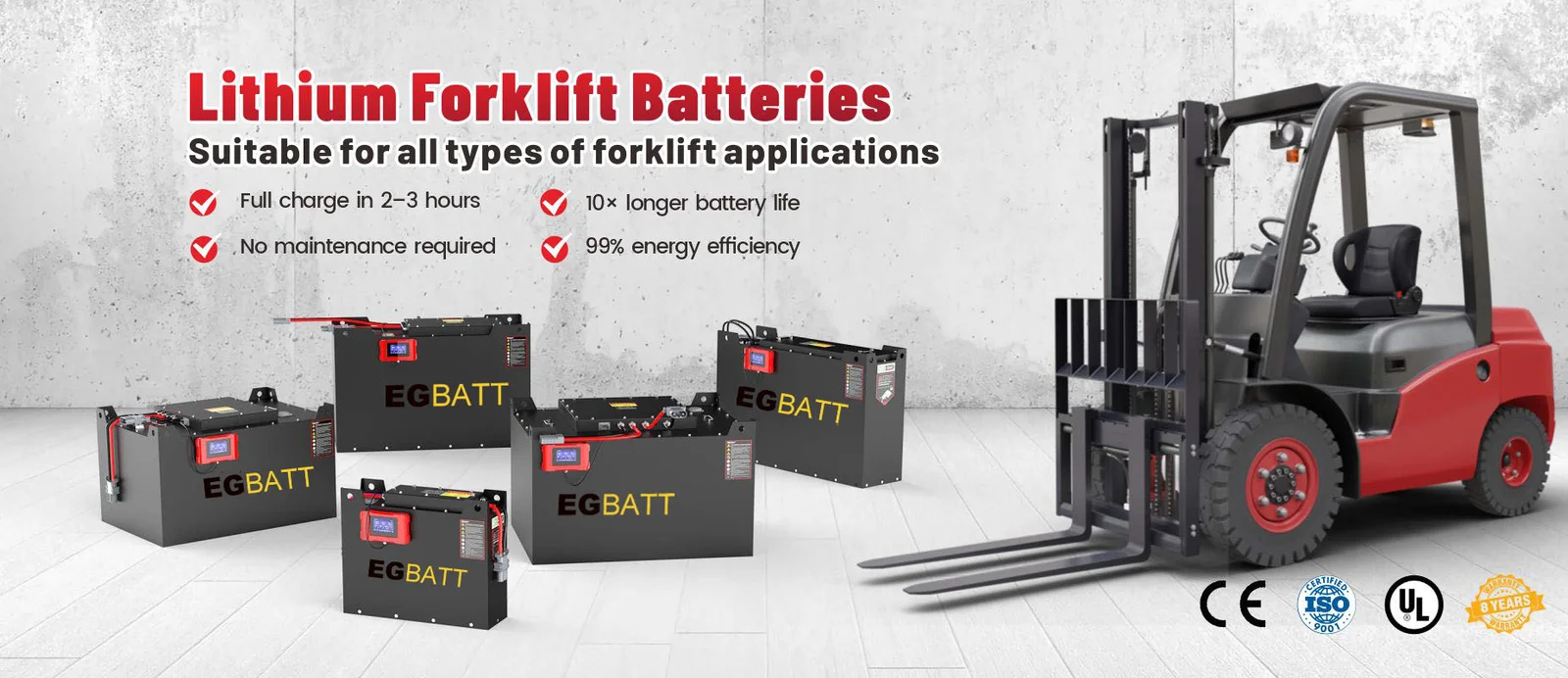
A qualified 24V LiFePO4 forklift battery charges faster, lasts longer, and requires far less maintenance than a traditional lead-acid forklift battery. Today, 24V lithium batteries are commonly used in:
- Electric pallet jacks
- Walkie pallet trucks
- Walkie stackers
- Reach trucks
- Small electric forklifts
Common capacities include: 150Ah; 280Ah; 205Ah; 230Ah; 300Ah; 400Ah; 608Ah. And many warehouses use these batteries in Toyota, Crown, Raymond, Yale, Hyster, Jungheinrich, Heli, and Hangcha equipment.
How Long Does a 24V Lithium Forklift Battery Last?
A quality 24V lithium forklift battery usually lasts around 3,000–5,000 charge cycles.
For many warehouses, that works out to roughly 8–10 years of daily use.
A standard lead-acid forklift battery normally lasts closer to 1,000–1,500 cycles.
The difference becomes noticeable in busy operations.
Lead-acid batteries don’t handle partial charging very well. Lithium batteries do.
With a LiFePO4 forklift battery, operators can plug in during lunch breaks or between shifts without damaging battery life. That’s one reason lithium batteries work so well in multi-shift warehouse operations.
Faster Charging Makes a Big Difference
Charging speed is one of the biggest reasons warehouses switch to lithium forklift batteries.
A lead-acid forklift battery often needs:
- Around 8 hours charging
- Additional cooling time afterward
A 24V lithium forklift battery can usually charge much faster.
In many cases:
- Full charging takes around 1–2 hours
- A short 20–30 minute charge can add enough power for several more working hours
That reduces downtime and helps forklifts stay in operation longer throughout the day.
Can You Replace a Lead-Acid Forklift Battery with Lithium?
In most cases, yes.
Many 24V lithium forklift batteries are designed as direct replacements for lead-acid batteries.
Before replacing the battery, it’s worth checking:
- Battery dimensions
- Voltage compatibility
- Connector type
- Forklift weight requirements
One thing people sometimes overlook is battery weight.
Lithium batteries are much lighter than lead-acid batteries. Some forklifts rely on battery weight as part of the counterbalance system, so extra ballast may occasionally be needed.
Most Toyota, Crown, Raymond, Yale, Hyster, and Jungheinrich warehouse trucks can be upgraded to lithium batteries without major issues.
Are LiFePO4 Forklift Batteries Safe?
This is a common question, especially for warehouse managers moving away from lead-acid batteries for the first time.
LiFePO4 (Lithium Iron Phosphate) is considered one of the safest lithium battery chemistries available.
Compared with some other lithium chemistries, LiFePO4 batteries are much more stable and have a very low risk of thermal runaway.
A properly designed lithium forklift battery also includes a Battery Management System (BMS) to protect against:
- Overcharging
- Over-discharging
- Short circuits
- Overheating
That’s one reason LiFePO4 batteries are widely used in industrial equipment and warehouse applications.
Do Lithium Forklift Batteries Work in Cold Storage?
Yes, but freezer applications need special attention.
LiFePO4 batteries usually discharge without problems down to around:
-20°C (-4°F)
Compared with lead-acid batteries, they hold capacity much better in cold environments.
However, charging below freezing temperatures is different.
Lithium batteries should not be charged below 0°C (32°F) unless the battery includes a built-in heating system.
For freezer warehouses, heated lithium forklift batteries are usually the safest option.
These are commonly used in:
- Frozen food warehouses
- Cold chain logistics
- Seafood storage facilities
- Pharmaceutical storage
Do Lithium Forklift Batteries Need Watering?
No. Unlike lead-acid batteries, lithium forklift batteries are completely maintenance-free.
There’s:
- No watering
- No acid spills
- No equalization charging
- No corrosion cleanup
For warehouses running multiple forklifts, this saves a surprising amount of maintenance time.
What Charger Does a 24V Lithium Forklift Battery Need?
A lithium forklift battery should use a lithium-compatible charger.
Traditional lead-acid chargers may use charging profiles that are not suitable for LiFePO4 batteries.
Most 24V lithium battery chargers use:
- CC/CV charging
- Charging voltage around 28.8V–29.2V
- No equalization stage
Many buyers simply purchase the charger together with the battery to avoid compatibility problems.
Lithium vs Lead-Acid Forklift Battery
| Feature | Lead-Acid Battery | 24V Lithium Forklift Battery |
|---|---|---|
| Charging Time | 8–10 hours | 2–3 hours |
| Watering | Required | No |
| Maintenance | High | Very low |
| Cycle Life | 1,000–1,500 cycles | 3,000–5,000+ cycles |
| Cold Storage Performance | Poor | Much better |
| Opportunity Charging | Not ideal | Fully supported |
Final Thoughts
For warehouses running forklifts every day, a 24V lithium forklift battery often makes operations much simpler.
Charging is faster.
Maintenance is lower.
Cold storage performance is better.
And battery life is usually much longer than lead-acid.
Lead-acid batteries can still work for light-duty applications with limited daily use.
But for busy warehouses, pallet jack fleets, and cold storage operations, LiFePO4 forklift batteries are becoming the preferred choice for long-term reliability and lower operating costs
Related CMX Battery Solutions
Frequently Asked Questions
What is a 24V LiFePO4 forklift battery used for?
24V packs power lighter pallet jacks, stackers, and walkie trucks in warehouses and retail; LiFePO4 gives longer life and faster charging than lead-acid at this voltage.
How long does a 24V lithium forklift battery last?
Typically 2,000-5,000 plus cycles at 80 percent DoD – several years in daily use – versus about 1,000-1,500 for lead-acid.
What does a 24V lithium forklift battery cost versus lead-acid?
Higher upfront, lower lifetime cost through no maintenance, no battery-swap room, and longer service life; ROI is strongest in multi-shift operations.
How do I replace a 24V lead-acid battery with lithium?
Match dimensions, terminal layout, and voltage; install a 24V lithium charger with the correct profile and verify truck compatibility.
Does LiFePO4 work in cold storage?
LiFePO4 tolerates cold better than many chemistries, but charging below about 0 C needs a low-temperature cutoff or heated cells; specify cold-rated packs for freezer use.