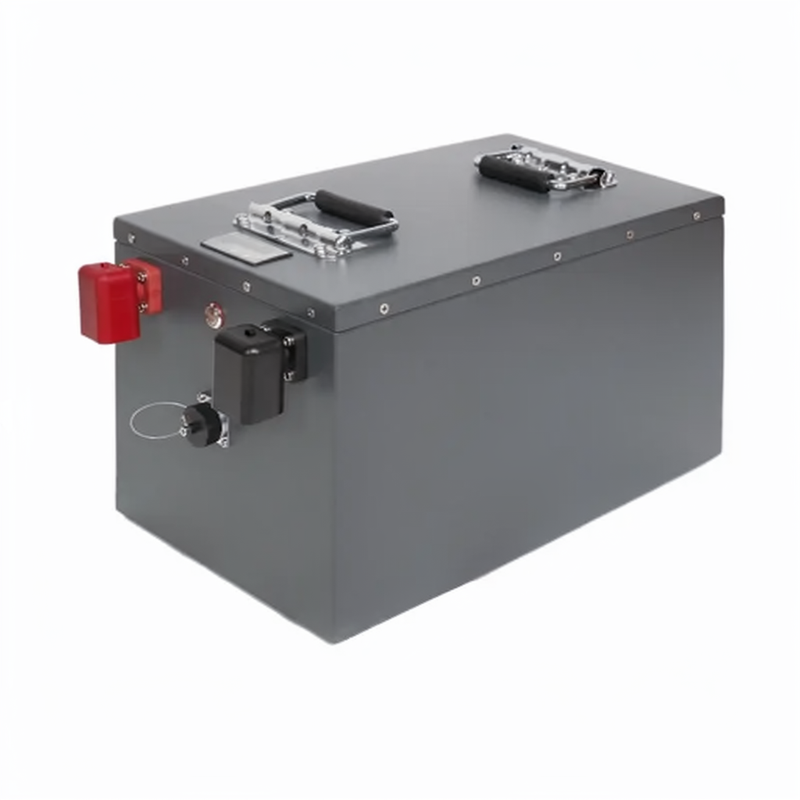
48V 100Ah LiFePO4 Battery for RV | 5.12kWh Lithium House Battery with Smart BMS
From $940.00Login for exact price
48V (51.2V) 100Ah RV house battery, 5.12 kWh, in an IP65 enclosure with a CAN/RS485 smart BMS and 4000+ cycles at 80% DoD. Factory-direct from CMX Battery, with wholesale and OEM/ODM terms.
TL;DR — The CMX 48V 100Ah RV house battery is a 51.2 V, 5.12 kWh LiFePO4 pack in an IP65 enclosure, with a CAN/RS485 smart BMS and a rated life of 4000+ cycles at 80% depth of discharge. It is built for the living side of a motorhome, van or off-grid cabin, charged from shore power, solar or a DC-DC converter, and sold factory-direct with OEM/ODM options.
48V House Battery for RV and Mobile Living
This pack is specified as an RV house battery: it powers the living side of the vehicle and is charged from shore power, alternator or solar. IP65 covers the dust and moisture of road use, and the Smart BMS communicates over CAN/RS485 so the inverter-charger reads state of charge directly instead of estimating it.
Where This Format Fits
- RV house loads — lighting, fridge, water pump, air conditioning.
- Van and motorhome builds with an inverter-charger.
- Mobile workshops and food trucks.
- Off-grid cabins using the same 48V architecture.
The 48V 100Ah LiFePO4 Battery for RV | 5.12kWh Lithium House Battery with Smart BMS is engineered for RV, marine & mobile-off-grid owners. Built with Grade A LiFePO4 cells and a smart BMS (Smart BMS with CAN/RS485), it delivers 5.12kWh of usable energy with more than 4000 cycles at 80% depth of discharge — a maintenance-free, factory-direct alternative to lead-acid.
48V 100Ah LiFePO4 Battery for RV | 5.12kWh Lithium House Battery with Smart BMS Specifications
| Nominal Voltage | 51.2V |
| Capacity | 100Ah |
| Energy | 5.12kWh |
| Form Factor | Deep cycle pack |
| Cycle Life | 4000+ @ 80% DoD |
| BMS | Smart BMS with CAN/RS485 |
| Protection Level | IP65 |
| Certifications | CE, UN38.3, IEC 62619, RoHS |
48V 100Ah LiFePO4 Battery for RV | 5.12kWh Lithium House Battery with Smart BMS Applications
- Motorhome & RV house battery banks
- Marine and yacht house power
- Off-grid solar cabins
- Mobile workshop and food-truck power
Why Choose CMX Battery — Your LiFePO4 RV Battery Manufacturer & OEM/ODM Partner
CMX Battery is a LiFePO4 battery manufacturer and OEM/ODM partner with 9+ years of experience serving RV, marine & mobile-off-grid owners worldwide. We deliver factory-direct pricing, wholesale and bulk ordering, and flexible OEM/ODM customization (voltage, capacity, BMS, communication, and enclosure) with competitive MOQs and reliable global shipping.
Every RV battery is built with Grade A LiFePO4 cells and certified to CE, UN38.3, IEC 62619, RoHS, and UL standards, backed by a 5–10 year warranty. Need volume pricing or a custom pack? Request a quote and our engineering team will respond within 24 hours.
Request a Quote
Get factory-direct pricing for the 48V 100Ah LiFePO4 Battery for RV | 5.12kWh Lithium House Battery with Smart BMS. Contact CMX Battery sales for wholesale, OEM/ODM, and bulk order quotes.
Builders weighing system voltage should also look at the 24V 100Ah RV battery for smaller house loads, and at the 12V 250Ah deep-cycle battery where the vehicle architecture stays at 12V.
Related models in this range
Compare other options in this category:
Measured on our bench: this class delivers above its label
Packs of this class are capacity-checked on our own production test bench under the plant standard procedure: charged to the constant-voltage limit, rested, then discharged at a constant current toward a 2.50 V per cell cutoff. A 51.2 V 100 Ah pack measured on this bench delivered 117.7 Ah, or 117.7% of the 100 Ah nameplate. The over-delivery is by design, not a fault: the cells installed in this build are graded above the 100 Ah rating (over-capacity cells), so real capacity runs above the label rather than below it. On all five of our platform test runs the pack’s own protection ended the discharge first, at 2.59 to 2.74 V per cell, so the bench cutoff was never reached. The amp-hours shown are the amp-hours above the protection threshold.
See our capacity verification guide for the full method, the cross-pack table, and how to read a capacity rating before you commit.
What 5.12 kWh actually runs in a vehicle
House loads in an RV are a different mix from a house. They are small, they run at odd hours, and one of them is usually a compressor that draws far more at start-up than its running figure suggests. At the 80% depth of discharge this pack is rated for, one module releases about 4.1 kWh to the load. That converts roughly as follows:
| House load | Typical continuous draw | Runtime from one 5.12 kWh module (80% DoD) |
|---|---|---|
| LED lighting throughout the van | 60 W | about 68 hours |
| Compressor fridge (average duty in warm weather) | 50 W | about 82 hours |
| Water pump | 150 W | about 27 hours |
| Laptop, router and phones | 90 W | about 45 hours |
| Microwave through an inverter | 1,200 W | about 3.4 hours |
| Roof air conditioner through an inverter | 900 W | about 4.5 hours |
Read the last two rows carefully. Air conditioning and microwaves are the loads that empty a battery quickly, and they are the reason most touring builds carry two modules rather than one. Everything above them on the list is what lets a van sit off-grid for days on one pack and a reasonable solar array.
How an RV charges a 48V house bank
Three sources usually feed the house side of a vehicle, and a 48V bank changes how each one is wired:
| Source | How it reaches a 48V bank | What to watch |
|---|---|---|
| Shore power | Through an inverter-charger, which also supplies 230 V or 120 V AC when hooked up | Set the charger to a LiFePO4 profile, not the default lead-acid profile |
| Solar | Through an MPPT solar charge controller sized for the array | Confirm the controller’s output voltage covers a 16-cell series pack |
| Alternator | Through a DC-DC charger that steps the vehicle’s 12 V or 24 V up to 48V | The DC-DC unit needs a LiFePO4 charge profile; direct connection is not an option |
Because the bank talks to the inverter-charger over CAN or RS485, the charger reads the real state of charge and current instead of guessing from voltage. That matters more in a vehicle than in a building, because load swings are constant and a voltage-only estimate drifts badly under a compressor start.
Why a 48V house bank rather than 12V
Doubling the system at the same power cuts the current roughly in half, and current is what makes cable heavy. A 3 kW inverter pulling from a 12 V bank needs cable that is thick, stiff and expensive to route through a van; the same inverter on a 48 V bank needs a far smaller cross-section. That is the reason most high-power conversions and new van builds land on 48V, and it is why this pack is specified at 51.2 V rather than 12.8 V.
| At the same 3 kW load | 12 V system | 48 V system |
|---|---|---|
| Approximate DC current | About 250 A | About 62 A |
| Cable cross-section needed | Very heavy, short runs only | Practical for normal vehicle routing |
| Voltage drop over a given run | High unless cable is oversized | Manageable at sensible sizes |
What 4000+ cycles at 80% DoD means in years
The pack is rated for 4000+ cycles at a depth of discharge of 80%. For a touring vehicle that cycles a few hundred times a year, that rating covers a very long service life — comfortably longer than the 5 to 10 year warranty that applies to the product. The usual constraint in a vehicle is not the cycle count at all: it is whether the alternator, solar array and charger can put back what the house takes out.
Shallow cycling is gentler than deep cycling, so a build that normally stops around 50% depth of discharge will outlast one that runs to the floor every night. If the loads allow it, leave a reserve.
LiFePO4 against lead-acid in a vehicle
Weight is the argument that settles the chemistry question in a vehicle, and it is not the only one:
| Property | Lead-acid (AGM or gel) | LiFePO4 pack |
|---|---|---|
| Usable depth of discharge | About 50% before service life falls sharply | 80% at the rated cycle life |
| Weight for the same usable energy | Several times heavier | A fraction of the weight, which is payload you keep |
| Maintenance | Ventilation, equalisation and terminal care | Sealed, with no watering and no equalisation |
| Charge acceptance | Slow, and slowest in the last part of the charge | Higher, so a given solar day puts back more energy |
Faster charge acceptance is the quiet advantage. A lead-acid bank spends hours in absorption accepting very little current, which is exactly the part of the day when a solar array has the least to give. A LiFePO4 pack takes charge at a high rate for longer, so the same roof area and the same driving hours put more usable energy back into the bank.
Charging and BMS communication in practice
The pack follows the standard sixteen-cell series LiFePO4 charge profile, with a constant-current phase followed by a constant-voltage phase in the region of 57.6 V to 58.4 V before settling to a float or standby voltage. Confirm the final values against the datasheet supplied with your order before configuring an inverter-charger or DC-DC unit, because the pack’s own limits take precedence over a generic figure.
- CAN is the connection most inverter-chargers use to read state of charge, voltage and current directly, so no external shunt or estimator is needed.
- RS485 is the service and monitoring link, used for commissioning tools, gateways and energy management systems.
Set the protocol on the BMS before the bank is energised and put the charger on a LiFePO4 profile. A vehicle that keeps its charger on a lead-acid profile is the most common reason a new 48V bank reads the wrong percentage from the first day.
Installation and commissioning checklist
- Ventilate the compartment and keep the pack away from heat sources such as an exhaust run or a charger that dumps heat into the same space.
- Secure the pack against movement in all directions; a vehicle flexes and vibrates far more than a building.
- Size and fuse the DC cable for the inverter’s continuous draw, not for its rated peak alone.
- Keep the run from the pack to the inverter-charger as short as the layout allows.
- Fit the DC-DC charger and the solar controller with LiFePO4 profiles before first charge.
- Set the BMS protocol and address with the bank cold.
- Record the first full charge and the first overnight discharge as a baseline to compare against later.
IP65 covers the dust and moisture of ordinary road use, but it is not a wash-down rating and it is not immersion. Mount the pack inside the vehicle rather than on a chassis rail or an open exterior tray.
Safety, transport and certification
| Mark | What it covers |
|---|---|
| UN38.3 | Transport safety testing for lithium cells and batteries, which is what carriers ask for before a shipment can move. |
| IEC 62619 | Safety requirements for industrial secondary lithium cells and batteries, including abuse and protection testing. |
| CE | Conformity with the applicable European directives for the product as placed on the market. |
| RoHS | Restriction of hazardous substances in electrical and electronic equipment. |
Certificates are issued against a specific build, so if a vehicle conversion needs the documents before a purchase order is raised, ask for the paperwork that matches the configuration you intend to buy.
OEM and private-label options for builders and converters
Converters, upfitters and rental fleets usually need something closer to a standardised component than a one-off pack. Because the module is built in our own plant, typical adjustments include:
- BMS protocol maps matched to a specific inverter-charger or DC-DC vendor.
- Enclosure branding, front-panel silkscreen and label artwork.
- CAN, RS485, or both, with or without Bluetooth depending on how the build is monitored.
- Mounting brackets and wiring kits supplied with the units for a repeatable install.
A custom build changes the certification scope, so the paperwork is re-issued against the final configuration. Tell us the inverter-charger you are pairing with and the build rate you expect, and we will confirm what can be adjusted without disturbing the certification path.
Ordering, MOQ and lead time
Units ship as individual packs, in build kits, or as part of a complete electrical package depending on the project. Minimum order quantities and lead times depend on the configuration, the certification paperwork and the destination, and both are confirmed at quotation together with the datasheet for the exact build.
Send your inverter-charger model, the house load you need to carry and the volume you expect, and our engineers will return a protocol check and a quote. For fleet and rental programmes, tell us the build rate and the delivery window and we will confirm what is achievable before you commit.
Frequently asked questions
Can I charge this pack from my vehicle alternator directly?
No. A 48V LiFePO4 bank needs a DC-DC charger that steps the vehicle’s 12 V or 24 V system up to 48 V and applies a LiFePO4 charge profile. Connecting an alternator directly to the bank is not a supported configuration.
Will my existing inverter-charger work with it?
If it supports a 48V nominal LiFePO4 battery and a CAN or RS485 link, the pack will report state of charge and current to it directly. Send us the model and we will confirm the protocol match before you buy.
Is the pack safe to run an air conditioner from?
The pack will run an inverter driving an air conditioner, but air conditioning is a large load and will empty a single module in hours. Most builds that run air conditioning carry two or more modules and a substantial solar array.
How much does the pack weigh compared with lead-acid?
A LiFePO4 pack of this class is a fraction of the weight of a lead-acid bank with the same usable energy, because lead-acid can only be cycled to about half its nameplate before service life collapses. The exact weight for your configuration is on the datasheet supplied with the order.
Does it need ventilation where it is installed?
The enclosure is sealed and the pack does not vent gas the way flooded lead-acid does, but the compartment still needs airflow for thermal management. Keep it away from exhaust runs and from chargers that dump heat into the same space.
Can I use it in a marine installation?
IP65 covers dust and water spray from ordinary road and deck use, but it is not an immersion rating. Marine house banks should use a pack and enclosure specified for the environment; our IP67 packs are built for those applications.
What depth of discharge should I run day to day?
The pack is rated for 4000+ cycles at 80% depth of discharge. Shallower daily cycling generally extends service life, so where the load allows a reserve to be kept, keep it.
How do I monitor the battery from inside the vehicle?
Through the BMS link. An inverter-charger with a display reads state of charge over CAN, and an RS485 gateway will feed a monitoring app or panel. The same data can be read by a laptop during commissioning.
What certifications come with it?
The pack carries UN38.3, IEC 62619, CE and RoHS. Certificates are issued against a specific build, so ask for the documents matching your configuration before raising a purchase order.
What is the warranty?
Coverage runs from 5 to 10 years depending on the configuration and the terms agreed at order, and the warranty terms are confirmed in writing with the quotation.
Do you supply converters, upfitters and fleet operators?
Yes. Much of our volume goes to converters, upfitters and fleet programmes, and volume pricing, OEM/ODM and private-label terms are all available. Tell us the build rate and the annual volume.
How do I get a quote?
Send the inverter-charger model, the house load you need to carry and the volume you expect through the form below or to sales@cmxbattery.com. Our engineers confirm the protocol match and return a quote.
Also Known As
This pack is the same hardware sold under several equivalent labels: 51.2V 100Ah
(16-cell series nominal voltage), 48V 100Ah (the 48V system-voltage convention used by most
inverters and chargers) and 5.12 kWh / 5120Wh (the same pack expressed as energy).
In RV trim this pack is commonly labelled 48V 100Ah.
Compatibility & Communication
The Smart BMS communicates over CAN and RS485 so the inverter-charger reads state of charge directly instead of estimating it.
| Inverter brand | Typical application | Protocol | Notes |
|---|---|---|---|
| Deye | Hybrid / off-grid | CAN / RS485 | Select the LiFePO4 battery profile |
| Growatt | Hybrid | CAN / RS485 | — |
| Victron Energy | MultiPlus / Quattro | CAN | Requires VE.Bus BMS configuration |
| GoodWe | Hybrid | CAN / RS485 | — |
| Solis | Hybrid | CAN / RS485 | — |
| Luxpower | Hybrid | CAN / RS485 | — |
| SMA | Off-grid / hybrid | CAN / RS485 | — |
| Studer | Off-grid | RS485 | — |
Compatibility is listed for communication-protocol matching only. It is not an endorsement or a
certified-partnership claim. Send us your inverter or charger model and we will verify protocol
matching before shipment.
System Check & Volume Pricing
Send us your inverter-charger model, target capacity and annual volume — our engineers will confirm protocol matching and return a quote with the downloadable datasheet. Prefer email? sales@cmxbattery.com.
| Voltage |
|---|
You must be logged in to post a review.

Related products
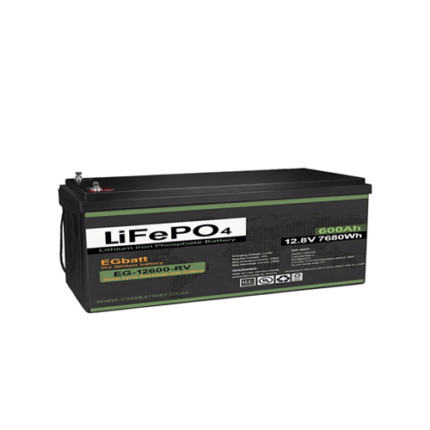
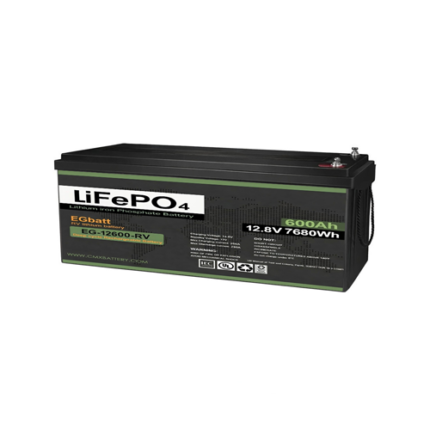
12V 600Ah 7KWh Deep Cycle LiFePO4 RV Lithium Battery
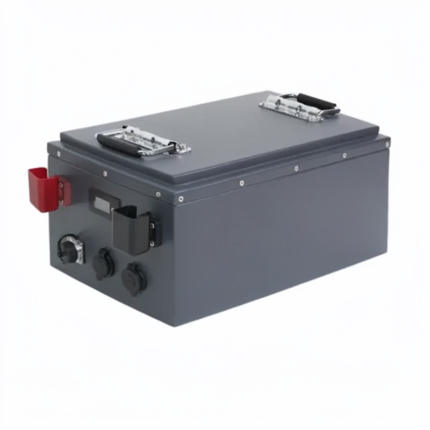
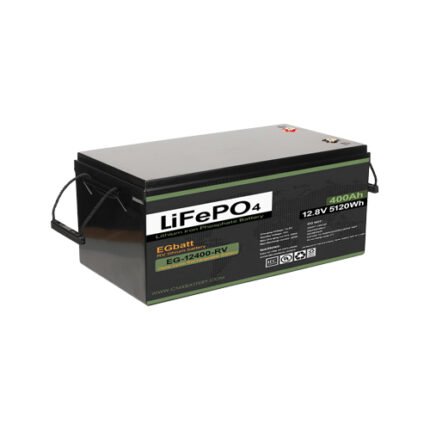
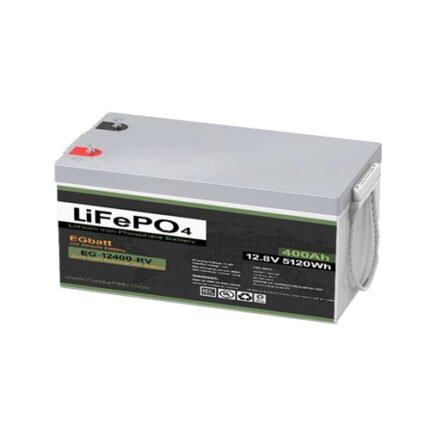
5KWh 12V 400Ah bluetooth Lithium RV battery
- This 5KWh 12V 400Ah Lithium RV battery delivers a full 5.12kWh of usable energy, giving you dependable power for RV travel, marine use, and off-grid systems.
- Most importantly, this 12V 400Ah Lithium RV battery is built for long service life and practical daily use. It weighs far less than an equivalent AGM bank while delivering significantly more energy, so handling and space planning become easier.
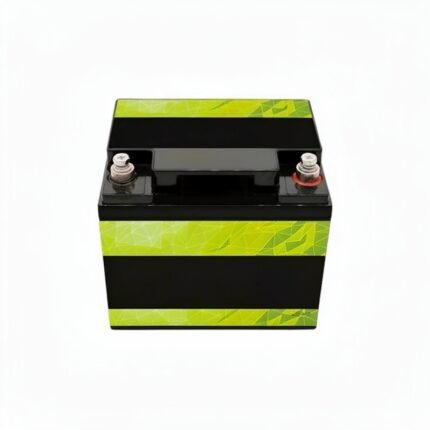
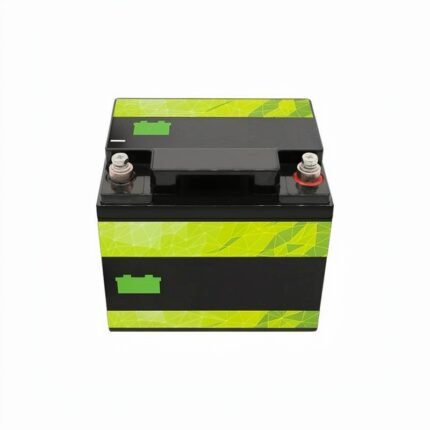
Manufacturer of Lifepo4 Rv Battery 12v 20ah Rechargeable Lithium
CMX Battery 12V 20Ah RV lithium battery — factory-direct from a LiFePO4 battery manufacturer and OEM/ODM partner, supplied wholesale and in bulk with private-label options.
- Performance: 6,000+ cycles @ 80% DoD with Grade A automotive cells and smart BMS protection; 5–10 year warranty.
- Compliance: Certified to CE, RoHS, UN38.3 and IEC62619 (UL available); CAN / RS485 / RS232 for inverter and EMS integration.
- Best for: Motorhomes, campers and travel trailers; Boats, yachts and trolling motors; Off-grid cabin and shore power backup.
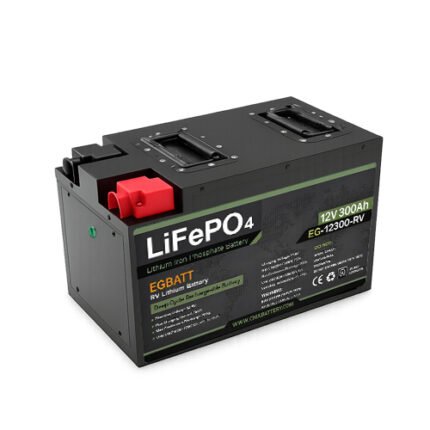
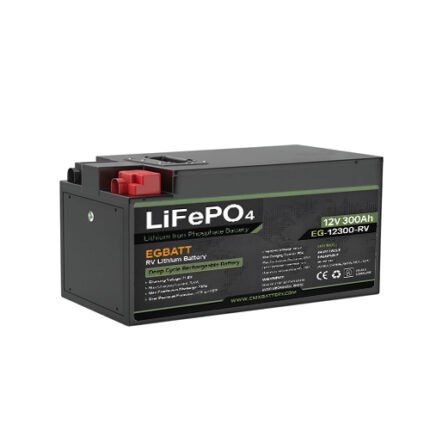
Mini Size 12V 300Ah Bluetooth LiFePO4 Lithium RV Battery
- The Mini Size 12V 300Ah Bluetooth LiFePO4 RV Battery delivers 3840Wh of reliable power in a compact design, ideal for RV, marine, and off-grid use.
- Built with automotive-grade cells, a smart 200A BMS, and built-in heating, it ensures safe, stable performance in all seasons.
- With Bluetooth monitoring, 5,000+ cycles, and a 10-year warranty, it provides long-lasting, low-cost power you can depend on.
Reviews
There are no reviews yet.