
Blog
Best Lithium Batteries for Trolling Motors (12V/24V/36V)

Quick answer: Match the battery voltage to your trolling motor: 12 V for small motors up to about 55 lb thrust, 24 V for 55–80 lb, and 36 V for high-thrust motors above 80 lb. Choose LiFePO4, which gives close to 100% usable capacity at roughly half the weight of lead-acid, and size amp-hours from the motor’s amp draw times the hours you run it. A 36 V 100 Ah LiFePO4 bank typically runs a high-thrust motor all day where an equivalent lead-acid bank would not.
Key facts
- Voltage vs thrust: 12 V ≤55 lb, 24 V 55–80 lb, 36 V >80 lb.
- Usable capacity: ~100% (LiFePO4) vs ~50% (lead-acid/AGM).
- Weight saving: roughly half or better — better hole-shot and less bow weight.
- Runtime is set by amp-hours ÷ motor amp draw; higher voltage uses fewer amps for the same thrust.
- Wiring: batteries in series add voltage, in parallel add amp-hours.
- Cycle life: 2,000–5,000 (LiFePO4) vs 300–500 (AGM).
Why lithium for a trolling motor?
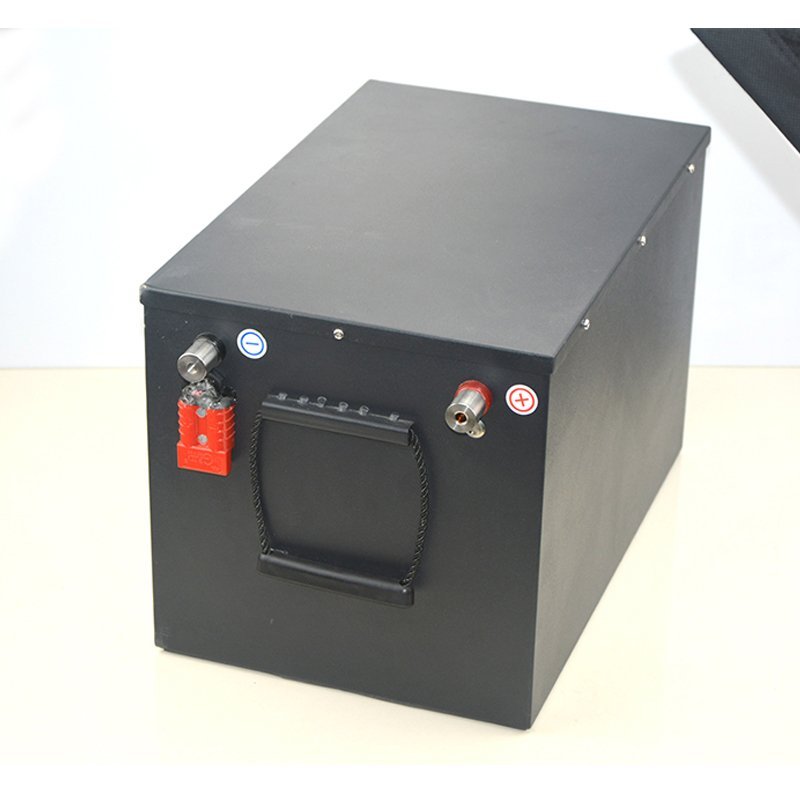
Trolling motors run at high current for hours, then sit idle for days — a duty cycle that destroys lead-acid. LiFePO4 holds voltage flat all day, so the motor keeps its speed on the last cast instead of fading as the bank sags. It is also roughly half the weight, which matters on a boat where every pound of bow weight changes how the hull runs.
Which voltage do I need: 12 V, 24 V, or 36 V?
| Motor voltage | Typical thrust | Best for | Battery configuration |
|---|---|---|---|
| 12 V | Up to ~55 lb | Small boats, kayaks, tenders | One 12 V battery |
| 24 V | ~55–80 lb | Mid-size bass and walleye boats | Two 12 V in series, or one 24 V pack |
| 36 V | ~80 lb and up | Large boats, heavy current | Three 12 V in series, or one 36 V pack |
Higher voltage does not make a motor more powerful by itself — the motor is built for a specific voltage. Choose the voltage your motor is rated for, then size the amp-hours for the runtime you need.
How do I calculate runtime?
Divide the usable amp-hours by the motor’s amp draw at your chosen speed. For example, a motor drawing 30 A at cruising speed on a 36 V 100 Ah LiFePO4 bank gives roughly three hours at that setting. Because LiFePO4 provides close to 100% usable capacity and holds voltage flat, you can use almost the whole rating — where a lead-acid bank would fall off after about half.
Series vs parallel wiring rules
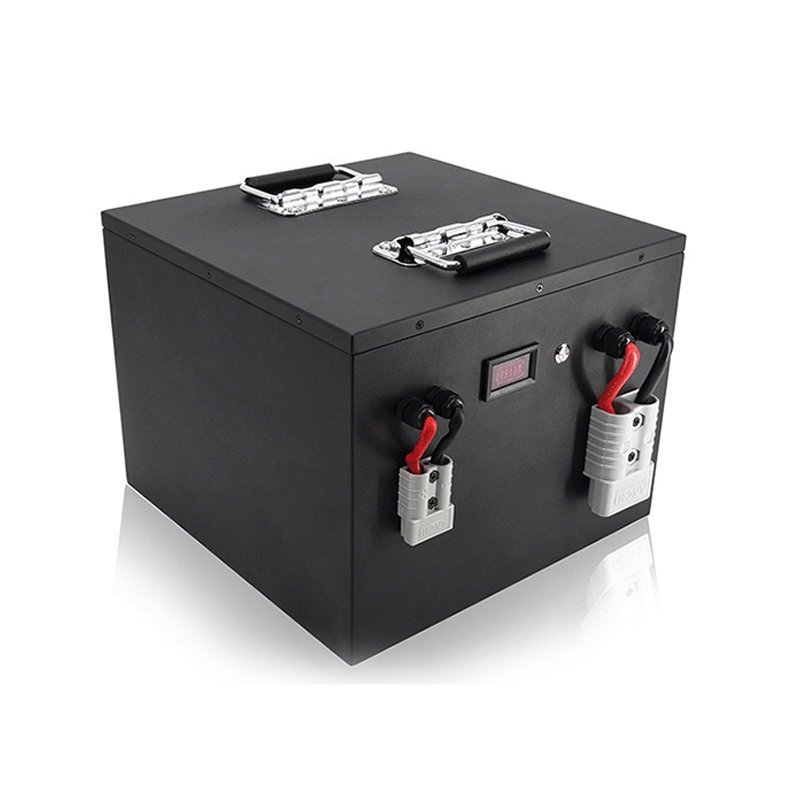
Batteries in series add voltage (two 12 V in series = 24 V); batteries in parallel add amp-hours (two 100 Ah in parallel = 200 Ah). Never mix voltages or chemistries in one bank, and always use batteries of the same model and age when wiring in parallel so they share the load evenly. A single higher-voltage LiFePO4 pack is usually simpler than a series string.
BMS and safety specs that matter
The BMS is the real brains of a lithium trolling battery. Look for over-current, over- and under-voltage, short-circuit, and temperature protection, plus active cell balancing. For wet, exposed installations choose an IP-rated case and sealed connectors. A quality BMS is also what allows the battery to be charged quickly between trips without risk.
Charging between trips
LiFePO4 charges far faster than lead-acid, so an overnight charge is usually enough. Use a charger with a LiFePO4 profile — a lead-acid profile will not fill the battery fully and can shorten its life. Multi-bank chargers handle a 24 V or 36 V series string cleanly, and a dedicated trolling motor batteries charger matches the pack.
Cost and lifespan
Lithium costs more upfront, but a trolling battery that lasts 2,000–5,000 cycles instead of 300–500 pays for itself quickly for anyone who fishes often. Add the weight saved and the flat voltage, and the upgrade is one of the highest-impact changes you can make to a boat.
CMX Battery supplies trolling motor batteries at 12 V, 24 V, and 36 V, plus marine LiFePO4 batteries and custom battery packs for boats with unusual tray or wiring layouts.
Related Buyer Guides
- Marine battery basics: deep-cycle vs cranking
- RV lithium battery guide
- Golf cart lithium battery buying guide
What size lithium battery do I need for a 24V trolling motor?
Choose a 24 V LiFePO4 bank and size the amp-hours from your motor’s amp draw times the hours you run it. A 24 V 100 Ah bank suits most mid-size boats for a full day of fishing.
Is 24V or 36V better for a trolling motor?
It depends on the motor, not on preference. Use 24 V for roughly 55–80 lb thrust and 36 V above 80 lb. Never run a motor at a voltage it was not designed for.
How long will a trolling motor run on lithium?
Divide usable amp-hours by the motor’s amp draw at your chosen speed. Because LiFePO4 gives close to 100% usable capacity, you get noticeably longer runtime than the same Ah rating in lead-acid.
Can I connect two lithium batteries in series for 24V?
Yes, if both are the same model and voltage. Series adds voltage; parallel adds amp-hours. A single factory-built 24 V pack avoids the balancing and wiring complexity of a series string.
Do trolling motor lithium batteries need a special charger?
Yes. Use a charger with a LiFePO4 profile. A lead-acid charger will not fill the battery properly and can shorten its life.
Are lithium trolling motor batteries safe near water?
Yes, with an IP-rated case, sealed connectors, and a BMS that includes short-circuit and temperature protection. LiFePO4 is non-spillable and far more stable than the lead-acid it replaces.
Get a Quote
Ready to spec the right battery? Tell us your voltage, capacity, and application and our engineers will size a LiFePO4 pack for you.
Frequently Asked Questions
1. What is the best lithium battery for a trolling motor?
A 12V (or 24V/36V for larger motors) LiFePO4 deep-cycle battery sized to the motor’s amp draw and desired runtime is best. Look for a high continuous discharge rating and a marine BMS.
2. How long will a lithium trolling motor battery last?
Runtime scales with Ah and throttle; a 100Ah LiFePO4 at moderate draw runs several hours. Cycle life is typically 2000-5000 cycles, far outlasting lead-acid.
3. Can I run a 12V trolling motor on a LiFePO4 battery?
Yes, provided the battery’s continuous amp rating meets the motor’s draw. CMX Battery 12V LiFePO4 trolling packs are built for this load.
