

Blog
Marine Battery Basics: Deep-Cycle vs Cranking

Quick answer: A cranking (starting) marine battery delivers a short, high-current burst to turn over an engine; a deep-cycle battery delivers a steady, moderate current for hours to run trolling motors, electronics, and house loads. They are engineered differently and are not interchangeable. For trolling and house duty, LiFePO4 deep-cycle batteries are the best fit — roughly half the weight of AGM, close to 100% usable capacity, and 2,000+ cycles.
Key facts
- Cranking batteries use many thin plates for burst current; deep-cycle batteries use fewer thick plates for sustained draw.
- Deep-cycle LiFePO4 gives ~100% usable capacity vs ~50% for AGM.
- LiFePO4 weighs about half of an equivalent AGM bank — range and hole-shot both improve.
- Cycle life: 2,000–5,000 (LiFePO4) vs 300–500 (AGM).
- Larger boats split start and house banks; isolate them so the house bank cannot drain the start battery.
- Fuse within 7 inches of the battery and use a sealed, IP-rated case in the bilge.

Two jobs, two batteries
A cranking battery’s thin plates dump high current for a few seconds to start the engine. A deep-cycle battery’s thick plates sustain a steady draw for hours. Ask the wrong battery to do the other’s job and you shorten its life — a starting battery cycled deeply fails early, and a deep-cycle battery used for cranking delivers weak starting current.
Why LiFePO4 is ideal for deep-cycle marine use
On a boat, every pound matters. Lithium is about half the weight of AGM, gives close to 100% usable capacity, and holds voltage steady under trolling load — exactly what your motor wants at the end of a long day. A deep-cycle LiFePO4 bank also recharges far faster, so a short run back to the dock can top it up for the next trip.
Cranking vs deep-cycle vs dual-purpose: which do I need?
| Type | Best for | LiFePO4 fit? |
|---|---|---|
| Cranking | Engine start (short burst) | Limited — keep AGM/lead for starting |
| Deep-cycle | Trolling, electronics, house bank | Excellent — best choice |
| Dual-purpose | Small boats with one battery | Good — LiFePO4 dual-purpose available |
Dual-purpose and house banks
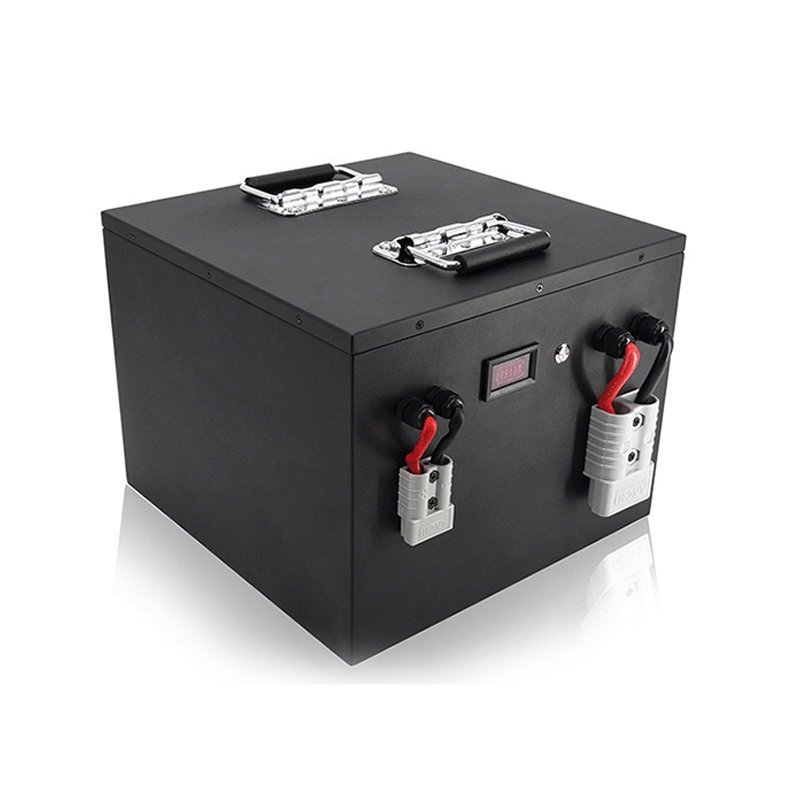
Larger boats split start and house banks. Isolate them with a battery switch or a DC-DC charger so the house (deep-cycle) bank never drains the start battery, and so the alternator charges both correctly. Keeping the banks separate is what lets you run electronics all day and still start the engine on the first turn.
How do I size a deep-cycle marine bank?
Size by the two loads that matter: trolling thrust and house electronics. Add up the amp draw of your trolling motor at cruise plus the draw of your fish finder, livewell, lights, and stereo, then multiply by the hours you run them. Aim to draw the bank down to no more than 80% depth of discharge to maximise cycle life. See our trolling motor batteries for the per-voltage numbers, then add house loads on top.
Charging on a boat
A marine LiFePO4 bank can be charged from three sources: the alternator (via a DC-DC charger or a lithium-compatible regulator), shore power (a LiFePO4-profile charger), and solar (an MPPT controller set to the correct absorption and float voltages). Never charge a lithium bank with a lead-acid-only shore charger — the profile is wrong and can shorten cell life.
Marine safety and installation
Use a sealed, IP-rated case, terminal protection, and a fuse or breaker within 7 inches of the battery positive terminal. LiFePO4 is non-spillable and far more stable than lead-acid, and the built-in BMS adds over-charge, over-discharge, over-current, and temperature protection on top. Mount the pack low and central, and secure it against the motion of rough water.
Winter storage and maintenance
Unlike lead-acid, LiFePO4 needs no watering, no equalising, and no trickle maintenance over winter. Charge the bank to roughly 50–60%, disconnect it, and store it somewhere it will not go below freezing while charging. It will hold its charge for months and be ready in spring.
CMX Battery builds marine LiFePO4 batteries and custom battery packs for trolling, house, and hybrid duty, using LiFePO4 cells with matched BMS protection.
Related Buyer Guides
- Best lithium batteries for trolling motors
- RV lithium battery guide
- Wheelchair & mobility scooter battery upgrade
Can a deep-cycle marine battery start my engine?
It can in a pinch, but cranking batteries are engineered for high burst current. For reliability, keep a dedicated start battery or a true dual-purpose LiFePO4.
Why use lithium instead of AGM on a boat?
Lithium is roughly half the weight, gives about 100% usable capacity versus 50% for AGM, and holds voltage steady under trolling load — critical when every pound matters on the water.
How do I isolate start and house banks?
Use a battery isolator or a DC-DC charger so the house (deep-cycle) bank cannot drain the start battery, and so the alternator charges both correctly.
Is a marine lithium battery safe near water?
Yes, with a sealed IP-rated case and proper fusing. LiFePO4 is non-spillable and far more stable than lead-acid, and the BMS adds fault protection.
How long does a deep-cycle marine battery last?
A well-managed LiFePO4 bank is rated for 2,000–5,000 cycles — often 8–10 seasons of use — versus roughly 300–500 cycles for AGM.
Can I charge a marine LiFePO4 bank from my alternator?
Yes, but through a DC-DC charger or a lithium-compatible regulator. Charging directly with an unregulated alternator can over-stress the battery and the alternator.
Get a Quote
Ready to spec the right battery? Tell us your voltage, capacity, and application and our engineers will size a LiFePO4 pack for you.
Frequently Asked Questions
1. What is the difference between deep-cycle and cranking marine batteries?
Cranking (starting) batteries deliver a short burst of current to start an engine; deep-cycle batteries provide steady power over long periods for trolling, house loads, and electronics. Use a deep-cycle (or dual-purpose) LiFePO4 for sustained marine loads.
2. Is LiFePO4 safe for marine use?
Yes. LiFePO4 is thermally stable and, with a marine-rated BMS, is safe against overcharge, over-discharge, and short circuit. Keep connections dry and fused, and use a battery box or compartment rated for the application.
3. How do I size a deep-cycle marine battery?
Size by the total amp-hours your electronics and trolling motor draw over expected runtime, then add reserve. CMX Battery offers 12V/24V/36V deep-cycle LiFePO4 marine packs sized to common trolling and house loads.
