215kWh Industrial Off-Grid LiFePO4 ESS | DEYE 125kW Inverter for Factory Power
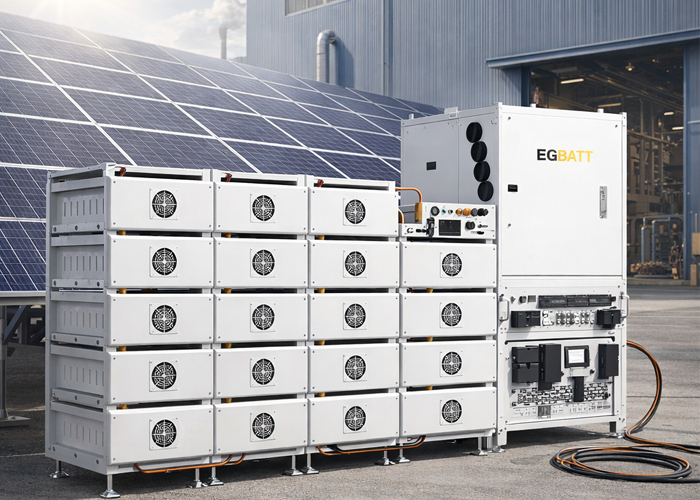
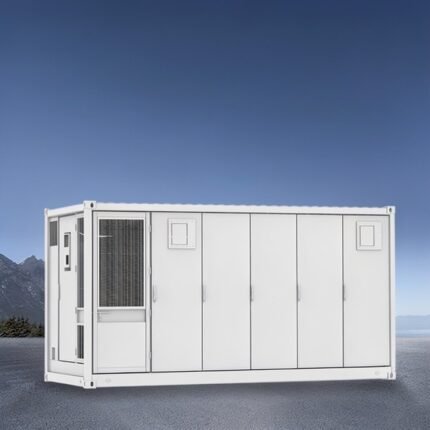
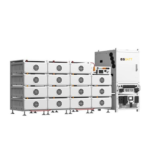
This is a complete industrial off-grid solar battery system with 215kWh LiFePO4 energy storage unit designed for factory power applications, integrated with DEYE 125kW inverter to deliver stable and reliable electricity for heavy industrial loads and continuous off-grid operation.
• 215kWh Large Capacity – Built for factory and industrial applications
• 125kW Output Power – Supports heavy machinery and production lines
• 200kW Solar Input – High-efficiency energy harvesting
• 768V High Voltage System – Lower current, higher efficiency
• 8000+ Cycles & 10-Year Warranty – Long-term reliability
• Expandable to 3.44MWh – Flexible scaling for large projects
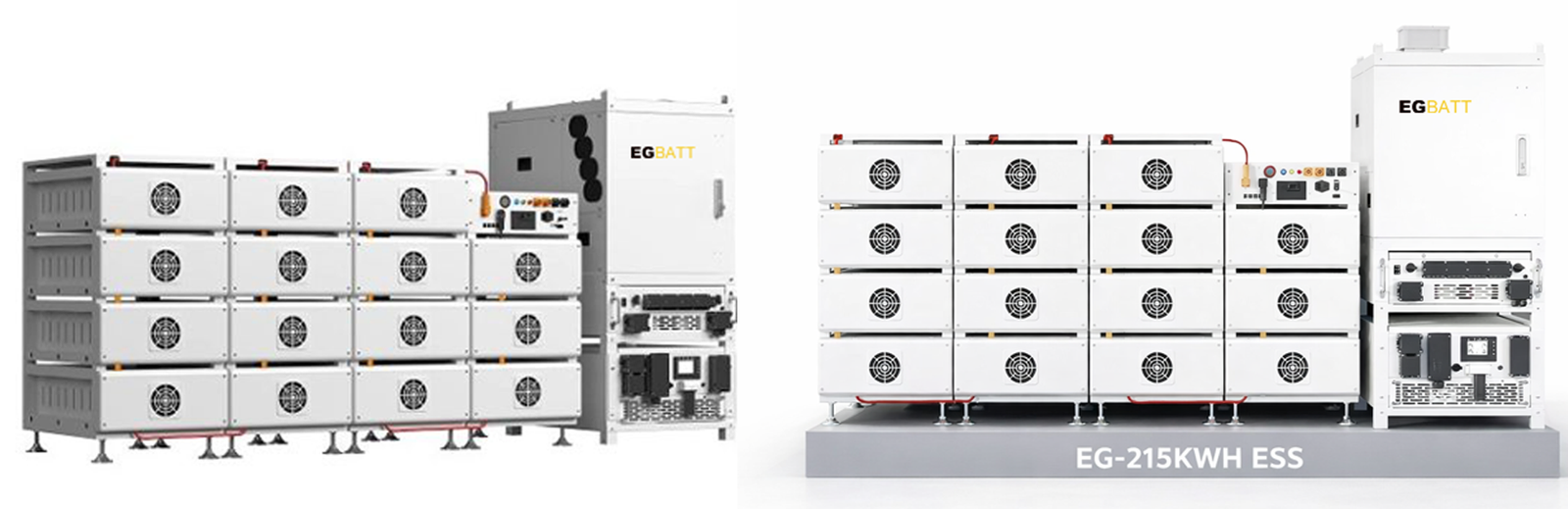
What's DEYE 125KW/ 215KWh ESS?
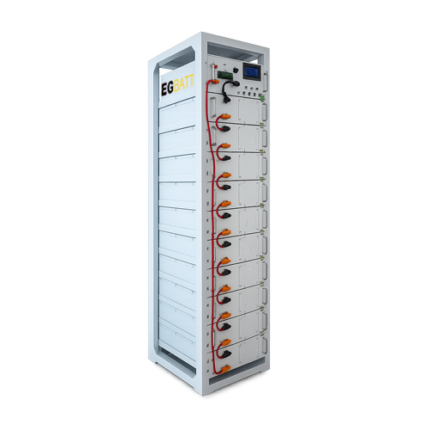
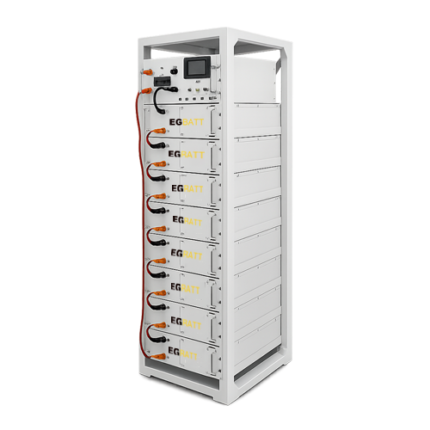
The EGBATT 215kWh LiFePO4 (Lithium Iron Phosphate) High Voltage Battery System is a complete industrial energy storage solution designed for demanding off-grid and hybrid solar applications. It delivers stable three-phase power, making it well-suited for factories, warehouses, farms, and various commercial facilities where reliability and continuous operation are critical.
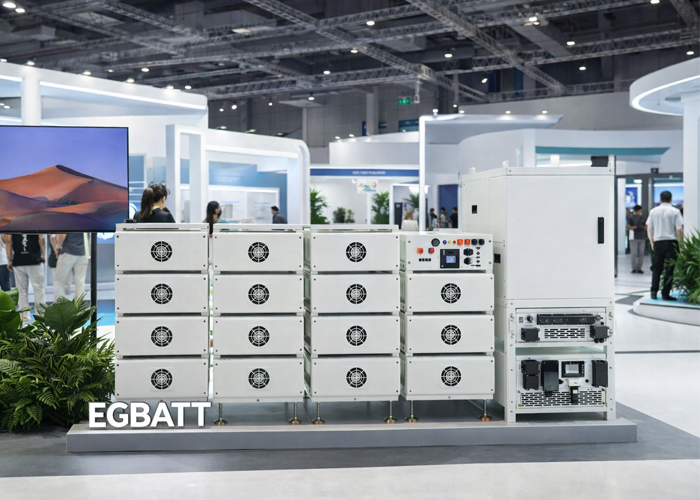
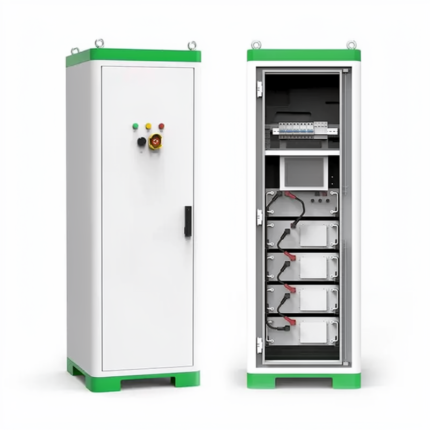
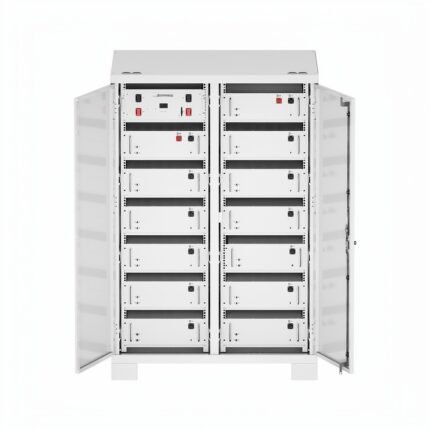
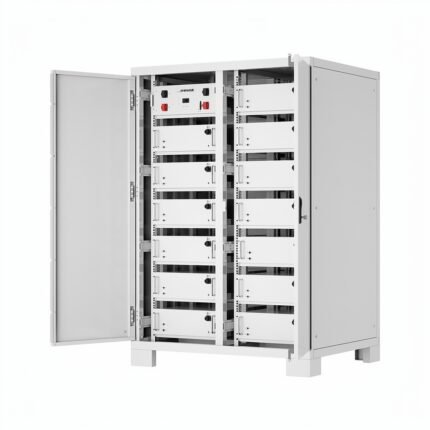
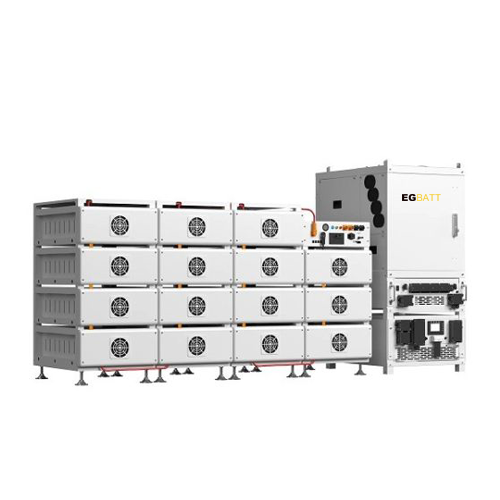
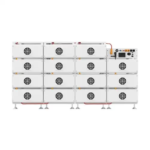
This Deye ESS 125KW/215KWH system integrates a full set of high-performance components into one solution. It includes 215kWh per cluster of high-voltage battery storage, a 125kW DEYE PCS (Power Conversion System), and a 200kW MPPT solar charge controller. As a complete 125KW DEYE PCS 215KWH C&I ESS solution, it ensures efficient energy conversion, optimized solar utilization, and seamless system operation under different load conditions.
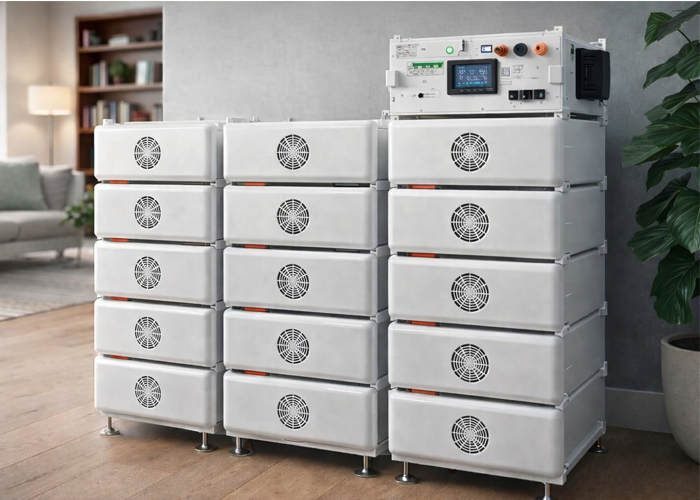
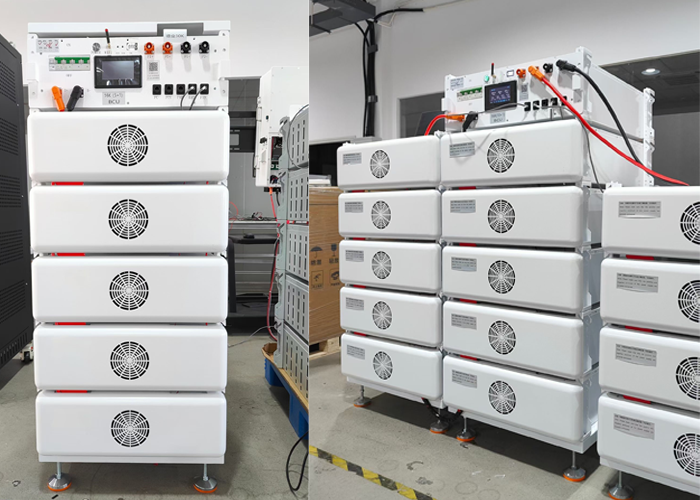
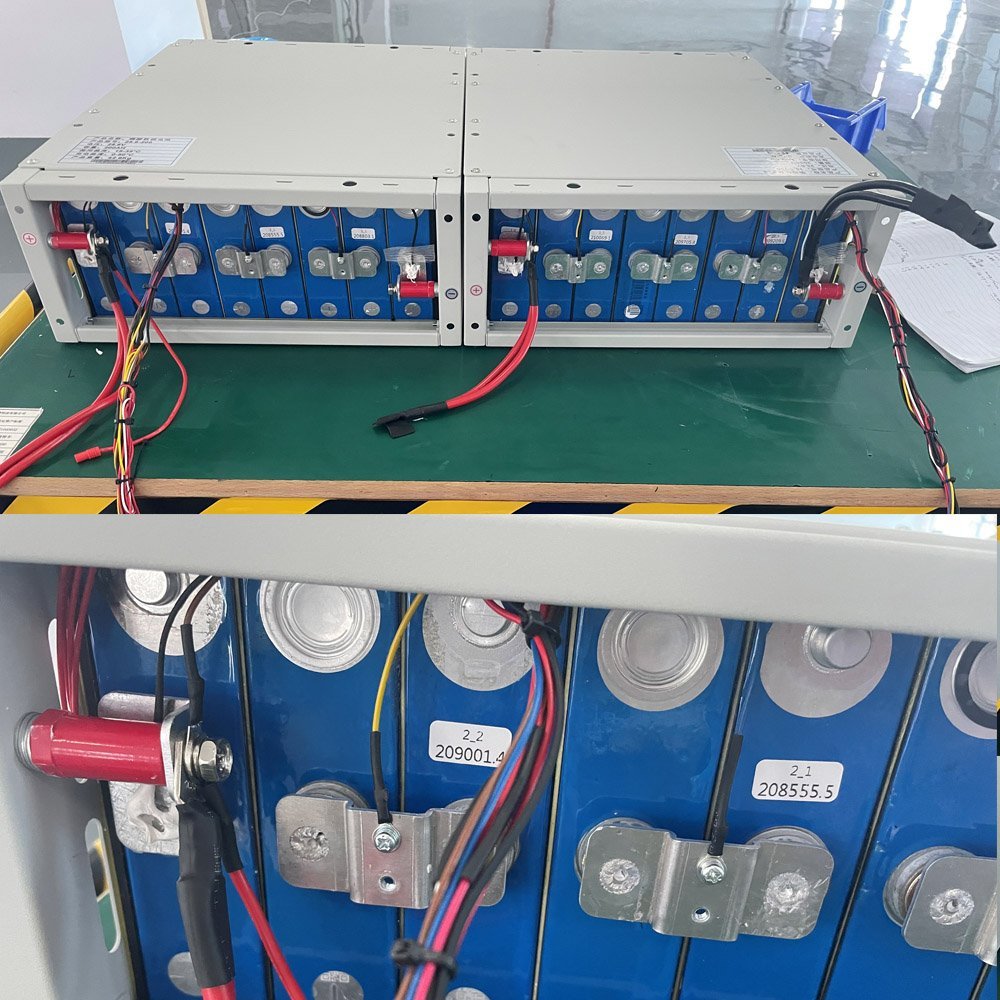
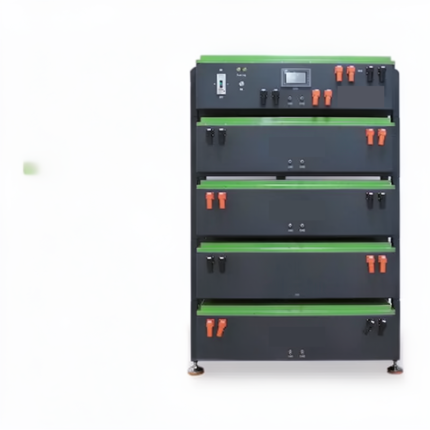
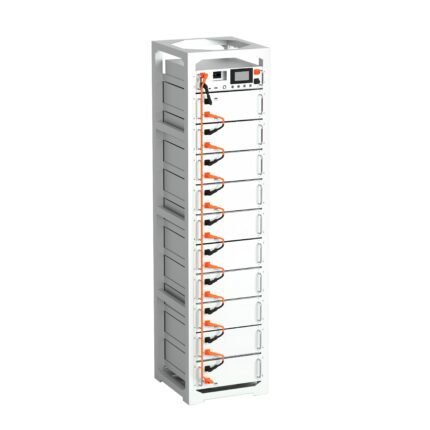
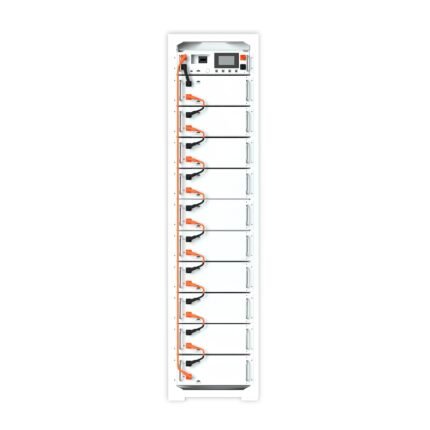
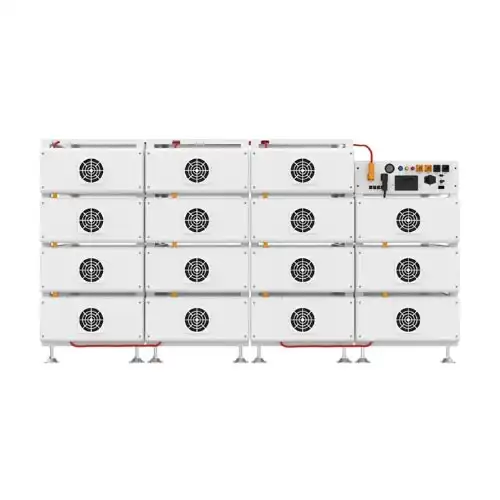
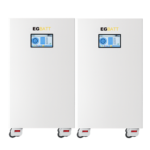
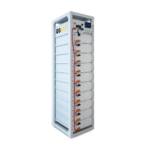
At its core, the 215kWh system is built using 15 stacked 51.2V modules, each configured with 16S 3.2V 280Ah LiFePO4 cells, forming a 768V high-voltage architecture. Each module is a 51.2V 280Ah HV lithium battery, and this high-voltage design significantly reduces current, improves overall system efficiency, and enhances stability, ensuring reliable power delivery for industrial-scale applications.
Key Features
| Feature | Benefit |
|---|---|
| Independent BMS | Prevents battery imbalance, optimizes charge distribution, and extends system lifespan. |
| 768V High Voltage | Lower current means less energy loss, smaller cables, and lower installation cost. |
| 215kWh Capacity (193kWh usable) | Powers factory operations for 6–12 hours continuously on a single charge. |
| Advanced BMS Protection | Real-time safety against over-charge, over-discharge, short circuits, and overheating. |
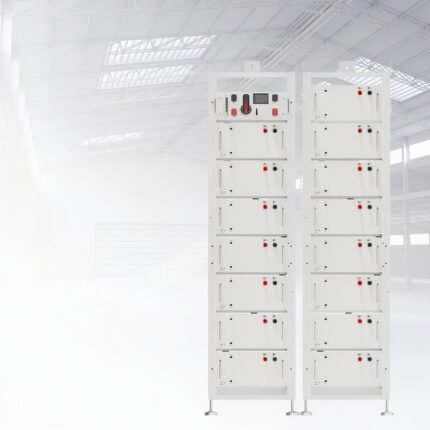
| Modular & Scalable Design | Start with 215kWh and scale up to 3.44MWh by connecting up to 16 units. Forklift-compatible modules simplify deployment. |
| Tier-1 Grade A LiFePO4 Cells | 8000+ cycles, high thermal stability, no thermal runaway risk – backed by 10-year warranty. |
| International Certifications | Compliant with IEC62619, UN38.3, CE – meets global industrial safety and transport standards. |
| CAN / RS485 / TCP Communication | Seamless integration with DEYE inverters, SCADA, and remote monitoring platforms. |
How Much Battery Capacity Does a Factory Need?
Choosing the right battery capacity depends on real usage, not estimates.
Step 1: Calculate Daily Consumption
Energy (kWh) = Load (kW) × Hours
Example: 100kW × 8 hours = 800 kWh/day
Step 2: Define Backup Strategy
• Critical loads only – Battery requirement: 20%–40% of daily consumption
• Partial backup – Battery requirement: 50%–80% of daily consumption
• Full off-grid – Battery requirement: 100% or more of daily consumption
Step 3: Match System
• Daily usage 100–200 kWh → Recommended: 1 × system (215kWh)
• Daily usage 300–600 kWh → Recommended: 1–2 × systems (215–430kWh)
• Daily usage 600kWh+ → Recommended: Multiple systems
Example
A factory using 100kW for 8 hours:
Needs ~800kWh/day
Solution: 2–4 × 215kWh systems (total 430–860kWh)
How to Run a Factory Off-Grid
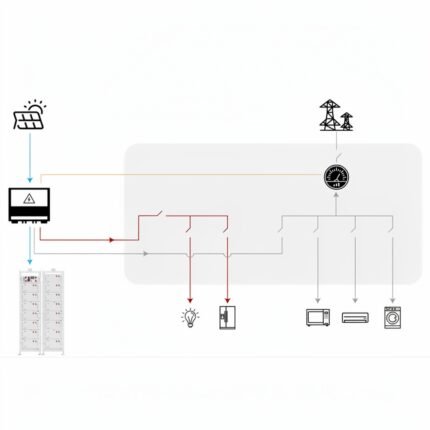
To operate a factory without grid dependence, you need:
• Solar generation
• Battery storage
• Inverter system
With this system, you can:
• Run operations for 6–12 hours continuously
• Support heavy startup loads
• Maintain stable voltage for industrial equipment
• Reduce reliance on diesel generators and lower operating costs
• Improve power stability and minimize production downtime
• Enable peak load management and better energy utilization
• Support scalable expansion as factory demand grows
• Ensure more predictable and stable long-term energy supply
Load test ready: The 125,000W inverter supports full-load startup and field load testing – a true 125kW hybrid inverter load test Deye capability.
Technical Specifications
| Model | DEYE 215kWh Battery System |
| System | Deye ESS 125KW/215KWH (125KW DEYE PCS 215KWH C&I ESS Solution) |
| Battery Type | LiFePO4 (Lithium Iron Phosphate) |
| Nominal Capacity | 215kWh per cluster |
| Nominal Voltage | 768V |
| Usable Capacity | ~193kWh |
| Cycle Life | ≥8000 cycles |
| Max Charge Current | 140A |
| Max Discharge Current | 168A |
| Communication | CAN / RS485 / TCP |
| Dimensions | 2150 × 1136 × 800 mm |
| Total Weight | ~1944 kg |
| Module Weight | ~130 kg (≈ 286 lb) each – forklift-compatible |
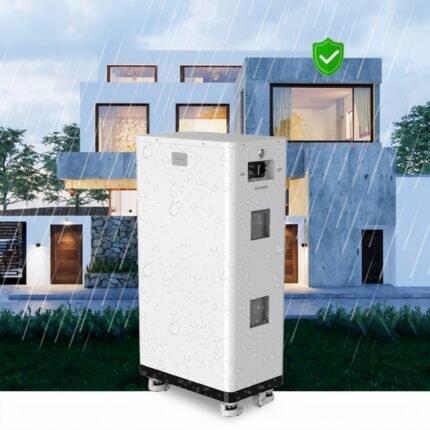
| Protection | IP20 (indoor installation recommended) |
| Warranty | 10 Years |
Applications
Factory off-grid systems
Warehouse energy storage
Industrial ESS
Solar farms
EV charging stations
Agricultural energy systems
ROI Analysis: Switching to battery storage allows you to:
- Reduce electricity costs by 30–70%
- Eliminate diesel fuel expenses
- Achieve ROI within 3–5 years
- After ROI, energy cost becomes significantly lower and more predictable
Installation & Compatibility
This system comes as a complete, pre-integrated solution with a built-in 125kW DEYE PCS (inverter) and 200kW MPPT solar charge controller. No external inverter is required for standard off-grid or hybrid operation.
Communication & Expansion:
• Supports CAN / RS485 / TCP for monitoring and system integration
• Allows parallel connection of up to 16 units (expandable to 3.44MWh)
• Compatible with external Deye devices (e.g., additional solar charge controllers or battery clusters) for further scaling
Installation Requirements:
• Indoor industrial rack mounting (forklift-compatible modules)
• 768V high-voltage bus – must be installed by certified electricians
• Detailed manual and wiring diagrams provided
How to build a 215kWh LiFePO4 battery forklift-compatible system: Each module is designed for easy handling with a forklift, allowing safe stacking and deployment.
High-voltage safety (768V): Installation must be performed by certified electricians using arc blast mask, 20kV-rated insulated gloves, and proper PPE. This is not a DIY system.
FAQ
We provide a full 10-year manufacturer warranty covering battery performance and system reliability.
Yes. When combined with a 200kW solar input, this system can function as the primary power source for factories.
Up to 16 units, scaling from 215kWh to 3.44MWh
Yes – designed for manufacturing plants, warehouses, and agricultural operations.
Modular stacked design, each module forklift-compatible. Includes rack mounting, electrical connections, and CAN/RS485 setup
BMS with overcharge, over-discharge, overcurrent, temperature monitoring. For installers: arc blast mask and 20kV insulated gloves required.
The 768V design cuts current by a factor of 16 compared to a 48V system at the same 125kW power. Lower current means smaller, cheaper cables; 2–3% higher system efficiency; reduced heat; and no need for complex parallel balancing. This is why all serious industrial ESS systems operate at 600V+ – 768V is the sweet spot for safety, efficiency, and cost.
Send Inquiry
Product & Packaging Details
Q: Do batteries include protection circuits(BMS) and connectors?
A:Protection: We supply batteries with BMS built in Protection Circuit Modules (PCM).
Connectors: We normally use standard like anderson,M8 lugs,Fast plugs or depends on OEM customer's demends.
Q: Are batteries Grade-A and brand new?
A: Yes, we use 100% brand new, Grade-A cells in all our batteries.
Q: Can you print our logo on the batteries?
A: Yes, we offer free custom logo printing with a minimal MOQ requirement.
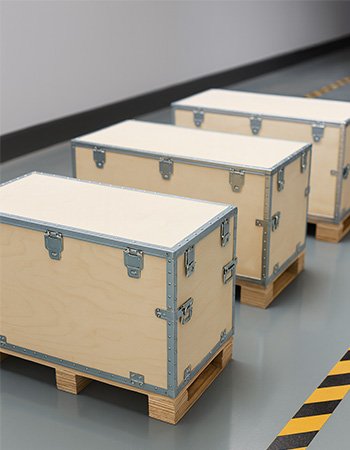
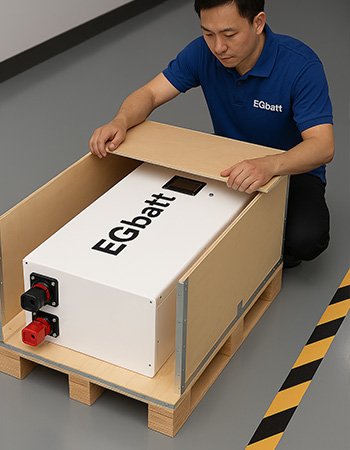
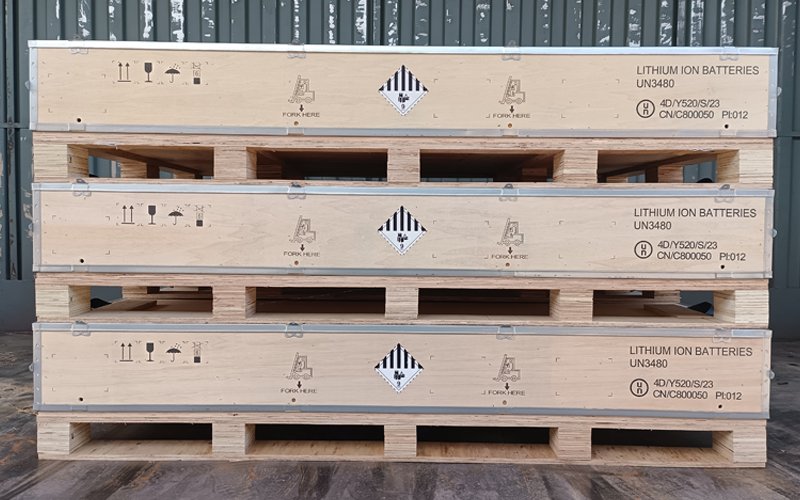
Q: What is your standard packaging? Can it be customized?
A: Our standard is a white box per battery. We fully support customized packaging, including carton box and logo design.
Yes. EGbatt is a manufacturer located in Shenzhen, Guangdong, China. It designs and produces LiFePO4 battery packs for energy storage, electric forklifts, marine applications, golf carts, RVs, and UPS systems.
Based on automated production technology, the current product lead time is 15-25 days.
The company has strategic cooperation agreements with top manufacturers like EVE and REPT, and insists on using A+ tier One lithium iron phosphate cells for its solar batteries.
For 48V inverters, compatible brands include Victron Energy, Goodwe, Studer, Solis, LuxPower, and others. For high-voltage three-phase inverters, compatible brands include Atess, Solinteg, SAJ, Goodwe, and Solis.
EGbatt offers dealer customers a 10-year warranty and technical service for its energy storage battery products.
DoD describes how much of the battery's capacity has been used. A DoD of 100% means the battery is completely empty, while 0% means it is full.
SoC reflects the battery's charge level. A SoC of 100% means the battery is full, and 0% means it is empty.
C-rate, or power factor, indicates how quickly a battery can be charged or discharged relative to its capacity. A rating of 1C means the battery can be fully charged or discharged in one hour.
The battery uses Lithium Iron Phosphate chemistry and provides a cycle life of over 6,000 cycles at 90% Depth of Discharge, and over 10 years at one cycle per day.
kW (kilowatt) is a unit of power, measuring the rate of energy production or consumption. kWh (kilowatt-hour) is a unit of energy, measuring the total amount of work done or energy used over time.
EGbatt home batteries are suitable for both indoor and outdoor installation (depending on the model's protection level) and offer floor-standing or wall-mounted options. Common locations include garages, attics, or under eaves.
This depends on the load. As a realistic example, a 10kWh battery could run ten 100-watt light bulbs for 12 hours without recharging.
The number varies based on home size, energy consumption history, and personal goals (like which devices to run during an outage). For most systems, 2 or 3 batteries are installed. A detailed discussion of your needs is recommended for an accurate assessment.
Yes, it is possible, but it requires careful planning and significant investment. A true off-grid system needs a large enough solar array and sufficient battery storage to sustain your lifestyle. Cost and having an alternative energy source for when solar charging isn't possible are key considerations.
No. EGbatt focuses on building long-term relationships with business partners like battery distributors, solar equipment dealers, and installation contractors worldwide, not direct sales to end consumers.
EGBATT Battery Compatibility with Inverters
Perfect Matching with Mainstream Hybrid and On-grid Inverters
EGBATT lithium battery systems are tested for seamless compatibility with a wide range of inverter brands across global markets. Whether for residential, commercial, or utility-scale applications, our batteries support multiple communication protocols (CAN/RS485) and work with both low-voltage (40–60V) and high-voltage (100–1500V) inverter platforms.
- Low-Voltage System Compatibility (40–60V)
Low-voltage systems typically operate in the 48V-60V range and are widely used in home off/grid-connected solar systems. EGBATT lithium batteries offer seamless compatibility with a wide range of leading inverter brands in this range, including:
Deye, Growatt, GoodWe, ZZPower, Solis, Sinexcel, SRNE, Schneider Electric, Megarevo, AISWEI, SMA, Luxpower, Victron Energy, Afore, Hoymiles, INVT, Sofar, OutBack Power, SolaX Power, tbbpower, Sacolar, Sunsynk, Sosen, SMD Solar, Must, SOROTEC, Sunman, Voltronic Power, SAJ, and more. - High-Voltage System Compatibility (100–1500V)
High-voltage energy storage systems generally operate in the voltage range of 150V-1000V and are adapted to high-power inverters for commercial and industrial energy storage systems (80kWh-200kWh and above). EGBATT high-voltage lithium battery systems are fully compatible with leading inverter brands within this range, including:
Sol-Ark, INVT, Sinexcel, Luxpower, SClinTeg, Shanghai Nenergy, Deye, Growatt, Xina Electric, Hoymiles, Sunsynk, Hopewind, Solis, SOSEN, Megarevo, EcoCod, GoodWe, Sunways, Jingshi Technology, Kehua Tech, AISWEI, KOYOE, Sermatec, Afore, and more.
We offer integration support and testing for most mainstream hybrid and on-grid inverters. Contact EGBATT for compatibility details and custom solutions.
Related products
105kW/232kWh Liquid Cooling outdoor ESS | Factory Peak Shaving
125kW/261kWh Liquid-Cooled Integrated Energy Storage Cabinet
- All-in-one plug-and-play design with factory-integrated PCS, BMS, EMS, and liquid cooling system
- 125KW+261KWh BESS delivering 125 kW power and 261 kWh energy in a single compact cabinet
- Advanced liquid cooling for optimal performance from -30°C to 60°C
- Premium EVE LFP cells with 832V high-voltage architecture and ≥6000 cycles
- Multi-layer hybrid fire suppression using Novec 1230
- IP54 outdoor-rated with surge protection, dehumidifier, and water-leak sensor
50kW/104kWh All-in-One Liquid-Cooled BESS | C&I Energy Storage with PCS
High-Capacity 200kW 372kWh Liquid-Cooled BESS | Industrial Battery Storage System
- Single-Cabinet Powerhouse: 372.7kWh usable energy + 200kW continuous output in a compact 1.4m × 1.4m footprint — delivering extreme energy density of 0.106 kWh/kg.
- Advanced Thermal Stability: 2nd-gen liquid cooling maintains cell temperature variance <3°C, extending system life by over 20% compared to air-cooled systems (industry-validated data).
- Utility-Scale Scalability: Modular "building block" architecture — parallel up to 15 units to create 5.5MWh+ energy hubs.
- Maximum Safety Integrity: Triple-tier fire suppression using Perfluorohexone (FK-5-1-12) ensures total site protection in industrial zones.