522kWh Mobile EV Charging Robot | 360kW Remote-Controlled Off-Grid DC Fast Charger for Construction, Mining & Fleet
CMX U9-6 mobile EV charging robot delivers 360kW off-grid DC fast charging from a 522.4kWh liquid-cooled LiFePO4 bank through dual CCS2 guns. Remote-controlled, wheeled/tracked/towable. Factory-direct OEM/ODM.
Overview
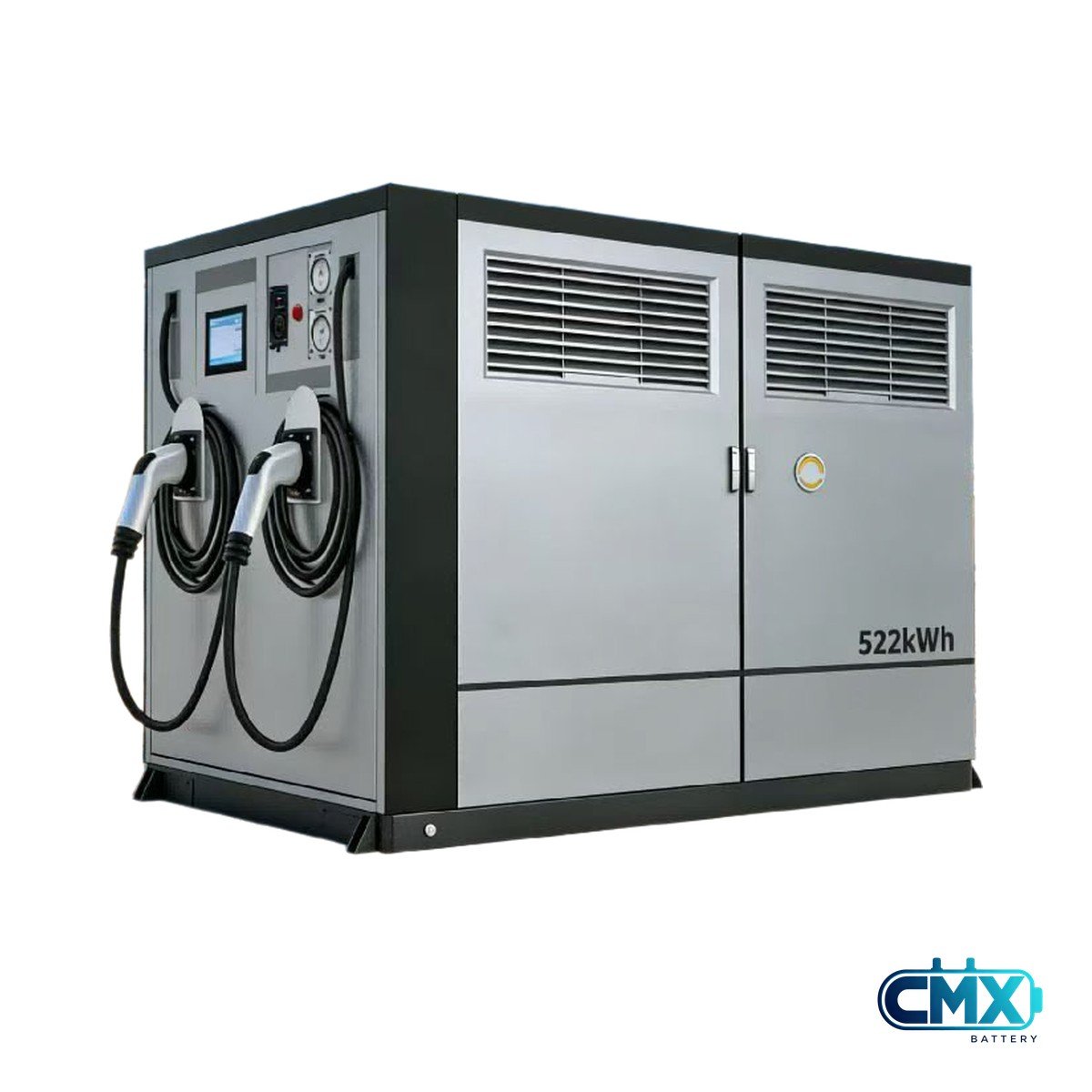
The CMX U9-6 is a 522.4 kWh mobile EV charging robot built for sites that will never get a grid connection. It pairs a liquid-cooled LiFePO4 battery bank with a 360 kW DC output stage and dual European-standard charging guns on a self-propelled platform, so DC fast charging can be delivered wherever vehicles actually park — a tunnel heading, a mine bench, a festival backstage — instead of where a transformer happens to exist.
Because the energy storage and the charger sit on the same chassis, there is no trenching, no civil works and no transformer upgrade. The unit is recharged from a 380 V three-phase supply or a DC busbar, then driven or towed to the point of use. It operates by remote control or mobile Bluetooth, which keeps the operator out of the weather and away from live charging equipment. Most operators go from first enquiry to a working unit on site in a matter of weeks rather than the months a fixed charger installation would take.
At a Glance
- 522.4 kWh LiFePO4 energy storage on board — no grid connection required
- 360 kW DC output, 200–1000 Vdc, compatible with 400 V and 800 V EV platforms
- Dual CCS2 guns with 5 m low-temperature flexible cables
- Liquid-cooled battery and power electronics for continuous high-power duty
- ≥8,000 cycles and a 5-year service life at ≤20% capacity degradation
- Remote control and mobile Bluetooth operation; manual cable winding
- Three mobility platforms — wheeled, tracked, or towable trailer
- Factory-direct from a LiFePO4 cell and BMS manufacturer, with OEM/ODM and private-label options
Key Specifications
| Model | CMX U9-6 (remote control version) |
| Battery chemistry | Lithium iron phosphate (LiFePO4) |
| Battery capacity | 522.4 kWh |
| Output power | DC 360 kW |
| Output voltage | DC 200–1000 Vdc |
| Charging port | European standard (Type 2 / CCS2); other standards on request |
| Charging cable | 5 m low-temperature resistant cable, rated −20 °C to +50 °C |
| Cooling method | Liquid cooled |
| Cycle life | ≥8,000 cycles |
| Service life | 5 years (capacity degradation ≤20%) |
| Recharge time | Approx. 3 hours to full charge |
| Input | 380 V three-phase AC grid / DC busbar access; supports up to 360 kW DC output depending on grid configuration |
| Operation | Remote control / mobile Bluetooth control; manual cable winding |
| Dimensions (L×W×H) | 2770 × 1200 × 2300 mm |
| Vehicle weight | ≈5,500 kg |
Specifications are subject to continuous product improvement. Download the current U9-6 datasheet (PDF) before specifying a project.
360 kW DC Fast Charging Without a Grid Connection
The output stage delivers up to 360 kW at 200–1000 Vdc, which covers both 400 V passenger and light commercial EV platforms and 800 V heavy-duty platforms. Two CCS2 guns let a single unit serve two vehicles in sequence or split the load across a shift change, and the 5 m low-temperature cables stay flexible down to −20 °C, where standard charging cables become stiff and difficult to handle.
For heavy equipment, the U9-6 behaves as a conventional DC fast charger from the vehicle’s point of view — same handshake, same power negotiation, same safety monitoring. The difference is where it can be deployed. On a highway or railway project, the same unit that fast-charges an electric excavator during a shift can also supply temporary power to site offices and accommodation, replacing the diesel generator that would otherwise run all day.
Three Mobility Platforms: Wheeled, Tracked, or Towable
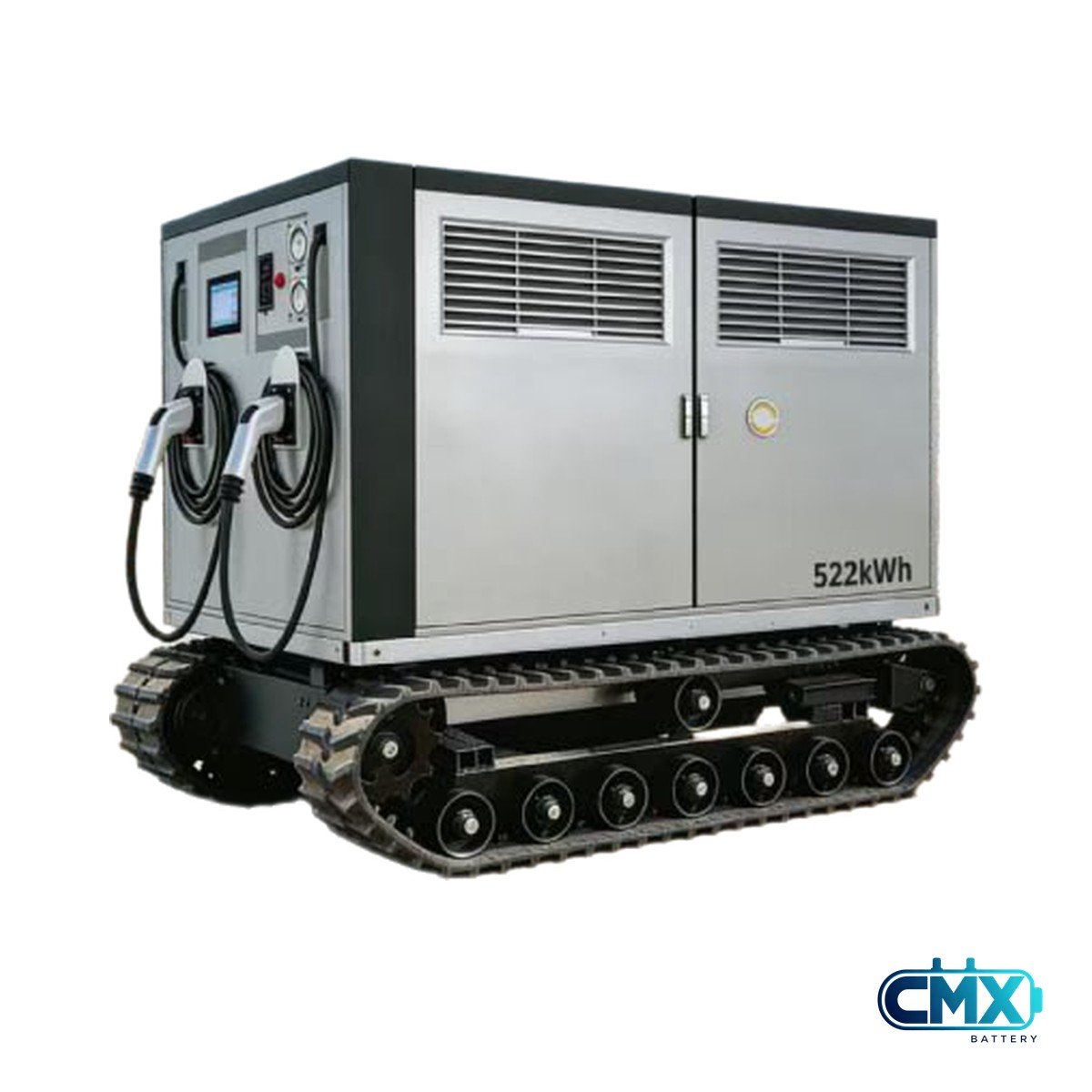
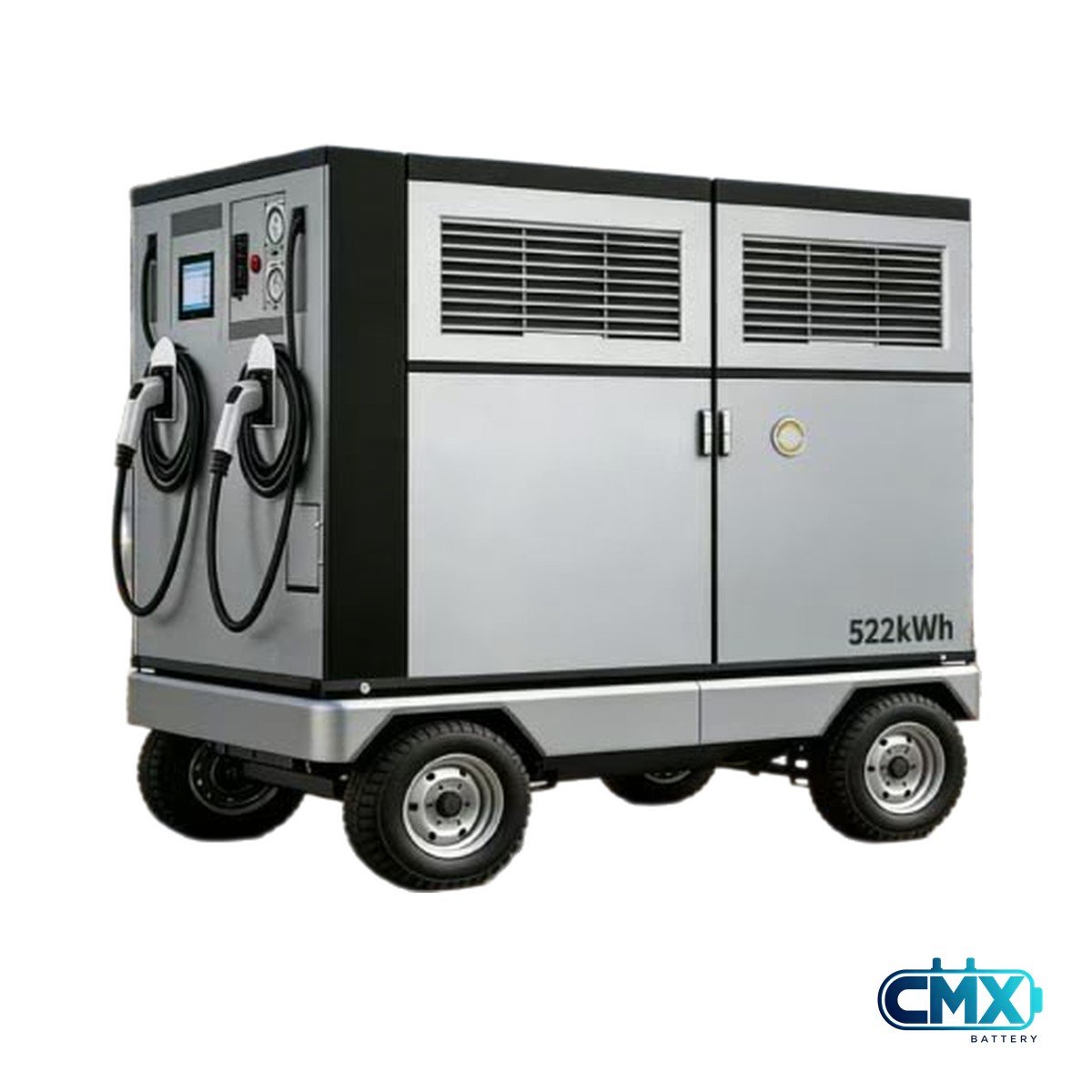
The energy storage and charging module is identical across the range; the chassis is selected to match the terrain.
- Wheeled — for compacted ground, paved yards, depots, event sites and vehicle compounds.
- Tracked — for sand, mud, spoil heaps and unconsolidated ground where wheels bog down; the crawler chassis spreads load and keeps the unit mobile on active earthworks.
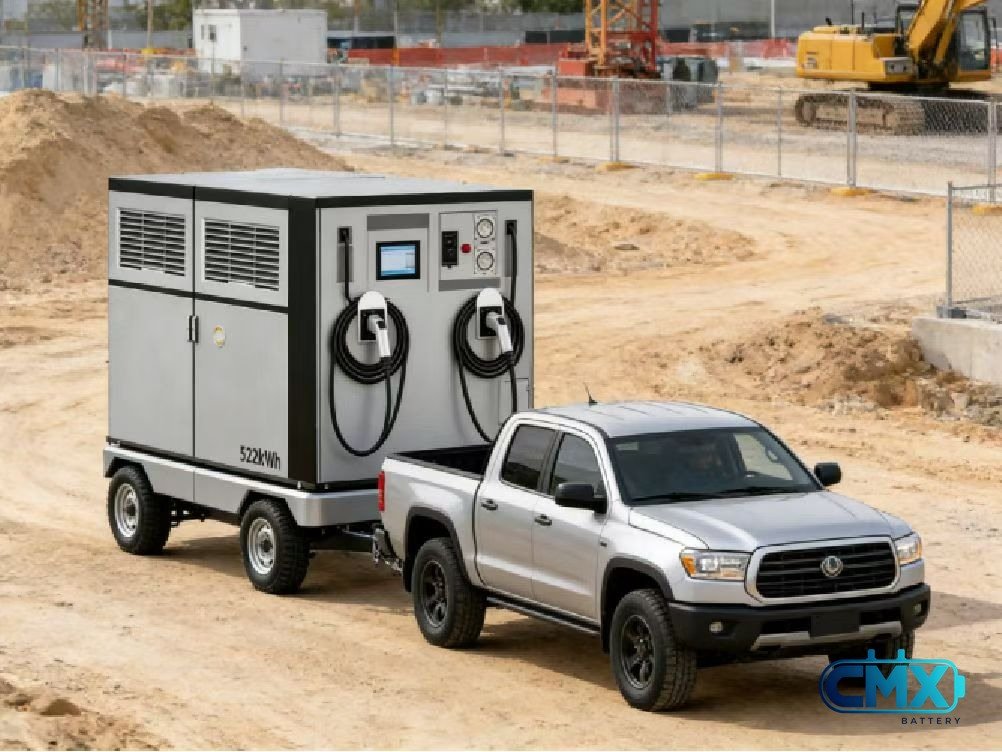
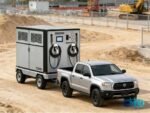
- Towable trailer — for road transport between sites behind a standard pickup or light truck, so one unit can cover a wide service area instead of being tied to one location.
All variants are driven or positioned by remote control, which means the operator can align the charging guns from outside the footprint of the machine rather than climbing around it.
Liquid-Cooled LiFePO4 Storage
A 522.4 kWh LiFePO4 pack sits behind the charging interface, cooled by liquid rather than air. Liquid cooling holds cell temperatures in a tighter band during repeated high-power charging, which is what allows a rated cycle life of ≥8,000 cycles and a 5-year service life at ≤20% capacity degradation to be a realistic expectation rather than a laboratory figure.
LiFePO4 chemistry also means the pack is thermally stable under fault conditions — the reason it has become the default choice for mobile energy systems deployed close to people and working machinery. See how LiFePO4 compares with lead-acid for mobile power.
Remote Control and Bluetooth Operation
The U9-6 is a remote control version: movement and positioning are handled from a handheld controller or a mobile device over Bluetooth, keeping the operator clear of the equipment during docking. Cable winding is manual, which removes the failure modes that come with motorised reels in dusty and wet environments.
Deploy in Weeks, Not Months
A fixed DC fast charger means permits, trenching, a pad-mounted transformer and a utility service upgrade — typically months of lead time before the first vehicle is charged. The U9-6 removes that sequence. The path from enquiry to a working unit on site is three steps:
- Define. Tell us the vehicles, target connector, daily energy demand, available site input (380 V three-phase or DC busbar) and your deadline.
- Configure and factory-accept. Our engineers confirm the configuration, build the unit, and run factory acceptance tests covering electrical, charging, communication and safety functions before it ships.
- Deliver and support. We handle shipping, remote commissioning, operator training and lifecycle support, so the unit is earning uptime from day one on site.
Because there is no civil works and no grid upgrade, the same unit can be relocated as the project moves — a mine face, a new construction zone, the next event — instead of being poured into one location.
Mobile Charging vs Fixed Infrastructure
The U9-6 is not a replacement for every fixed charger; it is the right tool for the situations where fixed infrastructure is slow, expensive or impossible.
- Choose the U9-6 mobile robot when the grid is absent or unreliable, the work front moves (mining benches, rotating construction zones), the need is temporary (events, emergency coverage, peak-season demand), or a fleet runs a relay-charging pattern where vehicles swap in and out of a bay mid-shift.
- Choose fixed infrastructure when you have a permanent, high-throughput depot with available grid capacity and always-on demand at a known location.
- They complement each other. Many operators run the U9-6 as primary charging for relay fleets and as backup for fixed chargers during outages — the same energy reserve that fast-charges a vehicle can also power site offices and accommodation.
Built to International Safety Standards
The U9-6 is built on CMX’s own LiFePO4 cells and packs, manufactured in our Dongguan plant to meet UL 1973, IEC 62619, UN 38.3 and CE/RoHS requirements. Liquid cooling, an automotive-grade BMS and a fire-safe enclosure are standard. As a manufacturer with 9+ years in lithium energy storage and in-house cell, module, BMS and system integration, we supply factory-direct with OEM/ODM and private-label options — including connector type, cable length, capacity, output power and chassis configuration. View our certifications.
Applications
1. Outdoor Engineering and Construction
Highway construction, railway works, tunnel excavation and mining operations all sit far from a usable grid connection. The U9-6 fast-charges electric excavators, wheel loaders and heavy-duty trucks on site, and supplies temporary power for offices and living quarters — zero emissions and low noise instead of a diesel generator running around the clock.
2. Geological Exploration and Field Operations
Oil and gas exploration, geological survey, forest inventories and scientific research stations depend on equipment that cannot stop. The U9-6 provides stable power for drilling rigs, geophysical instruments and field laboratories, backs up campsite supply, and charges drones and survey equipment on site so working hours are no longer limited by battery capacity.
3. Large Events and Outdoor Exhibitions
Music festivals, open-air concerts, outdoor film festivals, auto shows and product launches need clean, silent power. The U9-6 feeds stage lighting, sound systems, LED screens and special effects without generator noise intruding on the performance, doubles as mobile backup power to keep the show running through a supply fault, and relocates to the next venue as soon as the event closes.
4. Ports, Marine and Emergency Response
Quaysides, marinas and disaster-recovery sites need power where the grid is constrained or down. The U9-6 brings quiet, zero-emission DC fast charging and temporary site power to vessels, yard equipment and emergency fleets without waiting for permanent infrastructure.
Why CMX Battery
CMX Battery is a LiFePO4 battery manufacturer and OEM/ODM partner with 9+ years in lithium energy storage. We build the cells, modules, BMS and system integration in-house, which means the storage system and the charging interface on the U9-6 are engineered together rather than assembled from third-party parts. Units are supplied factory-direct, in wholesale and bulk quantities, with private-label and specification customisation available — including charging standard, capacity, output power and chassis configuration. Explore our OEM/ODM process.
FAQ
What is a mobile EV charging robot?
It is a self-propelled energy storage system with a DC fast charging interface built into the same chassis. Instead of a vehicle travelling to a fixed charger, the charger is moved to the vehicle. Because the energy comes from an on-board battery rather than the grid, it needs no trenching, transformer or civil works to be deployed.
How many vehicles can the U9-6 charge on one full battery?
With 522.4 kWh on board, a single U9-6 can deliver, for example, roughly six to eight DC fast-charge sessions to 60–80 kWh delivery vans, or two to three opportunistic top-ups to a 150–200 kWh electric excavator, between recharges. Exact throughput depends on the receiving vehicle’s battery size, its state of charge and the ambient temperature. Share your fleet profile and we will calculate the expected daily throughput for your site.
Can it charge 800 V vehicles?
Yes. The output range is 200–1000 Vdc, which covers 400 V and 800 V platforms, including heavy trucks, buses and construction machinery.
How is the U9-6 recharged?
From a 380 V three-phase AC supply or a DC busbar. A full recharge takes approximately 3 hours.
What is the difference between the wheeled, tracked and towable versions?
Only the chassis changes. The storage capacity, output power and charging interface are the same, so the choice comes down to ground conditions and how the unit will be moved between sites.
Can charging standards be changed for our market?
Yes. The U9-6 ships with European-standard Type 2 / CCS2 guns, and connector type, cable length, capacity, output power and chassis configuration can all be customised. Tell us the target market and vehicle mix and we will confirm the configuration.
How long does deployment take and what is the lead time?
Because there is no civil works or grid upgrade, deployment on site is a matter of positioning and commissioning rather than construction. Standard-configuration lead time is 35–45 days; custom configurations are confirmed during engineering review. Speak to us about your deadline and we will propose a timeline.
Is the U9-6 built for outdoor and industrial sites?
Yes. The unit is engineered for outdoor and industrial duty: liquid-cooled power electronics, a fire-safe enclosure and charging cables rated −20 °C to +50 °C. Tell us your site’s temperature, dust and moisture conditions and we will confirm the right configuration.
What certifications does the battery meet?
The LiFePO4 cells and packs are built to meet UL 1973, IEC 62619, UN 38.3 and CE/RoHS requirements. Request the current certification files when you request a datasheet.
What is the warranty and service life?
The pack is rated for a 5-year service life at ≤20% capacity degradation and ≥8,000 cycles. Warranty terms are confirmed per order and volume agreement.
Do you offer OEM, ODM and private-label?
Yes. As a cell and BMS manufacturer we supply factory-direct with OEM/ODM and private-label options, including branding, colour, connector and system configuration for your market.
What are the payment terms?
We accept payment by bank transfer (T/T) and Western Union. The exact payment schedule is stated in your quotation.
Which Incoterms do you support?
We quote EXW, FOB and FCA. The applicable term and named place are confirmed in your quotation, and our logistics team handles export documentation for you.
What is the minimum order quantity for the U9-6?
Single units are accepted — there is no fixed minimum order quantity for this model. Fleet and volume pricing tiers are available, and your quotation will show unit pricing at each quantity.
What documentation do you provide for international shipping?
The U9-6 ships as lithium battery equipment by sea. We prepare the dangerous-goods documentation required for that — including the UN 38.3 test summary and MSDS — together with the commercial invoice and packing list, so the unit clears customs without surprises.
Related Models
- 1000kWh Mobile BESS EV Charging Station — larger-capacity mobile storage for emergency power and heavy-duty vehicle fast charging.
- Dual-Gun Mobile Energy Storage EV Charging Station — compact dual-gun mobile charging for fleets and high-traffic sites.
- 300kW Heavy-Duty DC Fast Charger — fixed-installation fast charging for bus and truck fleets.
- 125kW / 261kWh Liquid-Cooled Integrated ESS Cabinet — stationary commercial and industrial storage for peak shaving and load shifting.
Compare CMX Mobile Charging Models
The U9-6 sits within CMX’s range of off-grid mobile charging units. The table below compares it with its siblings on the four numbers buyers use to shortlist. All four models run on LiFePO4 cells made in-house and can be configured to your market’s charging standard.
| Model | Energy capacity | DC output power | Cycle life | Charging standard |
|---|---|---|---|---|
| CMX U9-6 Mobile EV Charging Robot (this page) | 522.4 kWh | 360 kW | ≥8,000 cycles | Type 2 / CCS2 European standard; others on request |
| 416kWh Mobile EV Charging Station | 416 kWh | 240 kW | 6,000+ cycles @ 80% DoD | CCS1, CCS2, GB/T |
| Dual-Gun Mobile Energy Storage Charging Station | 200 kWh | 120 kW dual-gun | 6,000+ cycles @ 80% DoD | CCS1, CCS2, GB/T, CHAdeMO |
| 1000kWh Mobile BESS EV Charging Station | 1000 kWh | 480 kW | 6,000+ cycles @ 80% DoD | Confirmed per configuration |
The U9-6 is the only self-propelled unit in the range: it is driven to the vehicle by remote control or mobile Bluetooth instead of being towed into position, which is what makes it usable on ground that has never been built for vehicles — a tunnel heading, a mine bench or a festival backstage.
Charging Solutions by Scenario
The U9-6 is one configuration in CMX’s wider off-grid and mobile charging range. Depending on your site, vehicle mix and duty cycle, you may also need:
- A portable DC fast charger for fleets, passenger EVs and temporary depots
- Off-grid EV charging for construction sites, mines and remote operations
- A mobile EV charging station scaled from 100 kWh to 1000 kWh
- Commercial and industrial battery energy storage (BESS) for peak shaving and load shifting
Ordering and Commercial Terms
| Lead time | 35–45 days for the standard configuration; custom configurations are confirmed during engineering review. |
| Payment terms | Bank transfer (T/T) and Western Union. The payment schedule is confirmed in your quotation. |
| Incoterms | EXW, FOB and FCA; the applicable term and named place are stated in your quotation. |
| Minimum order | Single units are accepted for the U9-6; fleet and volume pricing tiers are available. |
| Shipping documents | We prepare the documentation required to ship lithium battery equipment by sea — including the UN 38.3 test summary and MSDS — together with the commercial invoice and packing list. |
| Warranty | Confirmed per order and volume agreement. |
Request a Quote
Send us your site conditions, fleet mix and target charging standard. We will come back with the recommended U9-6 configuration, chassis type and delivery schedule, plus pricing for single units and fleet quantities. Contact our team or use the form below and we will respond with a configuration and quote.
| Battery Capacity |
522.4 kWh |
|---|---|
| Output Power |
360 kW DC |
| Battery Type |
LiFePO4 (Lithium Iron Phosphate) |
| Cooling |
Liquid cooled |
| Connector |
CCS2 / Type 2 (European standard) |
| Chassis |
Wheeled / Tracked / Towable |
Ordering the U9-6
Send us your site conditions, vehicle mix and target charging standard. We confirm the configuration, the quotation and the delivery schedule — single units and fleet quantities are both welcome.
Lead time
35–45 days for the standard configuration; custom configurations are confirmed during engineering review.
Payment terms
Bank transfer (T/T) and Western Union. The payment schedule is stated in your quotation.
Incoterms
EXW, FOB or FCA — the applicable term and named place are stated in your quotation.
Export documentation
We prepare the documentation required to ship the unit as lithium battery equipment by sea — including the UN 38.3 test summary and MSDS — together with the commercial invoice and packing list.
Warranty
Warranty terms are confirmed per order and volume agreement.
Related products
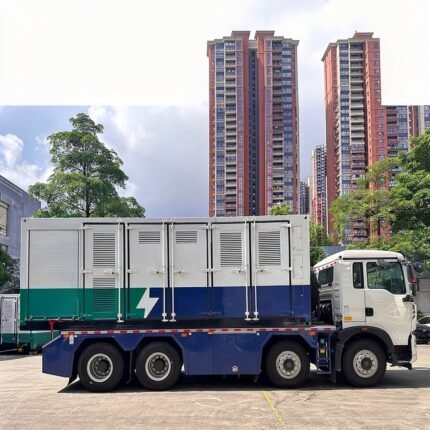
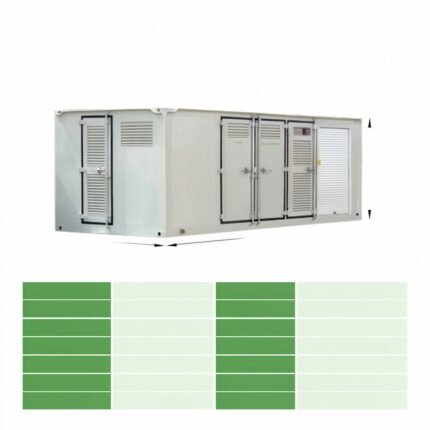
1000kWh Mobile BESS EV Charging Station for Emergency Power & Heavy-Duty Vehicle Fast Charging
CMX 1000kWh mobile BESS EV charging station — a 1 MWh LiFePO4 bank and a 480kW DC fast charger on a heavy-duty truck platform, for fleets with no grid connection. Factory-direct with OEM/ODM options.
- Performance: 480kW DC fast charging, 6,000+ cycles @ 80% DoD, Grade A automotive cells and smart BMS.
- Compliance: CE, RoHS, UN38.3 and IEC62619 (UL available); CAN / RS485 / RS232.
- Best for: Heavy-duty truck, bus and fleet charging; emergency, construction, mining, port and highway sites with no grid.
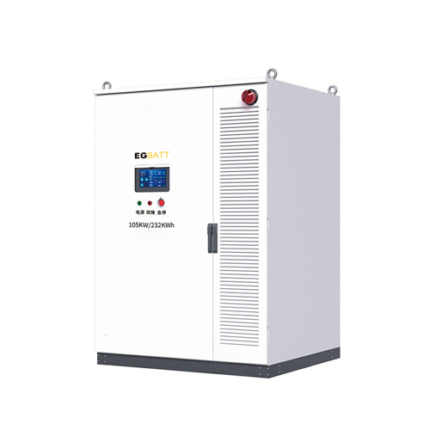
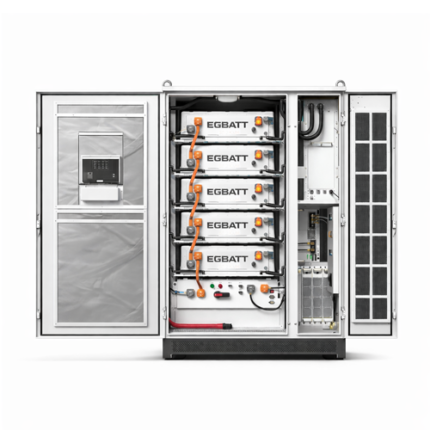
105kW/232kWh Liquid Cooling outdoor ESS | Factory Peak Shaving
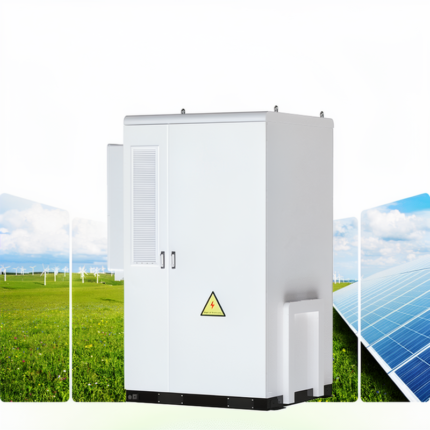
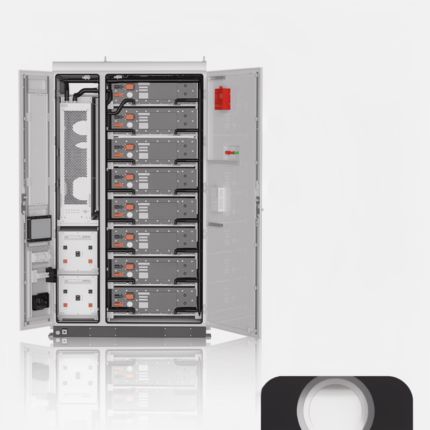
125kW 418kWh Liquid-Cooled BESS | Commercial Solar Battery Storage System Manufacturer
CMX Battery 418 kWh 125 kW commercial energy storage system — factory-direct from a LiFePO4 battery manufacturer and OEM/ODM partner, supplied wholesale and in bulk with private-label options.
- Performance: 6,000+ cycles @ 80% DoD with Grade A automotive cells and smart BMS protection; 5–10 year warranty.
- Compliance: Certified to CE, RoHS, UN38.3 and IEC62619 (UL available); CAN / RS485 / RS232 for inverter and EMS integration.
- Best for: Factory and commercial peak shaving; Microgrid and islanded sites; Solar + storage for warehouses.
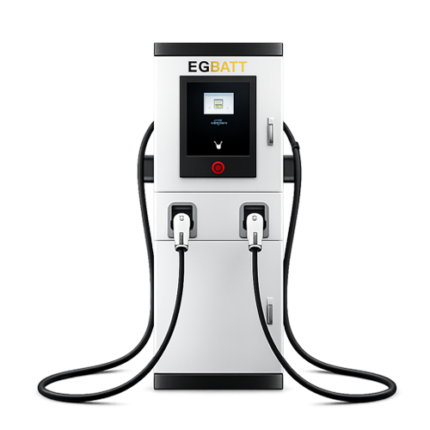
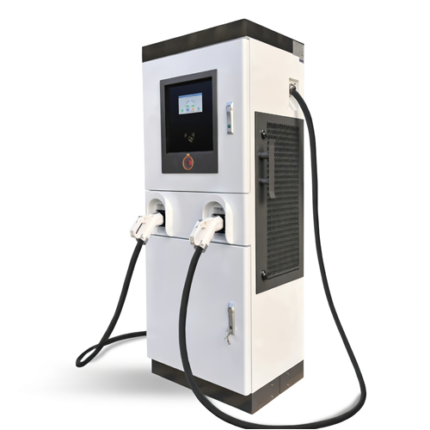
180kW DC Fast Charger | Scalable EV Charging Station for Commercial Fleets, Trucks & Buses
- Ultra-Fast Charging (Up to 180kW); Dual Charging for Higher Throughput
- Intelligent Power Distribution; Modular & Scalable Design
- Reliable Outdoor Performance; OCPP Compatible for Smart Management
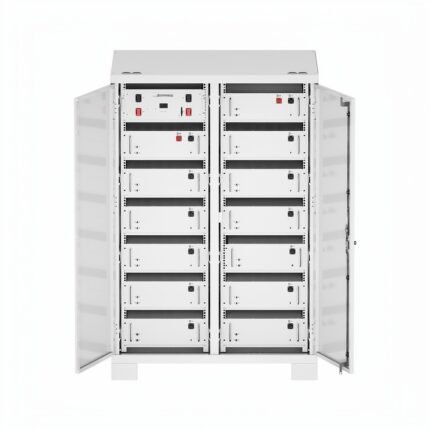
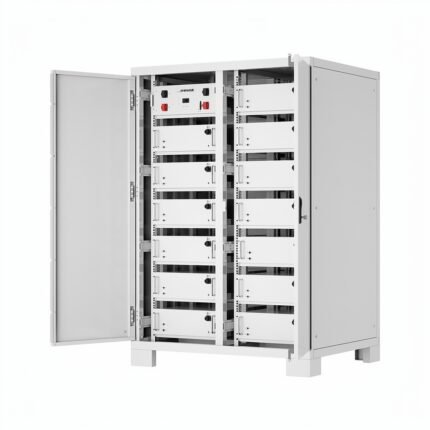
CMX Battery 716.8V High Voltage 140kWh Energy Management Commercial Power System Industrial Commercial Energy Storage
CMX Battery 716.8V 140 kWh commercial energy storage system — factory-direct from a LiFePO4 battery manufacturer and OEM/ODM partner, supplied wholesale and in bulk with private-label options.
- Performance: 6,000+ cycles @ 80% DoD with Grade A automotive cells and smart BMS protection; 5–10 year warranty.
- Compliance: Certified to CE, RoHS, UN38.3 and IEC62619 (UL available); CAN / RS485 / RS232 for inverter and EMS integration.
- Best for: Factory and commercial peak shaving; Microgrid and islanded sites; Solar + storage for warehouses.
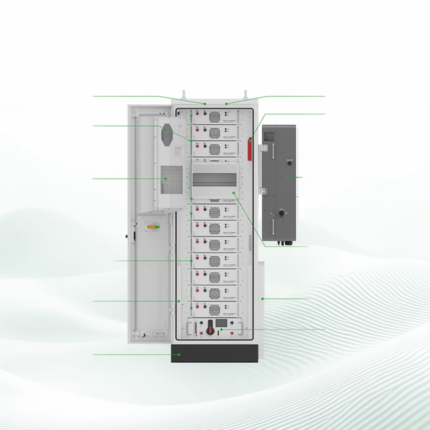
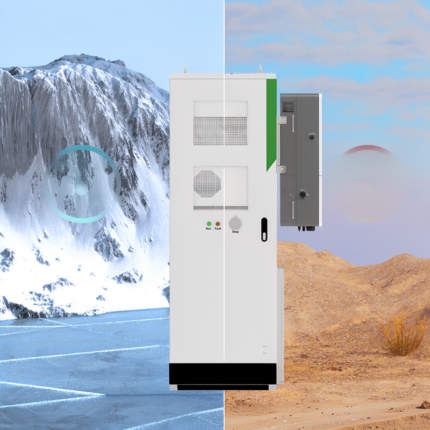
Commercial High Voltage Battery Storage | 20kWh – 60kWh Lithium Ion Energy System
CMX Battery 20 kWh commercial energy storage system — factory-direct from a LiFePO4 battery manufacturer and OEM/ODM partner, supplied wholesale and in bulk with private-label options.
- Performance: 6,000+ cycles @ 80% DoD with Grade A automotive cells and smart BMS protection; 5–10 year warranty.
- Compliance: Certified to CE, RoHS, UN38.3 and IEC62619 (UL available); CAN / RS485 / RS232 for inverter and EMS integration.
- Best for: Factory and commercial peak shaving; Microgrid and islanded sites; Solar + storage for warehouses.
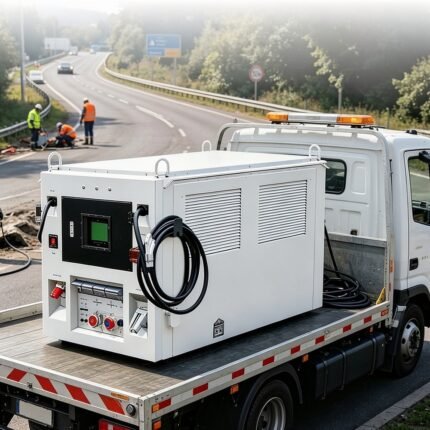
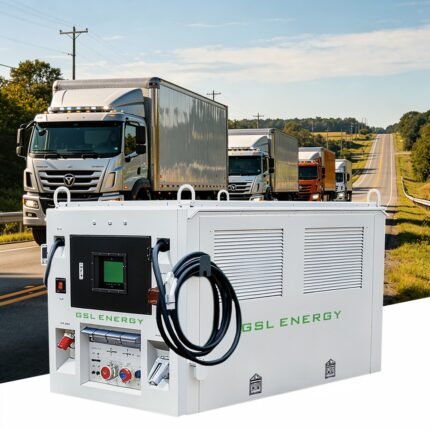
Dual-Gun Mobile Energy Storage EV Charging Station for Fleet & High-Traffic Charging
CMX dual-gun mobile energy storage EV charging station — 200kWh of LiFePO4 storage with 120kW dual-gun DC fast charging (CCS1 / CCS2 / GB/T / CHAdeMO) for fleets and high-traffic sites. Factory-direct with OEM/ODM options.
- Performance: 120kW dual-gun DC fast charging — two vehicles at once — from a 200kWh LiFePO4 bank.
- Compliance: CE, RoHS, UN38.3 and IEC62619 (UL available); CCS1 / CCS2 / GB/T / CHAdeMO; CAN / RS485 / RS232.
- Best for: Fleet depots, pop-up and temporary charging, and emergency backup power.
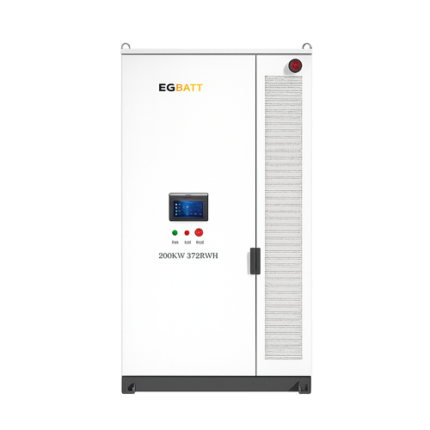
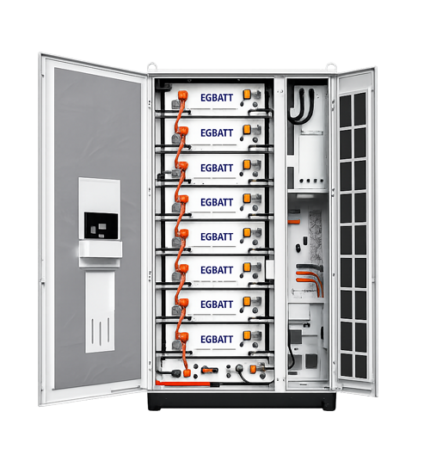
High-Capacity 200kW 372kWh Liquid-Cooled BESS | Industrial Battery Storage System
- Single-Cabinet Powerhouse: 372.7kWh usable energy + 200kW continuous output in a compact 1.4m × 1.4m footprint — delivering extreme energy density of 0.106 kWh/kg.
- Advanced Thermal Stability: 2nd-gen liquid cooling maintains cell temperature variance <3°C, extending system life by over 20% compared to air-cooled systems (industry-validated data).
- Utility-Scale Scalability: Modular "building block" architecture — parallel up to 15 units to create 5.5MWh+ energy hubs.
- Maximum Safety Integrity: Triple-tier fire suppression using Perfluorohexone (FK-5-1-12) ensures total site protection in industrial zones.