

Blog
How to Specify a Liquid-Cooled C&I BESS Cabinet: A 522 kWh Design Breakdown

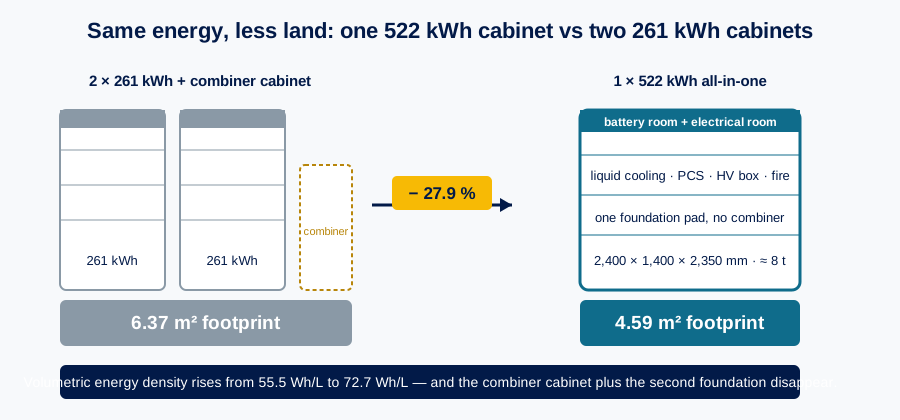
Two quotations sit on your desk. Both say 522 kWh. One needs 6.37 m² of switchyard and three separate enclosures; the other needs 4.59 m² and one. The gap is not luck — it is a single architectural decision, and once you can see it you can read any C&I storage proposal in about ninety seconds.
Quick answer: Built on 314 Ah cells as 1P52S packs in a 2P260S system at 832 V, one liquid-cooled cabinet replaces two 261 kWh units and their combiner cabinet: 4.59 m² against 6.37 m², a 27.9 % saving. It delivers 464.5 kWh per cycle, targets ≥ 89 % round-trip efficiency and ≥ 10,500 cycles, and is engineered to UL 1973, UL 9540/9540A and NFPA 855.
Six numbers to quote back at any supplier:
- 464.5 kWh — delivered per cycle. Budget against this, not the 522.5 kWh nameplate.
- 250 kW — about 1.8 hours at full rate. Fine for an afternoon demand interval, not for a four-hour outage.
- 2 °C — pack-level temperature spread. The quiet specification behind the cycle-life claim.
- 27.9 % — footprint saved against two smaller cabinets plus their combiner unit.
- 10,500 cycles — to 60 % EOL at 95 % DOD, roughly 4.9 GWh of lifetime throughput.
- 4 cabinets — maximum in parallel, about 1.9 MWh per site.
1. Why 522 kWh, and why now
Commercial and industrial storage has settled on 400 V grid connection as the mainstream voltage class, and the product roadmap tracks cell capacity almost one-for-one:
| Cell generation | Typical cabinet energy | Market period |
|---|---|---|
| 280 Ah | 215 kWh / 232 kWh | 2023–2024 |
| 314 Ah | 208 / 261 / 514 / 522 kWh | 2025 onward |
Three application segments are pulling this forward:
- PV–storage–charging integration. The global PV-storage-charging market passed ¥65 billion in 2023, with China holding 51.09 % share; the China market is forecast to reach ¥113.4 billion by 2025.
- Distribution-transformer-area storage. Guangdong alone has roughly 485,000 low-voltage transformer areas. At just 1 % penetration that implies about 4,850 units — a stock market of 485 MW / 970 MWh.
- Factory and non-residential sites. Users with a 400 V interconnection point and storage needs below 6 MWh, deploying for peak–valley arbitrage and demand-charge control.
Getting the capacity right is the first decision, not the last — see our LiFePO4 battery sizing guide for how load profile, autonomy target and usable SOC window interact before you fix a kWh number.
2. One 522 kWh cabinet vs. two 261 kWh cabinets
The central design argument is footprint, not cell cost.
| Item | 261 kWh baseline | 522 kWh all-in-one |
|---|---|---|
| Footprint for the same energy | 6.37 m² | 4.59 m² |
| Volumetric energy density | 55.5 Wh/L | 72.7 Wh/L |
| Total station cost | Higher (same energy) | Lower — no combiner cabinet, less civil work |
| Flexibility | Rich energy combinations | Moderate |
| Footprint change | — | −27.9 % |
The trade-off is configuration flexibility, which is why these cabinets target up to four units in parallel. If you are weighing liquid cooling against forced air at this size, our liquid-cooled ESS battery pack guide covers structure, assembly and sourcing in more depth.
Practitioner's note. Almost all of that 27.9 % comes from deleting an enclosure, not from shrinking two. When a quotation compares “two smaller units” against one large one, ask whether the combiner cabinet and its DC terminations are inside their figure. If they are not, it is not a like-for-like comparison.
3. Target specification for a North American programme
| # | Parameter | Target |
|---|---|---|
| 1 | Liquid-cooling temperature spread | Pack-level 2 °C; all-condition 3 °C |
| 2 | Operating temperature | −30 °C to 50 °C |
| 3 | Nominal voltage | 832 V DC |
| 4 | Round-trip efficiency (RTE) | ≥ 89 % (25 °C, 0.5 P, 95 % DOD) |
| 5 | Rated energy delivered | 464.5 kWh actual discharge (25 °C, 0.5 P, 95 % DOD) |
| 6 | Rated power | 250 kW |
| 7 | Structural strength | Pack meets GB/T 36276 and UN 38.3 |
| 8 | Corrosion class | C4 |
| 9 | Fire protection | Pack-level aerosol + compartment-level aerosol + water interface + combustible-gas deflagration venting |
| 10 | Ingress protection | Battery compartment IP55; electrical compartment IP54; pack IP67 |
| 11 | Cycle life | ≥ 10,500 cycles at 95 % DOD, 60 % EOL |
| 12 | Altitude | ≤ 3,000 m with no derating |
| 13 | Dimensions (W × D × H) | 2,400 × 1,400 × 2,350 mm |
| 14 | Weight | ≈ 8 t |
| 15 | Communication | Ethernet / CAN / RS485 / 4G (optional) |
| 16 | Maximum units in parallel | 4 |
| 17 | Certification | UL 1973:2022, UL 9540A:2023, UL 9540:2023, NFPA 68 / 69 / 72, NFPA 855:2023, UN 38.3, UN 3480 |
Three of those rows deserve a second look:
- Cycle life is quoted at 60 % EOL, not the 80 % most vendors default to. Read it alongside our breakdown of what 6,000 cycles really means before you compare quotations.
- The compartment split is IP55 battery / IP54 electrical — which is the right way round. A single blanket “IP54” claim usually conceals a weaker battery room; see what IP65 does and does not protect.
- 832 V nominal is a different design space from the 48 V class most projects start with. If your team is new to it, start with 12 V vs 24 V vs 48 V system voltage.
4. Compliance: policies and standards
For projects in mainland China, six mandatory instruments sit behind any grid-connected ESS project. The names matter less than knowing what each one governs:
| Instrument | What it governs |
|---|---|
| Specification for the Management of New Energy Storage Projects (Interim) | Project registration, siting and approval route |
| Regulations on Power Grid Connection and Operation Management | Grid-connection testing and dispatch behaviour |
| Measures for the Management of Power Ancillary Services | How storage is remunerated for frequency regulation and reserve |
| Basic Rules for Medium- and Long-Term Power Trading | Contracted energy and capacity trading |
| Notice on Strengthening the Safety Management of Electrochemical Energy Storage Stations | Station-level fire and operational safety duties |
| Lithium-Ion Battery Industry Normative Conditions (2024 edition) | Cell and pack manufacturing thresholds |
United States — regulatory references
| Reference | Subject |
|---|---|
| 49 CFR 173.185 | Hazardous materials regulations (lithium batteries) |
| 49 CFR 173.220 | Hazardous materials regulations |
| NFPA 1 (2018) | Fire code |
| NFPA 505 | Fire safety standard for industrial trucks |
And the mandatory national standards this design is written against (codes only — look each one up in your own quality system before quoting it):
| Reference | Reference | Reference |
|---|---|---|
| GB 44240-2024 | GB/T 36276-2023 | GB/T 36545-2023 |
| GB/T 43868-2024 | GB/T 22473.1-2021 | GB/T 34120-2017 |
| GB/T 34120-2023 | GB/T 34131-2023 | GB/T 36547-2018 |
| GB/T 36548-2018 | GB/T 36549-2018 | GB/T 36558-2023 |
| GB/T 40090-2021 | GB/T 42715-2023 |
The North American path is the part most projects underestimate. Read UL 1973 vs UL 9540A vs IEC 62619 — what certifications actually prove. Before you commit to a schedule, check the set your market needs with our certification requirement checker.
Where to read the source documents. Cite the standard, not a reseller. Every reference below comes from the standards body itself:
| Reference | What it covers |
|---|---|
| UL 1973 | Batteries for stationary and motive auxiliary power (UL Solutions) |
| UL 9540 | The energy storage system as a whole (UL Solutions) |
| UL 9540A | Thermal runaway propagation test method (UL Solutions) |
| NFPA 855 | Installation of stationary energy storage systems |
| NFPA 72 | Alarm and signalling systems |
| NFPA 68 | Deflagration venting |
| NFPA 69 | Explosion prevention systems |
One question to put in writing: which edition year was each report issued against? The 2022 and 2023 edition years above belong in the specification — they are not decoration.
5. System architecture: cell → pack → cluster → system
| Level | Configuration | Key values |
|---|---|---|
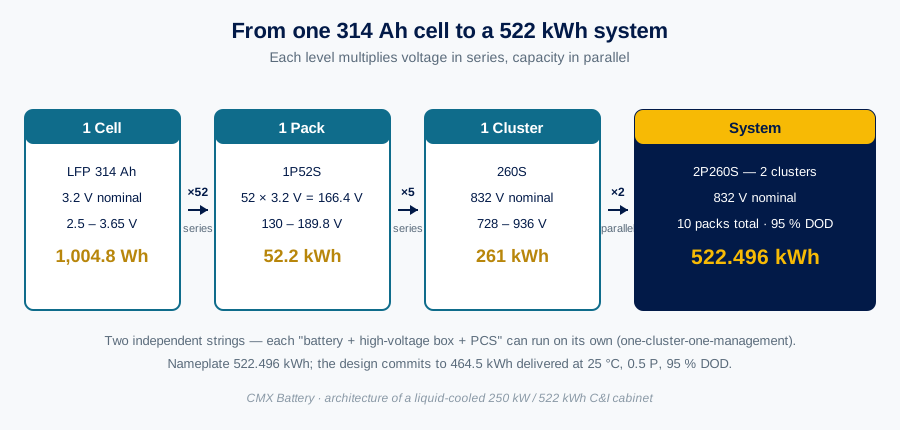
| Cell | LFP 314 Ah | 3.2 V nominal; 2.5–3.65 V |
| Pack | 1P52S | 52.2 kWh; 166.4 V nominal; 130–189.8 V range |
| Cluster | 260S (5 packs) | 832 V; 728–936 V; 261 kWh |
| System | 2P260S | 832 V nominal; 522.496 kWh; 95 % DOD |
Three design decisions are worth calling out:
- Two independent subsystems. Each “battery + high-voltage box + PCS” string runs on its own, so one-cluster-one-management is real: a fault in one string does not take the whole cabinet down.
- Separate power and auxiliary circuits. The main power loop and the distribution loop are independent, and the distribution loop accepts an external 480 V input for site auxiliary supply.
- Shipping-friendly envelope. Two cabinets fit in one 20-ft container, with side forklift pockets for transfer.
At 832 V the BMS is doing considerably more work than in a 48 V bank — balancing, isolation monitoring and contactor control all scale with string voltage. See LiFePO4 charging and BMS basics, and CAN vs RS485 wiring for the communications layer.
6. Enclosure and mechanical design
| Element | Specification |
|---|---|
| Frame material | Q355 — square tube plus bent sheet, welded |
| Corrosion class | C4 |
| Fire resistance | 2 hours |
| Paint film | > 200 µm |
| Dimensions (W × H × D) | 2,400 × 2,350 × 1,400 mm |
| Weight | 8 t |
| Process | Gas-shielded welding |
| Finish colour | RAL 7035 |
| Ingress protection | IP55 (battery room and electrical room) |
7. Thermal management and PCS compatibility
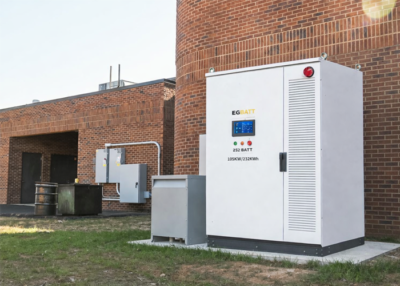
Liquid cooling is non-negotiable at this energy density. The programme targets a pack-level spread of 2 °C and an all-condition spread of 3 °C. That level of control is what protects the 10,500-cycle claim — cell-to-cell temperature divergence is what erodes a large 314 Ah cluster fastest.
Cabinet internals include the cooling loop and connector assembly, cold plate, a 9.8 kW chiller, UPS, distribution cabinet, high-voltage box and the PCS. The mechanical design accepts either a liquid-cooled or an air-cooled PCS without changing the enclosure, so one platform can serve both cost-sensitive and high-ambient projects.
Practitioner's note. Temperature spread is the number worth arguing about. A cycle-life figure is a test-result claim; what keeps a large 314 Ah cluster inside that condition on a hot site is how evenly the cooling holds the packs. Ask to see spread measured during a discharge, not only at rest.
8. What buyers and specifiers should verify
- Delivered energy, not nameplate. Nameplate is 522.496 kWh; the design only commits to 464.5 kWh actually discharged at 25 °C, 0.5 P, 95 % DOD. Always specify delivered kWh at a stated temperature, rate and DOD.
- Where the cycle-life number ends. “≥ 10,500 cycles at 60 % EOL” is not “10,500 cycles to 80 %”. Ask for the EOL definition and the warranty curve in the same units.
- Derating altitude. ≤ 3,000 m without derating is a genuine differentiator; many cabinets start derating at 2,000 m.
- Compartment-level IP. Insist on the split figure rather than one blanket rating.
- Parallel behaviour. With up to four units, ask how circulating current is managed between clusters and what the shared EMS does on a string fault.
- Thermal spread evidence. A 2 °C pack-level spread should come with test data at end-of-charge and high ambient — not only at 25 °C.
Before you issue an RFQ, run your load profile through the LiFePO4 battery sizing calculator, then sanity-check the spec you are about to sign against our LiFePO4 buying guide.
9. Peak shaving: how a 522 kWh cabinet earns its keep
C&I storage gets paid twice: once for the energy it shifts and once for the monthly demand peak it shaves. The second line is usually the larger one, and it is the one that ties directly back to the figures above.
Start from usable energy, not nameplate. This cabinet delivers 464.5 kWh per full cycle at 25 °C, 0.5 P and 95 % DOD.
Against its 250 kW rating that is roughly 1.8 hours of continuous discharge — long enough to ride a conventional afternoon demand interval — but short enough that knowing when your utility measures demand matters more than anything else on the quotation.
Practitioner's note. 522 kWh minus 464.5 kWh is roughly 11 % of capacity that never existed in your model, and nothing is faulty. It is simply what 95 % depth of discharge and real 0.5 P losses leave you with. Start the payback maths from 464.5 kWh and month one will not surprise you.
What to ask your utility for. Four things, and insist on all four:
- The demand-charge rate, plus any seasonal or annual ratchet
- The demand interval length — commonly 15 or 30 minutes
- Your monthly peak-day load shape
- Whether the tariff permits demand-charge-only discharge
Without those inputs, an ROI number is decoration. Feed the load shape through our battery sizing calculator to get the iterative part right, then read what commercial battery storage actually costs for the capex side, line by line.
The lifetime arithmetic you can defend. At ≥ 10,500 cycles to 60 % EOL and 464.5 kWh delivered per cycle, one cabinet is designed for roughly 4.9 GWh of cumulative throughput under those test conditions.
Divide your own installed cost by that figure and you have a levelised cost per discharged kWh you can set against any other quotation. One caution: cycle life varies with cell lot, duty cycle and temperature excursions, so take the warranted figure for your cell and duty cycle from your sales contact rather than assuming the headline number.
Scaling. Up to four cabinets run in parallel, so the same platform covers about 1.9 MWh of usable energy on one site without changing the mechanical design, the commissioning procedure or the spares you hold.
10. What moves the cost per kWh in a C&I cabinet
There is no single defensible $/kWh figure for C&I cabinets, because most of the spread between two identically rated enclosures comes from decisions the spec sheet does not show. Six of them account for nearly all of it:
- Cell format and grade. Moving to a 314 Ah prismatic cell removes interconnects, busbars and pack-assembly labour per kWh. It also concentrates risk: cell matching discipline and replaceability matter more per unit of energy.
- Thermal architecture. Liquid cooling costs more up front than forced air. What it buys is cell temperature spread — 2 °C pack-level and 3 °C across all conditions here — which is what protects usable energy in cold weather and cycle life in hot weather.
- Compliance scope. Designing to UL 9540 and UL 9540A rather than stopping at cell-level UL 1973 changes the size of the test programme and therefore the schedule. This is routinely the largest non-hardware line item.
- Enclosure and duty class. C4 corrosion class, IP55 and IP54 compartments and a fire-rated structure are not cosmetic — they decide whether the cabinet survives a coastal or high-particulate site for its design life.
- Grid integration. Interconnection studies, protection coordination and PCS commissioning are real budget lines that a quotation for “the battery” often leaves out.
- Commissioning and acceptance. See section 12. A two-week acceptance programme with witnessed testing is not the same deliverable as a delivered pallet.
11. 261 kWh or 522 kWh? A decision tree for specifiers
One 522 kWh cabinet holds the same energy as two 261 kWh liquid-cooled units plus their combiner cabinet. The two answers differ by 1.78 m² of floor area, and everything downstream of that.
| Constraint on your project | Favours |
|---|---|
| Floor area is paid for, or the layout is tight | One 522 kWh cabinet: 4.59 m² versus 6.37 m² for the two-cabinet equivalent — a 27.9 % reduction, with volumetric density going from 55.5 to 72.7 Wh/L. |
| Crane capacity or lift envelope is restricted | Two smaller units. The single-piece option weighs about 8 t; two lighter lifts are easier to stage where access is constrained. |
| Phase 1 is smaller than the final site | 261 kWh steps let you add capacity in smaller increments and bring revenue forward without duplicating a full 522 kWh unit. |
| You want one energised asset, not three | The integrated cabinet removes the separate combiner enclosure and the DC cabling and terminations between cabinets. |
| Planned site exceeds about 1.9 MWh | Neither increment alone — four cabinets in parallel is the ceiling, so beyond that you are designing a new medium-voltage architecture rather than adding enclosures. |
| Spare-parts commonality across a fleet of sites | Whichever unit you already operate: fewer, larger cabinets mean one set of spares covers more kWh. |
Note what is not on that list: electrical topology. A 522 kWh cabinet is 2P260S, which is two 261 kWh clusters running in parallel inside one enclosure, each with its own high-voltage box and PCS leg. An internal fault costs you half the capacity in either configuration, so redundancy is not a reason to choose one over the other.
12. Commissioning and site acceptance checklist
Use this sequence as the skeleton of your site acceptance test, then let the AHJ add what local practice requires.
- Delivery and levelling. Confirm crane and route capacity for a single ≈ 8 t piece, verify foundation flatness before lift day, and record levelling results. A twisted base is the usual origin of later door and seal complaints.
- Mechanical reinstatement. Remove transport restraints, re-torque busbar joints to the manufacturer’s specification, and record torque values in the handover pack.
- Coolant loop. Fill and vent to the manufacturer’s procedure, pressure-test, then leak-check at operating pressure before anything is energised.
- Earthing and insulation resistance. Measure and record insulation resistance per pole before connecting the PCS.
- Communications. Bring up Ethernet, CAN or RS485 to the PCS and EMS, then confirm BMS telemetry — pack voltage spread, cell temperature spread, SOC — is sane at rest.
- Fire system acceptance. Witness functional testing of pack-level and compartment-level aerosol suppression, the water interface, combustible-gas deflagration venting, and any alarm signalling required against NFPA 72.
- Capacity acceptance. Run a documented full-rate discharge and compare measured delivered energy against the specified 464.5 kWh at 25 °C, 0.5 P and 95 % DOD.
- Thermal soak. Confirm pack-level temperature spread stays inside the specified 2 °C during a 0.5 P cycle.
- Documentation handover. Collect the UL 1973, UL 9540 and UL 9540A reports, the UN 38.3 test summary for shipping, and the emergency response guide before the Authority Having Jurisdiction visit.
Our own production and quality-control process is open for customer witness at several of these stages; ask for it to be written into the contract rather than requested later.
Related CMX hardware
CMX builds 522 kWh-class energy storage for mobile and off-grid duty — see the CMX U9-6 522 kWh mobile EV charging robot. For stationary C&I projects the same cells and thermal architecture are configured into fixed cabinets; send us your load profile, autonomy target and site constraints and we will size it against your tariff.
FAQ
What cells and configuration produce 522 kWh?
314 Ah LFP cells in 1P52S packs (52.2 kWh, 166.4 V each); two clusters in parallel give 2P260S, 832 V nominal, 522.496 kWh.
How much smaller is one 522 kWh cabinet than two 261 kWh cabinets?
For the same energy: 4.59 m² versus 6.37 m² — a 27.9 % footprint reduction, with volumetric density rising from 55.5 to 72.7 Wh/L.
What is the realistic usable energy?
The design commits to 464.5 kWh delivered at 25 °C, 0.5 P and 95 % DOD — about 89 % of the 522.496 kWh nameplate.
What round-trip efficiency should I expect?
≥ 89 % at 25 °C, 0.5 P, 95 % DOD as a design target; comparable products on the market cite 90–91.5 %.
Which certificates matter for the US?
UL 1973:2022 and UL 9540:2023 for the system, UL 9540A:2023 for thermal runaway propagation, NFPA 855/68/69/72 for installation, and UN 38.3 / UN 3480 for transport.
Can it be shipped as one piece?
Yes — the 2,400 × 1,400 × 2,350 mm envelope allows two cabinets per 20-ft container, with side forklift pockets.
Air-cooled or liquid-cooled PCS?
The enclosure accepts either, so the same platform can serve both cost-sensitive and high-ambient projects.
How many cabinets can run together?
Up to four in parallel, arranged side-by-side.
Note on scope: figures above describe a representative 250 kW / 522 kWh liquid-cooled cabinet design built for the North American certification path. Always confirm delivered energy, EOL definition and derating limits against the supplier’s test report for the exact unit you are buying.
CMX Battery is a brand of EGbatt.
Is one 522 kWh cabinet better value than two 261 kWh cabinets?
For the same energy, yes on installed complexity: 4.59 m² against 6.37 m², no separate combiner cabinet, and fewer external DC connections. Two smaller units still win where crane capacity is limited or where you want to phase capacity in smaller steps.
How long can a 522 kWh cabinet cover a factory load?
464.5 kWh usable against a 250 kW rating is about 1.8 hours at full power, proportionally longer at lower power. Size it against your demand interval length, not against the nameplate kWh.
What belongs on the site acceptance test?
Levelling records, busbar torque records, a pressure-tested coolant loop, insulation resistance readings, BMS telemetry verification, witnessed fire-system function testing, a full-rate capacity run against 464.5 kWh, and the certificate reports before the AHJ visit.
What does the utility need to tell me before I size a peak-shaving system?
The demand-charge rate and any seasonal ratchet, the demand interval length, whether demand-charge-only discharge is allowed, and your peak-day load shape. Without those the payback model is guesswork.
