

LiFePO4 Cycle Life & Capacity Degradation: How to Read the Datasheet
Quick answer: A LiFePO4 cell rated for 6,000 cycles reaches that figure only under stated test conditions — typically 25 °C, 0.5 C charge and discharge, and 80–90% depth of discharge. In the field, the four factors that shorten life most are high temperature, deep discharge, high charge and discharge rates, and sustained high state of charge. Keep the pack near 25 °C, operate between roughly 20% and 90% SoC for daily use, and expect about 70–80% capacity retention after 10 years of daily cycling.
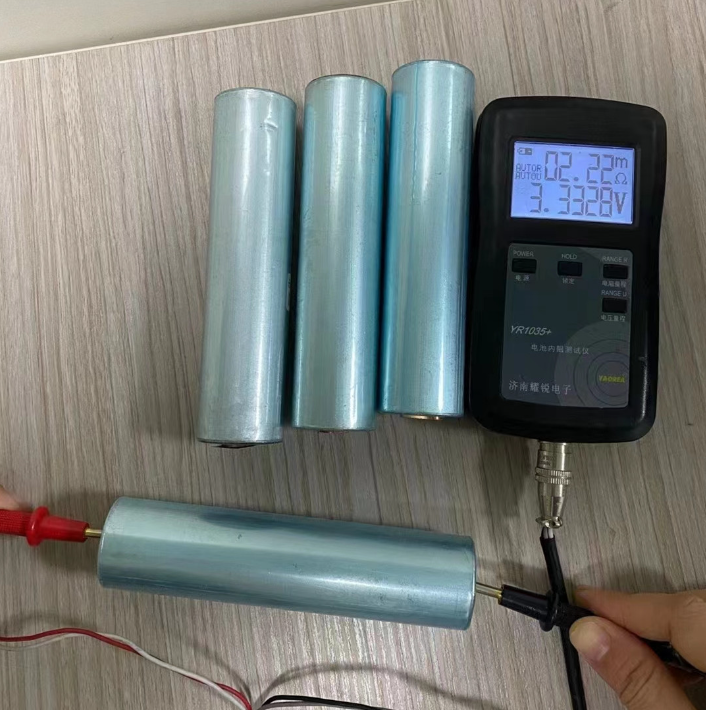
- Datasheet conditions: 25 °C, 0.5 C, to 70–80% of original capacity
- Temperature rule of thumb: every 10 °C above 25 °C roughly halves calendar and cycle life
- Depth of discharge: 100% DoD shortens cycle life sharply; 80% DoD is the usual design point
- Storage: around 50% SoC, cool and dry, gives the slowest calendar ageing
What does ‘6,000 cycles’ actually mean?
It means the cell still delivers a defined fraction of its original capacity — usually 70% or 80% — after 6,000 charge and discharge cycles under the manufacturer’s test conditions. Those conditions are almost always 25 °C, moderate current, and a stated depth of discharge. Real installations deviate from all three, which is why field life differs from the datasheet.
What shortens LiFePO4 cycle life the most?
| Factor | Effect on life | Practical mitigation |
|---|---|---|
| High temperature | Every ~10 °C above 25 °C roughly doubles degradation rate | Ventilate, shade, or specify liquid cooling; avoid rooftop and unvented enclosures |
| Deep discharge | 100% DoD degrades far faster than 80% DoD | Size the bank with margin; set BMS low-SoC cut-off conservatively |
| High C-rate | Fast charge and discharge accelerate mechanical and chemical wear | Keep continuous discharge ≤ 1 C unless the cell is rated for it |
| Sustained high SoC | Storage near 100% accelerates calendar ageing | Hold at 50–80% SoC when the pack is idle for long periods |
| Charging below 0 °C | Causes lithium plating — permanent and dangerous | Use packs with low-temperature cut-off or self-heating |
| Cell imbalance | Weakest cell limits the pack and over-works the rest | Ensure the BMS balances adequately and cells are matched at build |
How capacity fades over time
Two mechanisms run in parallel. Cycle ageing consumes a finite number of charge transfers as the electrode structures slowly change. Calendar ageing happens even when the battery is idle, driven mainly by temperature and state of charge. In a daily-cycling solar battery, cycle ageing dominates; in a standby UPS string that almost never discharges, calendar ageing dominates — which is why an unused pack still has a finite service life.
How to maximise the service life of your pack
- Keep it cool — the single highest-leverage action, especially above 30 °C
- Size with margin so daily cycling stays in the 20–90% SoC band rather than 0–100%
- Charge at moderate current; reserve fast charging for when you actually need it
- Avoid leaving the pack at 100% SoC for weeks; 50–80% is kinder for storage
- Never charge below 0 °C without a low-temperature cut-off or heater
- Monitor cell-voltage spread — a growing spread is the earliest warning of imbalance
What warranty terms actually tell you
Look for three numbers: the cycle count, the depth of discharge it assumes, and the end-of-warranty capacity (commonly 70% at 10 years). A ’10-year warranty’ that specifies only 60% DoD at 25 °C is worth much less than one covering 90% DoD at 35 °C. Ask which of the two you are being offered.
Frequently asked questions
How long does a LiFePO4 battery last?
Typically 3,000–6,000 cycles to 70–80% of original capacity, which is about 10–15 years in daily-cycling service. Real life depends far more on operating temperature and depth of discharge than on the cycle count printed on the datasheet.
Is it bad to charge to 100% every day?
It is harder on the pack than stopping at 90%. LiFePO4 tolerates full charge better than most chemistries, but holding a pack at 100% state of charge for long periods accelerates calendar ageing, so avoid it when the pack will sit idle.
Does fast charging damage LiFePO4?
Charging above the cell’s rated C-rate increases heat and wear, and below 0 °C it causes lithium plating, which is permanent. Within the datasheet rating and above freezing, fast charging is safe.
How much capacity will I lose per year?
Roughly 2–3% per year for a well-managed pack cycled daily at moderate temperature and depth of discharge. Expect noticeably more if the pack routinely runs hot or cycles to the BMS cut-off.
Should I store batteries fully charged?
No. Around 50% state of charge in a cool dry place gives the slowest calendar ageing. Avoid storing at 100% or fully discharged for long periods.
Can a degraded battery be repaired?
Individual modules can often be replaced if the pack was designed for serviceability and replacement modules of matching capacity are available. Cells must be matched to the remaining string, so this is a job for the manufacturer or an authorised service partner.
Specify a pack that will still meet its runtime in ten years
Tell us your duty cycle, ambient temperature range and required service life. We will size the pack with the right depth-of-discharge and thermal margin, and state the end-of-warranty capacity in writing.
Related: LiFePO4 vs NMC and how a BMS works.