

RV Lithium Batteries
Quick answer: CMX Battery RV batteries are 12.8V / 25.6V LiFePO4 drop-ins with an integrated BMS, built for the vibration, deep discharge and space limits of a motorhome. They replace AGM at roughly a quarter of the weight with 3–5x the cycle life and 80–90% usable capacity. The one caveat: your converter, DC-DC charger and solar controller must be set to a LiFePO4 profile.
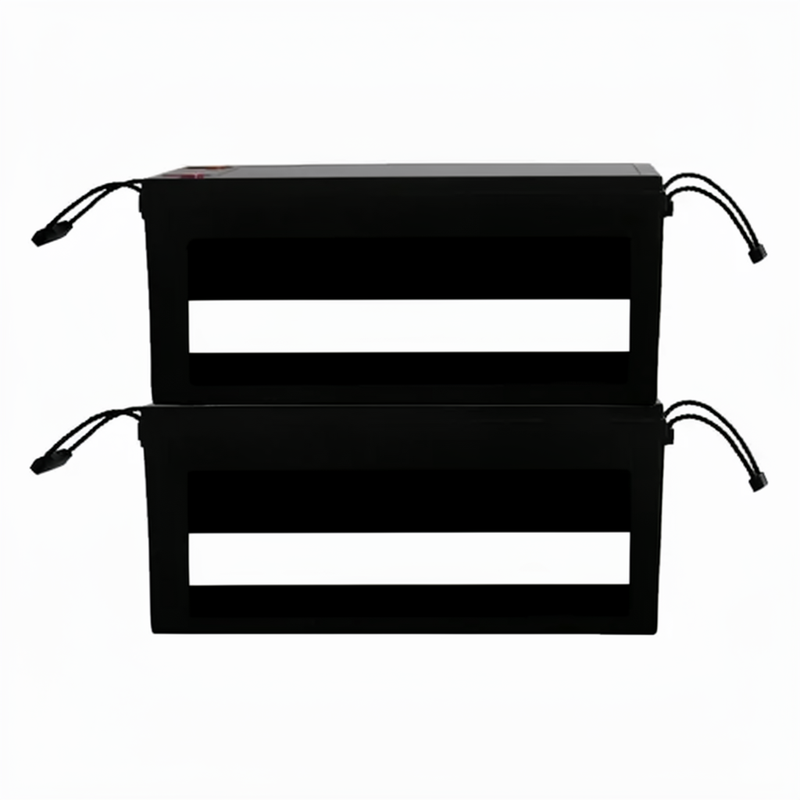
Why an RV house bank is a hard duty cycle
An RV house bank lives a harder life than almost any other battery: constant vibration, deep discharges most nights, long periods at partial state of charge, temperature extremes, and a charging system that was designed around lead-acid. AGM survives it by being heavily oversized and replaced often. LiFePO4 handles it because deep discharge is not the damage mechanism it is for lead-acid.
The practical result: a lithium bank gives you roughly double the usable energy from the same physical space, at a quarter of the weight, and it charges several times faster from the alternator or shore power.
12V, 24V or 48V for an RV?
| System | Typical rig | Pros | Cons |
|---|---|---|---|
| 12.8V | Travel trailers, small vans, simple builds | Drop-in for everything; no redesign; cheapest | High current for inverters over 2kW; thick cables |
| 25.6V | Mid-size motorhomes, higher loads | Half the current; smaller cables; efficient inverter | Fewer native 24V appliances; needs a DC-DC step-down |
| 48V / 51.2V | Large coaches, full-electric rigs | Runs air conditioning and induction efficiently; smallest cables | Full system redesign; 48V appliances or step-downs |
For most retrofits 12.8V is still the right answer because every appliance in the rig already runs on it. Move to 24V or 48V when you are designing from scratch or when continuous inverter load exceeds about 2kW.
Key specifications
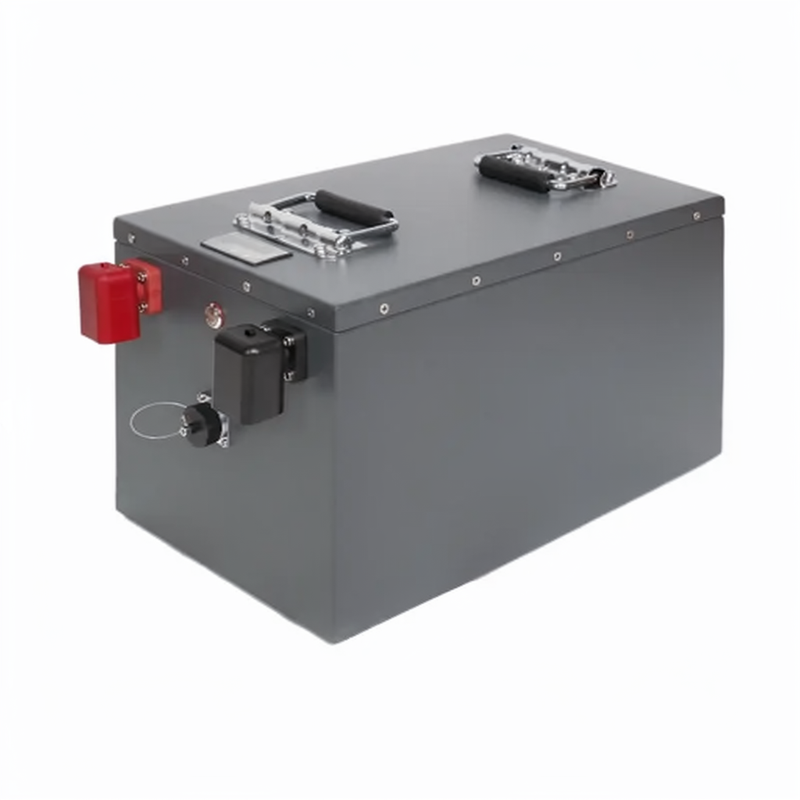
| Specification | Value | Why it matters |
|---|---|---|
| Voltage | 12.8V / 25.6V | Drop-in for standard RV systems. |
| Capacity | 100Ah typical; up to 300Ah | Deep usable DoD means fewer amp-hours needed. |
| BMS | Integrated, vibration-rated | Full protection plus low-temperature charge cut-off. |
| Weight | ≈1/4 of lead-acid | Payload matters in a motorhome. |
| Cycle life | 2,000–5,000 cycles | 3–5x AGM. |
| Usable DoD | 80–90% | Twice the usable energy per amp-hour of AGM. |
| Heating | Self-heating option | Enables charging below freezing. |
| Certifications | UN38.3, IEC 62619, CE | Import-ready and insurable. |
How to size an RV battery bank
- List your overnight loads. Fridge 30–60W, LED lights 5–15W each, water pump 40–80W, fan 20–50W, phone and laptop charging 30–80W, CPAP 30–60W. Multiply each by the hours it runs and sum to watt-hours.
- Convert to amp-hours at your system voltage. Divide watt-hours by 12.8V (or 25.6V for a 24V bank). 1,600Wh / 12.8V = 125Ah.
- Divide by usable depth of discharge. At 85% usable: 125 / 0.85 ≈ 147Ah. Round up to the next standard size — a 150Ah or 200Ah unit.
- Check the charging side before you buy the battery. Confirm the converter has a lithium profile, add a DC-DC charger for the alternator, and set the MPPT solar controller to LiFePO4. This step is where most DIY conversions go wrong.
- Verify cable and fuse ratings. Lithium holds voltage under load and accepts high current, so cables and fuses sized for lead-acid may be undersized. Check the inverter’s continuous and surge current against your cable gauge.
The charging caveat nobody mentions
This is the single most common failure in an RV lithium conversion. Lead-acid chargers apply an equalisation voltage that a lithium BMS will reject, and their absorption profile undercharges lithium by 10–15%. You need three things set correctly:
- Converter / shore charger — must have a LiFePO4 profile (typically 14.4–14.6V absorption, no equalisation stage).
- DC-DC charger for the alternator — a direct connection lets lithium pull far more current than the alternator is rated for, which can burn it out.
- MPPT solar controller — set to lithium; lead-acid float behaviour will slowly walk the BMS into protection.
LiFePO4 vs AGM for RV use
| LiFePO4 | AGM | |
|---|---|---|
| Usable capacity | 80–90% of nameplate | 50% recommended |
| Cycle life | 2,000–5,000 | 500–1,000 |
| Weight (100Ah) | ≈11–13kg | ≈30–35kg |
| Charge acceptance | Up to 1C | 0.2–0.3C |
| Vibration resistance | Excellent with braced cells | Moderate |
| Maintenance | None | None (sealed) but sensitive to undercharging |
| Cold charging | Needs heating below 0°C | Tolerates cold charging better |
| Upfront cost | 2–3x | Lowest |
Cold weather and self-heating
Discharging a LiFePO4 bank in freezing conditions is fine. Charging below 0°C is not — lithium plates onto the anode and permanently damages the cell. The BMS in an CMX Battery RV pack blocks charging below freezing to protect the bank, which means in winter you either need a heated compartment or a self-heating pack. See self-heating batteries if you camp below freezing.
Typical applications
| Build | Recommended configuration | Notes |
|---|---|---|
| Motorhome house bank | 12.8V 200–300Ah | Lighter payload, deeper usable capacity |
| Travel trailer | 12.8V 100–200Ah drop-in | Direct swap, verify converter profile |
| Van conversion | 12.8V 150–300Ah or 25.6V 100Ah | Space-limited; slim formats help |
| RV solar | Bank + MPPT + lithium profile controller | See our MPPT charge controllers |
Engineering and testing
RV packs are validated for the duty they actually see: vibration to automotive profiles, thermal cycling across the full storage and operating range, and drop testing of the finished enclosure. Cells are grade-A and batch-traced, and the BMS firmware is configured per pack capacity rather than reused across sizes.
Certifications and compliance
- UN38.3 — mandatory lithium transport test; required for any cross-border shipment.
- IEC 62619 — international safety standard for industrial lithium cells and batteries.
- CE — EU declaration of conformity.
- RoHS — restriction of hazardous substances.
- IP65 — dust-tight and water-jet resistant, suitable for exterior battery boxes.
RV battery FAQ
Will it drop into my RV?
At 12.8V or 25.6V, yes — the footprints match standard group sizes and most drop-in units fit the existing battery box. The important caveat is charging: your converter, DC-DC charger and solar controller must be set to a LiFePO4 profile, or you will undercharge the bank or trigger BMS cut-off.
How much longer does it last than AGM?
Expect 3–5x the cycle count — 2,000–5,000 cycles versus roughly 500–1,000 for AGM — and far deeper usable capacity. AGM should only be discharged to 50%; LiFePO4 comfortably gives you 80–90%.
Is it safe under vibration?
Yes. LiFePO4 is intrinsically robust and CMX Battery RV packs add a vibration-rated BMS, braced cell stack and a sealed enclosure. This is exactly the duty cycle that kills AGM.
What capacity do I need?
Add up your overnight load in watt-hours, divide by system voltage (12.8V), then divide by the usable depth of discharge (0.85 is a safe planning figure). 1,500Wh overnight at 12.8V is 117Ah usable, so about 140Ah nameplate — a 150Ah unit covers it.
Do I need to change my converter or charger?
Almost always. Lead-acid profiles either undercharge lithium (leaving capacity on the table) or apply an equalisation voltage the BMS will reject. You need a converter with a lithium setting, or a DC-DC charger for alternator charging.
Can I charge from the alternator while driving?
Yes, but through a DC-DC charger rather than a direct connection. A direct connection can overheat the alternator because lithium accepts current far faster than lead-acid.
What about cold-weather camping?
Discharging is fine well below freezing; charging below 0°C is not. If you winter camp and need to charge in the cold, specify a self-heating pack or a low-temperature cell.
Can I run my air conditioner off it?
Yes, with enough capacity and the right inverter. A typical 13,500 BTU roof unit draws 1,200–1,500W continuous and needs a 2–3kW inverter plus a soft start. Budget roughly 1.2kWh per hour of runtime.
RV products
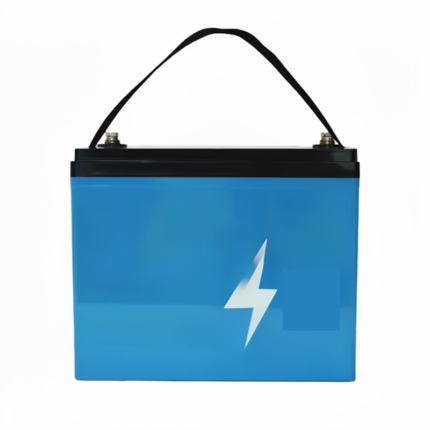
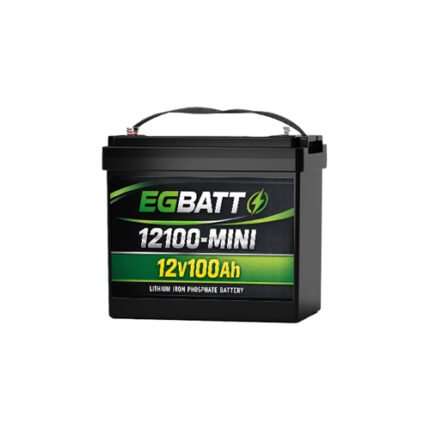
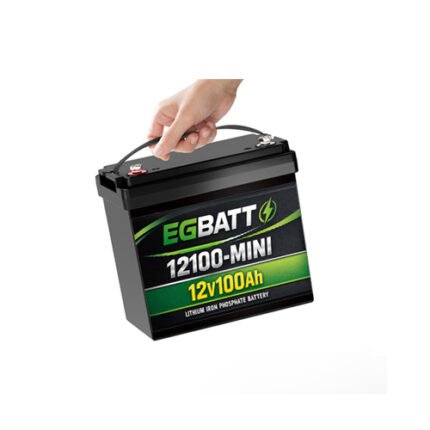
12V 100Ah Mini Group 22NF Lithium RV Battery
More in this series
Explore related solutions
- Residential Energy Storage
- Whole Home Battery Backup
- Off-Grid Solar Systems
- C&I Energy Storage
- Peak Shaving Systems
- UPS Battery Solutions
- Telecom & UPS Backup
- Forklift Lithium Batteries
- Marine LiFePO4 Batteries
- Golf Cart Lithium Batteries
- Robot Battery Packs
- Military Battery Packs
- All Solutions
Request an RV battery quote
Tell us your rig, overnight loads, system voltage and whether you camp below freezing — we size the bank and the charging side together.