
Battery Certification Guide for Importers
Quick answer: Lithium battery certifications fall into four groups: transport (UN38.3 — mandatory for any cross-border shipment), product safety (IEC 62619 for industrial cells and modules, UL 1973 for North American stationary, IEC 63056 for stationary systems), installation fire safety (UL 9540A), and market marks (CE, RoHS). UN38.3 moves the battery; IEC 62619 / UL 1973 satisfy buyers and insurers; UL 9540A satisfies the authority having jurisdiction for an installed ESS.
The certification alphabet decides whether your battery ships and installs legally — CMX Battery explains what each standard actually covers and when you need it.
Which certifications does a lithium battery actually need?
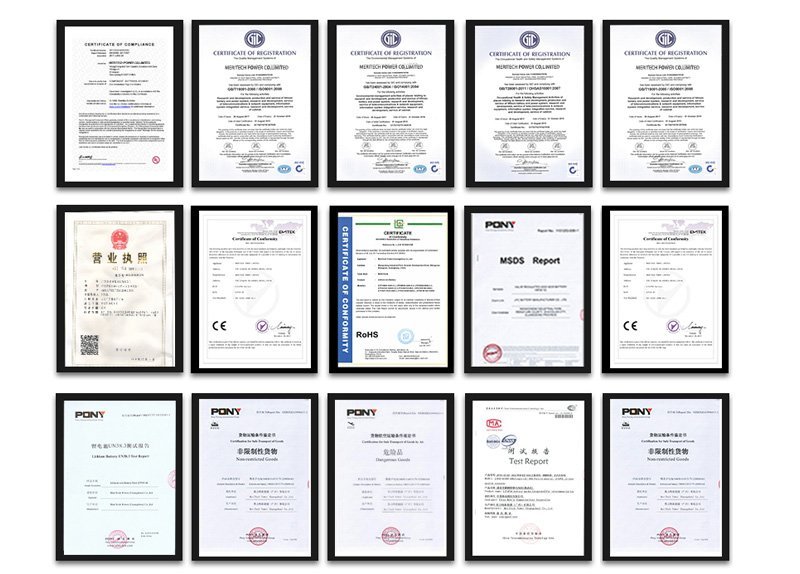
Lithium battery certifications fall into three buckets: transport (UN38.3), product safety (IEC62619 for industrial cells/modules, UL1973 for North American stationary, IEC63056 for stationary systems), installation fire safety (UL9540A), and marks (CE, RoHS). UN38.3 is mandatory for any cross-border shipment — without it, the battery does not move. IEC62619 / UL1973 is what buyers and insurers expect on the unit. UL9540A is what the authority having jurisdiction often requires for the installed system. CMX Battery builds to these and supplies the documentation per market; know which your destination requires before you order.
| Standard | What it covers | When you need it |
|---|---|---|
| UN38.3 | Transport test: altitude, thermal, vibration, shock, external short circuit | Mandatory to ship — no carrier moves lithium batteries without it. |
| IEC 62619 | Safety for industrial Li-ion cells and batteries | EU and most APAC buyer and insurer expectation. |
| UL 1973 | Safety for stationary and motive auxiliary batteries | US and Canadian units. |
| UL 9540A | Thermal runaway fire propagation test method for ESS | Often required by the US authority having jurisdiction for installed systems. |
| IEC 63056 | Safety for stationary lithium battery energy storage systems | Stationary ESS, international markets. |
| CE | EU declaration of conformity to applicable directives | EU market access. |
| RoHS | Restriction of hazardous substances in battery and BMS | EU market, often bundled with CE. |
What do you need by destination market?
- Importing to the EU — UN38.3 + IEC 62619 + CE/RoHS declaration.
- Importing to the US — UN38.3 + UL 1973, plus a UL 9540A path if it is an installed ESS.
- Installing fixed systems — UL 9540A documentation for the AHJ, and often IEC 63056 elsewhere.
- Shipping anything — UN38.3 is non-negotiable, plus correct dangerous-goods packaging and declaration (UN3480 for batteries alone, UN3481 with equipment).
What does a real test report look like?
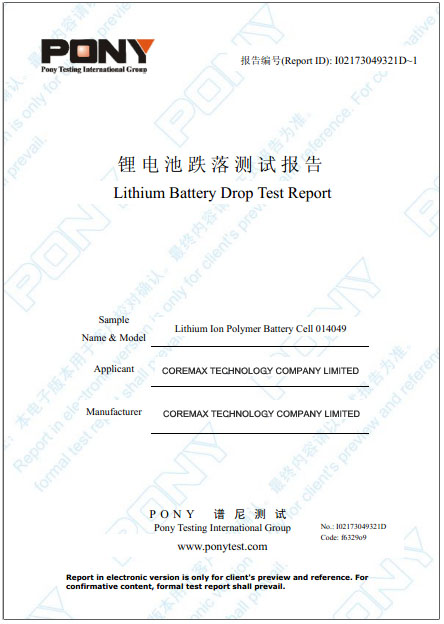
A usable documentation package includes the test report itself (with laboratory name, report number and date), the certificate referencing that report, and a model list showing your exact model is covered. Watch for three common problems: the certificate covers a different model family; the report is expired; or the “certificate” is a supplier self-declaration with no accredited laboratory behind it.

How do you specify certification in an RFQ?
- Confirm the destination’s required standards before ordering — certification is per market and slows delivery if added late.
- Never ship without UN38.3; carriers will refuse the consignment and can fine the shipper.
- For installed systems, line up the UL 9540A path with your AHJ early — it is a system test, not a unit test.
- Ask suppliers for the actual test reports and certificate numbers, not just a mark on a datasheet.
- State who bears certification cost and lead time in the contract if a new model needs testing.
Engineering & manufacturing at CMX Battery
Our guides are written by the same engineering team that grades the cells and builds the packs. They are meant to help importers, installers and procurement specifiers make defensible decisions — not to rank for a keyword.
What certifications & compliance apply?
- UN38.3 — Mandatory lithium battery transport test (altitude, thermal, vibration, shock, external short). Required for any cross-border shipment.
- IEC62619 — International safety standard for industrial Li-ion cells and batteries; expected by EU and most APAC buyers.
- UL1973 — North American safety standard for stationary lithium battery systems.
- UL9540A — Fire safety test method for ESS installations; often required by US authorities having jurisdiction.
- IEC63056 — Safety requirements for stationary lithium battery energy storage systems.
- CE — EU declaration of conformity for the applicable directives.
- RoHS — Restriction of hazardous substances in the battery and BMS.
Frequently asked questions
Which certification is absolutely mandatory?
UN38.3 — no carrier moves lithium batteries without it. It covers altitude, thermal, vibration, shock and external short-circuit testing and is required for any cross-border shipment.
What is the difference between IEC 62619 and UL 1973?
IEC 62619 is the international industrial standard; UL 1973 is the North American one. The destination market decides which you need — sometimes both.
What is UL 9540A and when is it needed?
The installation fire-safety test method US authorities often require for an ESS. It is a system-level thermal runaway propagation test, needed for permitted installations rather than for shipping.
Which certifications do I need for my market?
It depends on the destination and whether you are importing a product or installing a system. EU: UN38.3 + IEC 62619 + CE/RoHS. US: UN38.3 + UL 1973, plus UL 9540A for installed ESS. We advise per market. You can also run your destination and application through our certificate requirement checker to see the exact document set, including which certificates can be issued under your own brand.
Is CE marking a certification?
No — CE is a manufacturer’s declaration of conformity to applicable EU directives, supported by a technical file. It is not issued by a laboratory in the way a UL listing is.
How long does certification take?
Using existing certified models, documentation is immediate. New model testing runs from several weeks (UN38.3) to a few months (UL 9540A system testing), so plan it into the project schedule.
Related products & resources
Request a LiFePO4 quote
Tell us your product, volume and specs — our engineering team returns a proposal within three working days. Or review our custom pack capabilities.