

Blog
48V LiFePO4 Battery Guide 2026: Rack, Golf Cart and Backup Systems

Written by Jason Lee, Hardware & Structural Engineer at CMX Battery with 20 years in the lithium battery industry. Last updated: 14 September 2026.
1. Short answer: why 48V became the default
Every battery system is a compromise between energy and current. For the same power, doubling the voltage halves the current, and halved current means thinner cables, smaller contactors, less voltage drop and less heat at every termination. 48V sits at the point where the current is low enough to be practical for multi-kilowatt loads while staying below the thresholds that trigger stricter electrical-safety rules and more expensive components.
In practice, a “48V LiFePO4 battery” is a 16-cell series (16S) pack with a nominal voltage of 51.2V (16 × 3.2V) — sometimes marketed as 48V because it replaces a 48V lead-acid bank. The pack operates roughly between the BMS low-voltage cut-off and a full-charge voltage in the mid-to-high 50V range, so equipment must be rated for that whole window, not just the nominal figure.
2. What “48V” actually means on a lithium pack
| Term | What it means for a 16S LiFePO4 pack | Why it matters when you buy |
|---|---|---|
| Nominal voltage | About 51.2V (16 × 3.2V per cell) | Used for Wh and Ah conversions — using 48V instead understates energy slightly |
| Full-charge voltage | Typically in the mid-to-high 50V range, set by the cell and BMS specification | Your charger must match the manufacturer’s profile; an incorrect profile shortens life or trips the BMS |
| End-of-discharge | Set by the BMS low-voltage cut-off, per cell and per pack | This is what limits usable capacity, not the cell itself |
| Usable window | Usually a high proportion of nameplate, depending on BMS thresholds | Ask the supplier for the usable figure rather than assuming 100% |
| Current rating | Continuous and peak amps of the BMS | Frequently the real limit in golf cart and traction duty, not the capacity |
If you are comparing quotes, convert everything to watt-hours before comparing prices — a 48V 100Ah pack and a 51.2V 100Ah pack are not the same amount of energy once you use consistent numbers.
3. 48V rack batteries for home and commercial storage
The 19-inch rack format became standard in telecom and has carried over into residential and commercial storage because it makes expansion, replacement and cabling predictable. When you specify one, look past the headline kWh figure:
- Cell format and grade. Prismatic cells dominate rack modules; grade and matching quality show up in capacity consistency and cycle life.
- BMS current rating. A rack module sized for a 0.5C continuous discharge may be fine for backup but marginal for a workshop or telecom site with a large inverter.
- Parallel capability. Confirm how many modules can be paralleled and whether the manufacturer supports it in writing.
- Communication. Closed-loop communication with the inverter changes what the system can do; see the buying guide for how to evaluate it.
- Certification. For stationary storage, the relevant standards differ from those for traction — what UL 1973, UL 9540A and IEC 62619 actually prove explains which is which.
Cost structure is covered separately in our server rack battery BOM breakdown, which is the fastest way to understand why two quotes at the same kWh differ.
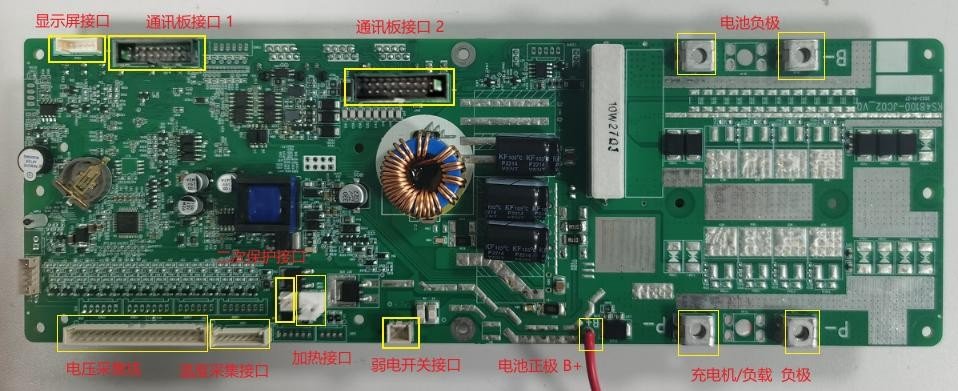
CMX 48V rack module — specification reference
For the CMX 51.2 V (48 V class) rack module family (e.g., the 48100-Ho1, 16S / 100 Ah):
| Item | Value |
|---|---|
| Configuration | 16S LiFePO4, 51.2 V nominal (48 V class), 100 Ah |
| Energy | ≈ 5.12 kWh nominal (100 Ah × 51.2 V) |
| BMS current | continuous 100 A, peak 130 A |
| Parallel | up to 16 modules |
| Protection | full per-cell over/under-voltage, over/under-temperature, over-current (L1 115 A / L2 130 A) and short-circuit — see the charging & BMS guide for the full setpoint table |
| Certification | supplied per the latest shipping certificate of conformity / test report — confirm the applicable marks (e.g., CE / UL / IEC) for your market at order |
Nominal energy is 5.12 kWh; usable energy at 25 °C depends on the depth-of-discharge window (typically ~90% of nominal under a 0.2C discharge) and is stated on the shipment test report. Figures are from the CMX 48100-Ho1 family spec A0 (2023-03-12); confirm against the current shipping specification.
4. Golf cart and LSV: is a 48V lithium pack a real drop-in?
This is the question behind most “48V lithium” searches, and the honest answer is: sometimes, but the battery is the easy part. A drop-in replacement succeeds or fails on five checks.
| Check | What to verify | Typical failure mode |
|---|---|---|
| Tray dimensions and hold-down | Overall footprint and height, including terminals; the restraint method | Lithium packs are often smaller and lighter, so the original hold-down no longer clamps anything |
| Terminal type and layout | Stud size, polarity positions, cable reach | Cables cut for the original layout will not reach a relocated terminal |
| Charger compatibility | Whether the existing lead-acid charger has a LiFePO4 profile or is switchable | A lead-acid charger with an equalisation or desulfation mode can damage a lithium pack or trip its BMS |
| Controller and solenoid voltage window | That the controller tolerates the lithium pack’s higher operating voltage range | Over-voltage faults on a freshly charged pack, or regen current being rejected when full |
| BMS continuous and peak current | Hill starts and acceleration peaks, not just cruising draw | BMS cut-out on the first steep incline, which reads as a dead battery |
What usually changes for the better is range consistency and weight: a lithium pack holds its voltage under load far better than lead-acid, so performance does not fade over the round, and the reduction in mass is significant. What does not change is the need to size for the duty — peak current on hills is the number that decides the BMS, and it is the one most buyers never measure.
If you are sizing the pack itself, the sizing guide walks through the energy calculation for this exact case.
5. 48V for telecom, UPS and industrial backup
Telecom inherited the 48V standard from the exchange, and it remains the default for base stations, UPS and industrial DC backup. Here the sizing logic is different from consumer applications: the operator specifies an autonomy time, and the battery is sized to deliver it at end of life, not when new.
- Size against the required autonomy at the specified end-of-discharge voltage.
- Apply an ageing margin so a five-year-old string still meets the autonomy target.
- Check the ambient range — outdoor cabinets see far more extreme temperatures than a garage.
- Confirm the monitoring interface, because remote sites are usually managed over a network.
6. Cells, BMS and balancing in a 48V pack
A 16S LiFePO4 pack is only as good as its weakest cell, which is why two things matter more than the cell brand on the datasheet:
- Cell matching. Capacity and internal resistance should be closely matched at assembly; mismatched cells lose usable capacity and drift out of balance. Our buying guide covers what to ask about grading, and why a 314Ah pack measures around 200Ah explains what happens when matching or test conditions are poor.
- Balancing strategy. Passive balancing bleeds energy from high cells as heat and is adequate for many applications; active balancing moves charge between cells and matters more on large packs, fast charge cycles or packs assembled from cells with wider spread. The choice affects usable capacity over time, so ask which is implemented and why.
7. Charging a 48V LiFePO4 pack
LiFePO4 uses a constant-current / constant-voltage profile, and the pack’s BMS enforces the limits. In practice:
- Use a charger with a LiFePO4 profile, or one you can configure to the manufacturer’s specified voltages.
- Do not use a lead-acid charger in a mode that applies an equalisation or desulfation cycle.
- Charge only within the temperature window the manufacturer specifies — charging below freezing is a hard limit, not a performance question.
- Size the charger to the pack: too small and the battery never balances, too large and you may exceed the recommended charge rate.
Because the exact absorption and float voltages are cell- and BMS-specific, treat the manufacturer’s datasheet as the authority rather than any generic figure.
8. Cabling, fusing and disconnects at 48V
48V is low enough to be relatively forgiving and high enough that sloppy terminations cause real problems. Size the cable from the continuous current at the lowest battery voltage you expect, not from the nominal figure, and keep the run short — voltage drop is wasted energy and, at high current, a genuine heat source.
- Use fine-stranded, tinned copper cable rated for the temperature in the enclosure.
- Torque lugs to the manufacturer’s value and re-check after the first thermal cycle.
- Place over-current protection as close to the battery terminal as practical.
- Fit a disconnect that is accessible and rated for DC at your system voltage — AC-rated breakers are not a substitute.
- Keep the communication wiring physically separated from the power cables — see our wiring and CAN vs RS485 guide for the details.
9. Six 48V mistakes that cost money
- Assuming 48V means 48.0V. Using the wrong nominal in calculations understates or overstates energy and current.
- Sizing on capacity and ignoring peak current. The BMS rating decides whether the pack survives the hill start, the motor surge or the inverter surge.
- Reusing a lead-acid charger. Equalisation modes and lithium packs do not mix.
- Ignoring the voltage window of existing equipment. A full lithium pack sits higher than a full lead-acid bank; controllers and inverters must tolerate it.
- No restraint design. A lighter, smaller pack needs a hold-down that was designed for it.
- Paralleling modules without confirming support. Manufacturer guidance on parallel configuration exists for a reason.
10. FAQ
Can I drop a 48V lithium battery straight into my golf cart?
Often yes, but confirm five things first: tray dimensions and hold-down, terminal type and layout, whether your charger has a LiFePO4 profile, whether the controller tolerates the pack’s voltage window, and the BMS continuous and peak current rating. The most common failure is a BMS that trips on the first hill because it was sized for cruising current rather than peak.
Will my existing golf cart charger work with a 48V lithium pack?
Only if it has a LiFePO4 profile or can be configured to the pack manufacturer’s specified voltages. A lead-acid charger that runs an equalisation or desulfation cycle can damage the pack or trip its BMS, so check the charger before you buy the battery.
How far will a 48V 100Ah lithium pack take a golf cart?
That depends on the cart’s energy consumption per mile, which varies with terrain, tyre pressure, speed, passenger load and whether the cart is lifted. Convert the pack to watt-hours, estimate consumption from your current setup, and add margin for hills — a lift kit and aggressive tyres can raise consumption substantially.
Is 48V better than 36V for a golf cart?
Higher voltage means lower current for the same power, so less voltage drop, less heat and better sustained torque on hills. 48V has become the mainstream for that reason, but if your cart is 36V throughout — motor, controller and charger — the conversion is a system decision, not just a battery swap.
What is the real voltage of a 48V LiFePO4 battery?
A 16-cell LiFePO4 pack has a nominal voltage of about 51.2V and operates across a range between the BMS cut-off and its full-charge voltage, which is typically in the mid-to-high 50V range. Equipment must be rated for the whole window, not the nominal figure.
How many 48V rack batteries do I need for my home?
Work from the load: sum the average draw of the circuits you want backed up, multiply by the hours of autonomy you want, then divide by the usable energy of one module. Sizing by kWh alone without a load survey is how people end up with either a stranded house or an oversized bill.
Can I parallel 48V rack batteries?
Most rack modules are designed to be paralleled, but the number supported and the commissioning procedure are manufacturer-specific. Get it in writing, and bring modules to a similar state of charge before connecting them in parallel.
Do I need a special BMS for 48V?
The BMS must match the cell count (16S for a 51.2V nominal pack), the continuous and peak current of your application, and the temperature conditions. For traction duty such as golf carts, the peak current rating is usually the deciding specification.
What size cable do I need for a 48V system?
Size from the continuous current at your lowest expected battery voltage, then check voltage drop over the actual run length. Undersized cable wastes energy and gets hot; because 48V systems run lower current than 12V, the same power needs much thinner cable.
Is 48V safe to work on?
48V DC is generally treated as a lower-risk voltage than mains AC, but a battery can deliver very high current into a short circuit, and that is where the real hazard lies — arc flashes, burns and fire. Use insulated tools, remove jewellery, fit over-current protection near the terminal, and follow the manufacturer’s procedure.
Which certification does a 48V rack battery need?
It depends on the market and the application. Stationary storage, traction and marine each have their own applicable standards, and transport testing is separate again. Rather than collecting certificates by name, confirm which standards your market and installation type require.
Can CMX supply a 48V pack for a specific application?
Yes — we build 48V packs for rack storage, golf carts and LSVs, marine and industrial backup, including drop-in configurations. Send the dimensional envelope, continuous and peak current, voltage window of the existing equipment and target certification; start from the RFQ page or our OEM / ODM services.
11. Specifying 48V for a volume programme
For fleet, OEM and distributor programmes, the 48V decision is a platform decision that should be made once and documented.
- Fix the electrical envelope. Nominal voltage, operating window, continuous and peak current, charge rate.
- Fix the mechanical envelope early. In vehicles and cabinets, the tray usually constrains the design more than the energy requirement does.
- Specify the BMS behaviour, not just its rating. Cut-off thresholds, balancing strategy, low-temperature charge protection and the communication interface.
- Decide the certification path before tooling. Retrofitting a certification programme is far more expensive than designing to it.
- Plan the service model. Field-replaceable modules, diagnostics access and spare strategy matter more in year five than in week one.
Our OEM / ODM services cover cell selection, structural and thermal design, and BMS integration for 48V platforms; start with the request a quote form.
Related reading
- LiFePO4 for forklifts and AGVs: OEM specification guide
- LiFePO4 cycle life: what “6000 cycles” really means
- 12V vs 24V vs 48V LiFePO4: how to choose a system voltage
12. Disclaimer
Technical scope. This article explains general principles for 48V LiFePO4 systems. Voltages, currents and configurations vary by manufacturer; the pack datasheet always takes precedence over any figure here.
No brand ranking. We do not rank or compare named competitor brands, and nothing here is an endorsement of third-party equipment.
Safety. Lithium batteries can deliver very high fault current. Installation, over-current protection and commissioning must be done by a qualified person following the applicable electrical code and manufacturer instructions. Do not charge LiFePO4 cells below freezing.
Commercial disclosure. CMX Battery is a LiFePO4 battery manufacturer and OEM/ODM supplier. We supply products in the categories discussed, so read our guidance with that in mind.
No affiliate links. This article contains no affiliate or paid placement links.
CMX Battery is a brand of EGbatt.
Turning “48V” into per-cell numbers you can actually check
“48 V” is a class name, not a voltage you will ever read on a meter. In a lithium pack it means
16 LiFePO4 cells in series, and every number that matters is that cell count multiplied by a
per-cell figure. The three you will use most often:
| What it is | Per cell | On a 16-cell pack | Where you meet it |
|---|---|---|---|
| Nominal voltage | 3.20 V | 51.2 V | The nameplate figure (“48 V”, “51.2 V”) |
| Constant-voltage charge limit | 3.65 V | 58.4 V | The absorption voltage your charger holds |
| Discharge cutoff | 2.50 V | 40.0 V | Where a capacity test is set to stop |
The spread between those three numbers is the whole reason 48 V systems behave the way they do.
A pack spends almost its entire working life inside a very narrow voltage band: between 10% and 90%
of its capacity, our own bench measurements show a 16-cell pack moving only 0.134 to 0.140 V per
cell — under one and a half tenths of a volt per cell across four fifths of the discharge. That
is why voltage alone tells you very little about state of charge on a LiFePO4 pack, and why a
monitor that only reads pack voltage will always look “about right”.
What that looks like as a lookup
Because the plateau is flat, the useful question is not “what voltage is 50%?” but “what range of
voltage covers the middle of the discharge?” The table below is read off the curves above, at each
pack’s own test current:
| Depth of discharge | 16S 50 Ah (50 A) | 16S 100 Ah (60 A) | 16S 200 Ah (90 A) | 16S 230 Ah (90 A) |
|---|---|---|---|---|
| 10% | 3.234 V | 3.272 V | 3.269 V | 3.264 V |
| 30% | 3.217 V | 3.256 V | 3.254 V | 3.254 V |
| 50% | 3.196 V | 3.229 V | 3.228 V | 3.227 V |
| 70% | 3.168 V | 3.204 V | 3.203 V | 3.203 V |
| 90% | 3.088 V | 3.131 V | 3.130 V | 3.127 V |
| Last reading before the run ended | 2.613 V | 2.744 V | 2.728 V | 2.709 V |
Read the shape rather than the decimals. Halfway through the discharge the cell is still at
3.20–3.23 V; you have to take out 90% of the capacity before it drops to 3.09–3.13 V, and then it
falls off a cliff. Charged to that same 3.20–3.23 V band, a pack is anywhere between roughly 30%
and 90% full. This is the single most common source of “my monitor says 80% but the pack is nearly
empty” complaints.
One line in that table deserves its own note. “Last reading before the run ended” is not the same
as “the cutoff”. The bench was configured for 2.50 V per cell / 40 V, and every one of the five runs
ended between 2.59 and 2.74 V per cell instead — because the pack’s own protection opened the
discharge path before the bench setting could be reached. A cell voltage chart that claims to run
down to the cutoff is worth checking against the log; ours does not, so ours says so.
Adding up to a real pack
Multiply those per-cell numbers back up and a 16-cell pack charged at 58.4 V, sitting at rest
anywhere in the low-to-mid 50s, and carrying a cutoff setting of 40 V is completely normal. Nothing
about it is “only reading 53 V” — that is a full pack at rest. If you want the measurement side of
this, our production bench results for five 16-cell packs of different capacities are published in
how to verify a capacity rating.
Raw measurement data
First-party capacity-test bench results under the plant’s standard procedure. Rates and cutoffs as measured; see the article text for interpretation.
Voltage plateau flatness across platforms (10-90% DOD)
| Object | Per-cell voltage swing (10-90% DOD) |
|---|---|
| 16S 50 Ah | 0.138 V |
| 16S 100 Ah | 0.140 V |
| 16S 200 Ah (Jun) | 0.138 V |
| 16S 200 Ah (Feb) | 0.140 V |
| 16S 230 Ah | 0.134 V |
| 128S 409.6 V 150 Ah cabinet | 0.134 V |
Inverter Compatibility & BMS Communication
This 48V (51.2V nominal) LiFePO4 pack communicates over CAN and RS485
(RS232 on select models) and integrates with most 48V-class hybrid and off-grid inverters.
Confirm your inverter supports a LiFePO4 charge profile and closed-loop BMS communication before commissioning.
| Inverter brand | Typical application | Protocol | Notes |
|---|---|---|---|
| Deye | Hybrid / off-grid | CAN / RS485 | Select the LiFePO4 battery profile |
| Growatt | Hybrid | CAN / RS485 | — |
| Victron Energy | MultiPlus / Quattro | CAN | Requires VE.Bus BMS configuration |
| GoodWe | Hybrid | CAN / RS485 | — |
| Solis | Hybrid | CAN / RS485 | — |
| Luxpower | Hybrid | CAN / RS485 | — |
| SMA | Off-grid / hybrid | CAN / RS485 | — |
| Studer | Off-grid | RS485 | — |
Compatibility is listed for communication-protocol matching only. It is not an endorsement or a
certified-partnership claim. Send us your inverter model and we will verify protocol matching before shipment.
Choosing a 48V 100Ah Module for This Use Case
If you are sizing a rack-based system, a single 48V 100Ah module stores about 5.12 kWh and can be
paralleled with further modules as your load grows. For a module built for rack mounting with a smart BMS
and CAN / RS485 communication, see our
48V 100Ah 5.12kWh server rack LiFePO4 battery pack.
Related: 48V LiFePO4 battery manufacturer — sourcing, OEM and wholesale terms for the 48V range.
51.2V and 48V in numbers: the 16S vs 15S difference
Two cell counts are in circulation, and they are not the same amount of energy at the same amp-hour
rating:
| Label | Cells in series | Nominal voltage | Energy at 100 Ah |
|---|---|---|---|
| 51.2V 100Ah | 16S | 51.2 V | 51.2 × 100 = 5,120 Wh (5.12 kWh) |
| 48V 100Ah | 15S | 48.0 V | 48.0 × 100 = 4,800 Wh (4.8 kWh) |
The 16S pack holds about 6.7% more energy at the same amp-hour number. That is the practical
reason to convert every quote to watt-hours before comparing.
The cell count also decides the voltage window your inverter has to be programmed with. Per-cell values
are the reliable way to read it:
| Per cell | 16S pack | What it sets |
|---|---|---|
| 2.50 V | 40.0 V | Low-voltage cut-off — the reference point used in capacity testing |
| 3.20 V | 51.2 V | Nominal |
| 3.50 – 3.65 V | 56.0 – 58.4 V | Typical full-charge band; the exact figure comes from the pack maker |
A note on nameplates: on our production test bench a 51.2 V 100 Ah pack measured 117.7 Ah against a
100 Ah label, because the cells graded into that build sit above the rating rather than below it. Our
capacity verification guide
publishes the method and the cross-pack table.
Is 51.2V the same as 48V lithium?
Same product class, different cell count. 51.2 V is 16 cells in series; a pack labelled 48.0 V is
usually 15. Both work with 48 V inverters, but the energy per amp-hour differs by about 6.7%.
Why do listings say 5.12 kWh instead?
5.12 kWh is the same pack expressed as energy: 51.2 V × 100 Ah = 5,120 Wh. Sellers use whichever
number their market searches for.
Verify Compatibility for Your Project
Send us your inverter model, target capacity and annual volume — our engineers will confirm protocol
matching and return a quote within 24 hours.
