
What does Coremax do to match the cells?
Coremax will do the following things before assembling the pack:
- Select capacity, same capacities cells for one pack
- Measure the voltage, same voltage cells for one pack(difference is under 0.02v per cell)
- Check and Measure the internal resistance, same IR cells for one pack (difference is under 1m Ohm)
All above steps are very strict to make sure the pack performance is perfect.

It is hard to determin the exact capacity of the battery cell after it is produced from a lithium battery factory, and this is especially true with lead acid and other batteries that involve manual assembly. Even fully automated cell production in clean rooms causes performance differences. As part of quality control, each cell is measured and segregated into categories according to their capacity levels. The high-capacity NiMH and other cells may be reserved for special applications and sold at premium prices; the large mid-range will go to commercial and industrial markets; and the low-grade cells might end up in a consumer product or in a department store. Cycling will not significantly improve the capacity of the low-end cell, and the buyer should be aware of differences in capacity and quality, which often translate into life expectancy.
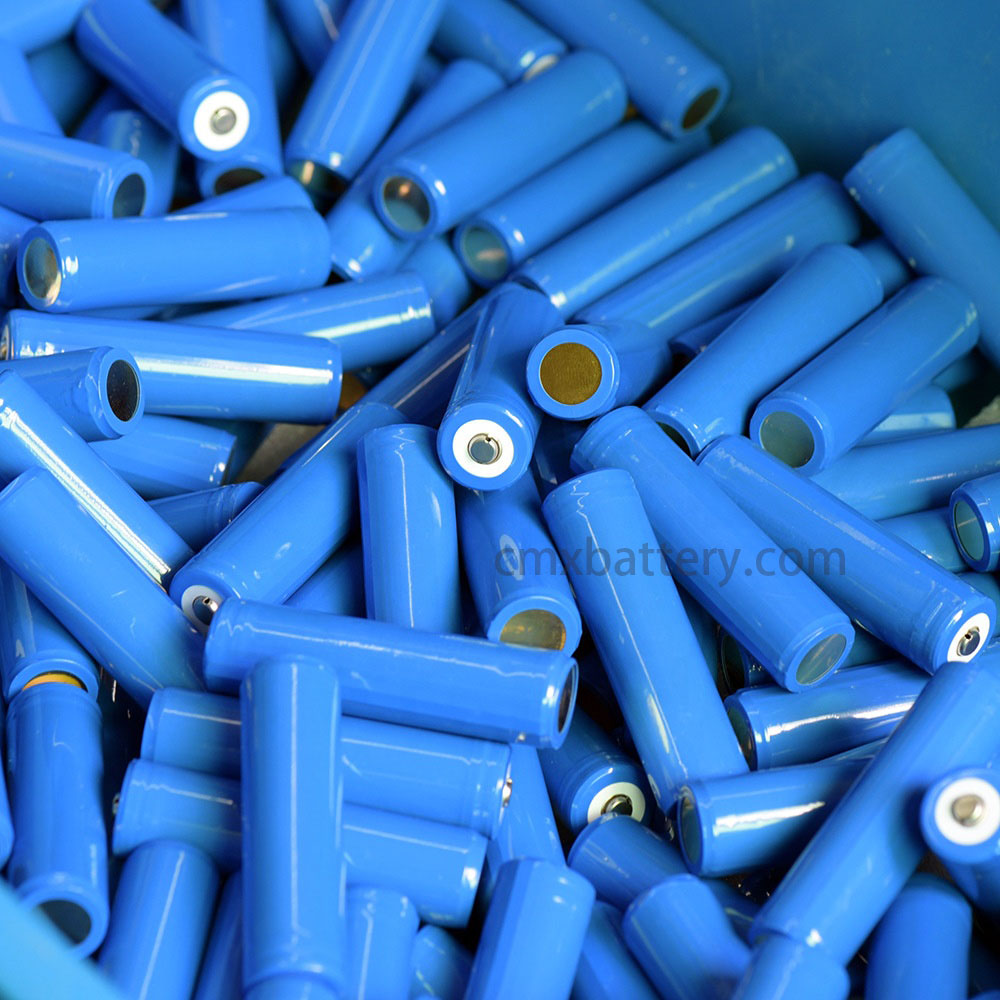
Cell matching according to capacity is important, especially for industrial batteries, and no perfect match is possible. If slightly off, nickel-based cells adapt to each other after a few charge/discharge cycles similar to the players on a winning sports team. High-quality cells continue to perform longer than the lower-quality counterparts, and fading is more even and controlled. Lower-grade cells, on the other hand, diverge more quickly with use and time, and failures due to cell mismatch are more widespread. Cell mismatch is a common cause of failure in industrial batteries. Manufacturers of professional power tools and medical equipment are careful with the choice of cells to attain good battery reliability and long life.
Let’s look at what happens to a weak cell that is strung together with stronger cells in a pack. The weak cell holds less capacity and is discharged more quickly than their strong brothers. Going empty first causes their strong brothers to overrun their feeble sibling to the point where a high load can push the weak cell into reverse polarity. Nickel-cadmium can tolerate a reverse voltage of minus 0.2V at a few milliamps, but exceeding this will cause a permanent electrical short. On charge, the weak cell reaches full charge first, and then goes into heat-generating overcharge, while the strong brothers still accept charge and stay cool. The weak cell experiences a disadvantage on both charge and discharge; it continues to weaken until giving up the struggle.
The capacity tolerance between cells in an industrial battery should be +/– 2.5 percent. High-voltage packs designed for heavy loads and a wide temperature range should reduce the capacity tolerance further. There is a strong correlation between cell balance and longevity.



Leave A Comment
You must be logged in to post a comment.