

Blog
Is a High-Voltage Battery System Worth It for Commercial Solar Projects? What Most Buyers Overlook Before Investing

When businesses start researching commercial battery storage, the first question is usually:
“How many kWh do I need?”
Ironically, that is often the least important question.
The real question should be:
Will this battery system actually save money over the next 10 years?
Many commercial energy storage projects fail to deliver the expected return on investment—not because the batteries are bad, but because buyers focus on capacity instead of operational economics.
Before investing in a high-voltage battery storage system, here are five critical factors most buyers overlook.
1. The Cheapest Battery Is Rarely the Cheapest System
Many buyers compare battery prices on a per-kWh basis.
This seems logical.
However, battery cost is only one part of the total project investment.
A lower-cost battery may require:
- More installation labor
- Larger cable sizes
- Additional cabinets
- More maintenance
- Earlier replacement
Over time, these hidden expenses can outweigh the initial savings.
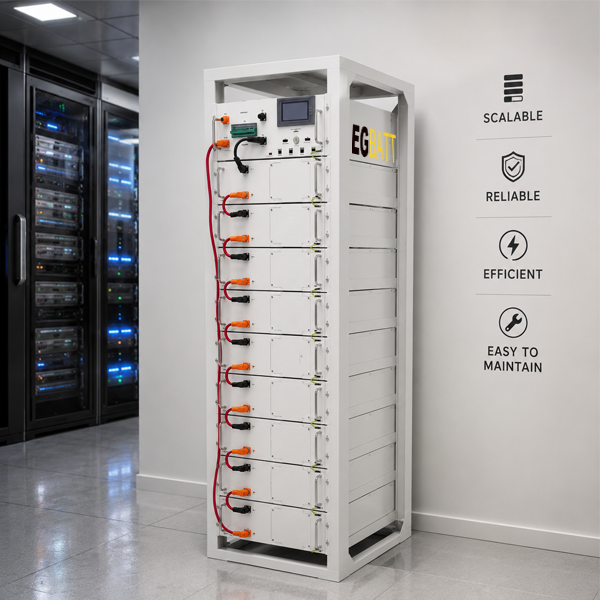
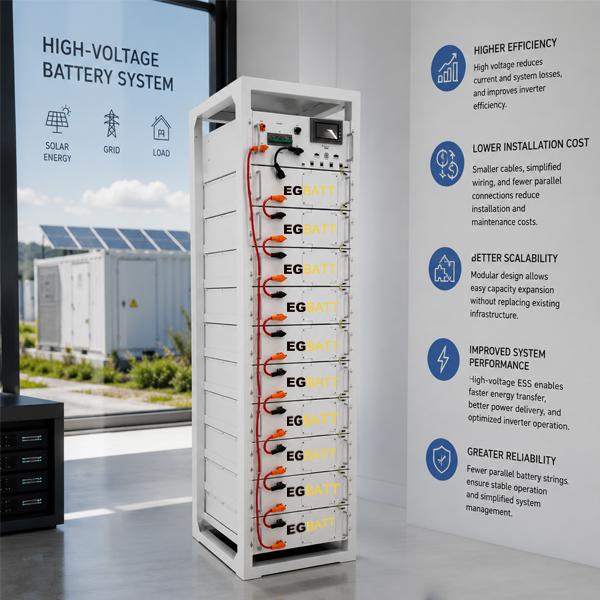
This is one reason why many EPC contractors are moving toward integrated high-voltage battery platforms such as the CMX Battery GRHV Series.
The goal is not simply to buy batteries.
The goal is to reduce total ownership cost.
2. Peak Demand Charges Often Matter More Than Energy Consumption
Many commercial facilities focus entirely on reducing electricity usage.
In reality, utilities often charge businesses based on peak demand.
For factories, warehouses, and cold storage facilities, a few hours of peak consumption can dramatically increase monthly electricity bills.
A properly configured battery storage system can discharge during these expensive periods and reduce demand charges.
In some markets, this creates a faster return on investment than solar generation alone.
This is one of the fastest-growing applications for commercial battery energy storage worldwide.
3. Future Expansion Is Usually Underestimated
A warehouse built today may double its throughput within three years.
A manufacturing plant may add production lines.
A solar project may expand capacity.
Yet many battery systems are designed only for today's needs.
This often forces businesses to replace equipment earlier than expected.
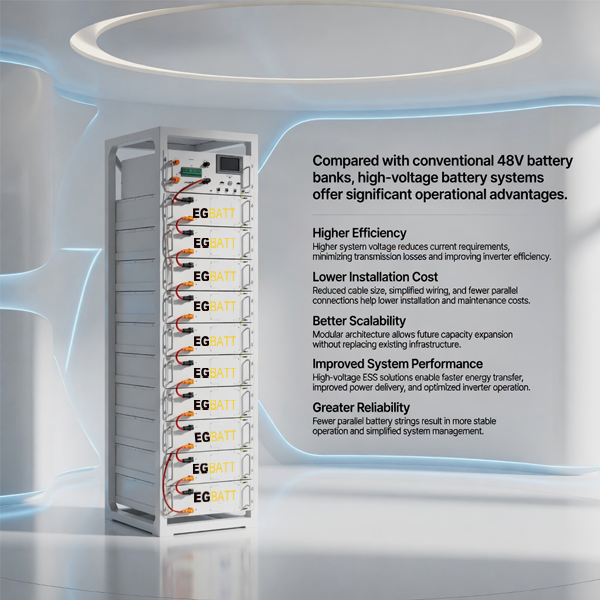
Modular high-voltage systems provide a more flexible approach because additional battery modules can be integrated as energy requirements increase.
For growing businesses, scalability may be worth more than a slightly lower purchase price.
4. Grid Reliability Is Becoming a Bigger Business Risk
Power outages are no longer just an inconvenience.
For many businesses, even a short interruption can result in:
- Production delays
- Equipment shutdowns
- Inventory losses
- Missed deliveries
- Revenue loss
Battery storage is increasingly being viewed as an operational risk management tool rather than simply an energy-saving device.
Forward-thinking businesses are investing in energy resilience before disruptions occur—not after.
5. The Most Valuable Energy Is Often the Energy You Generate Yourself
Commercial solar adoption continues to grow.
However, many facilities still export excess solar power to the grid during the day and purchase electricity back at higher prices later.
Without storage, a significant portion of potential savings remains unrealized.
Battery storage changes the equation.
Instead of selling low and buying high, businesses can store excess generation and use it when electricity is most valuable.
This is one of the primary reasons why commercial solar developers increasingly bundle battery storage into new projects.
What Type of Business Benefits Most from High-Voltage Battery Storage?
Not every facility requires energy storage.
However, battery systems typically deliver the strongest economic value for:
Manufacturing Plants
High power demand and expensive peak charges.
Warehouses & Logistics Centers
Extended operating hours and growing electricity consumption.
Cold Storage Facilities
Critical loads that cannot tolerate interruptions.
Agricultural Operations
Remote sites with limited grid reliability.
Commercial Solar Projects
Maximizing self-consumption and project returns.
Why More EPC Contractors Are Choosing High-Voltage Architectures
The commercial energy storage market has changed significantly.
Five years ago, many projects relied on multiple low-voltage battery banks.
Today, more EPC contractors prefer high-voltage systems because they simplify installation, improve efficiency, and provide a cleaner path for future expansion.
This shift explains the growing adoption of solutions such as the CMX Battery GRHV High-Voltage Rack-Mount Battery System, which is specifically designed for commercial and industrial applications where scalability, efficiency, and long-term reliability are essential.
Final Thoughts
The most successful energy storage projects are not necessarily the ones with the largest batteries.
They are the projects that align battery capacity with real business objectives:
- Lower operating costs
- Reduced demand charges
- Improved energy independence
- Greater resilience
- Better long-term ROI
Before choosing a battery system, ask a simple question:
Will this investment reduce costs and improve operational flexibility over the next decade?
For many factories, warehouses, and commercial solar projects, the answer is increasingly yes.
Learn more about the CMX Battery GRHV High-Voltage Rack-Mount Battery System:
Related CMX Battery Solutions
Frequently Asked Questions
Is a high-voltage battery system worth it for commercial solar?
For sites with large daytime load, demand charges, or more than 100 kWh of storage, high-voltage (e.g. 400-1000V DC) systems improve efficiency and lower balance-of-system cost. Smaller sites may do better with lower-voltage racks.
What do most buyers overlook before investing?
Buyers often miss total cost of ownership (inverter DC bus, cooling, maintenance), degradation over the warrantied cycles, and whether their tariff actually rewards peak-shaving. Model 10-year cash flow, not just upfront price.
Is high-voltage or low-voltage storage more efficient?
High-voltage systems run lower current at the same power, reducing I2R losses and cable cost, so round-trip efficiency is typically better at commercial scale.
Are high-voltage batteries safe?
Yes when built with certified LiFePO4 cells, a rated BMS, and proper isolation and arc-fault protection per code. Higher voltage demands stricter insulation and qualified installers.
How long does payback take for commercial storage?
Payback depends on demand-charge structure, solar self-consumption, and incentives; many C&I projects land in a multi-year range. A site load study is the only reliable way to size it.