

Blog
Split vs. Integrated DC Fast Chargers: Choosing the Right Architecture for Your EV Future

The electric vehicle revolution is here, and with it comes a critical question for businesses, developers, and infrastructure planners: Which charging technology will power tomorrow's success?
As DC fast charging becomes the backbone of modern EV infrastructure, two distinct architectures have emerged—Split-Type and Integrated. Each offers a unique path forward, but only one may align with your specific vision, growth trajectory, and operational reality.
This guide walks you through everything you need to know, from design philosophy to real-world application, helping you make a decision that serves you not just today, but for years to come.
The Big Picture: Two Philosophies, One Goal
At their core, both charger types aim to deliver rapid, reliable energy to electric vehicles. But how they achieve this—and what that means for you—couldn't be more different.
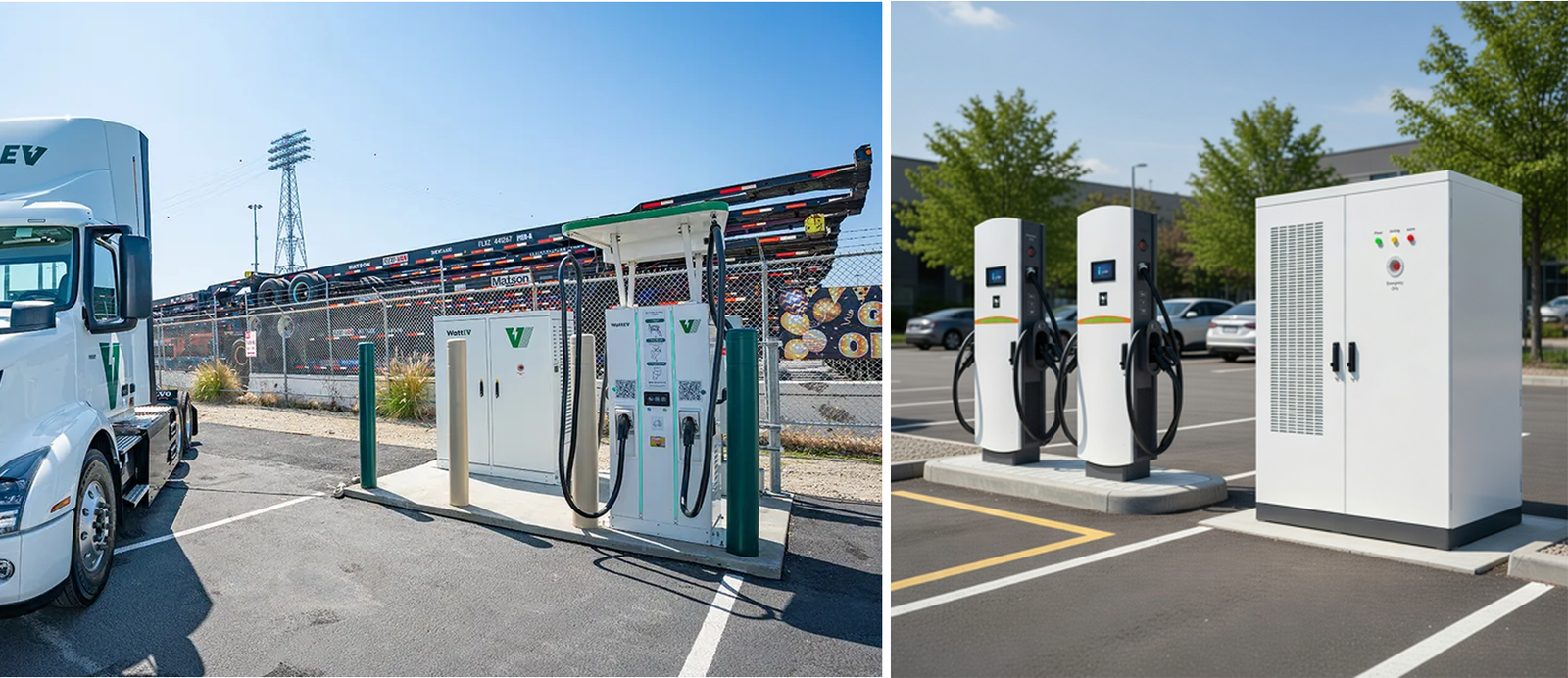
Split-Type: The Modular Powerhouse
Imagine a system where the complex electronics live in a centralized hub, quietly humming away in a protected space, while sleek, minimalist dispensers dot your parking area where drivers need them. That's the split-type philosophy: separate the intelligence from the interface.
Power Cabinet: Houses all critical components—power modules, control systems, cooling. Can be installed indoors or in a utility area, safe from weather and wear.
Charging Dispensers: Lightweight, user-friendly posts connected to the central hub. They take up minimal space and create a clean, uncluttered look.
This separation isn't just about aesthetics. It's about intelligent design that prioritizes longevity, flexibility, and ease of operation.
Integrated: The Self-Contained Solution
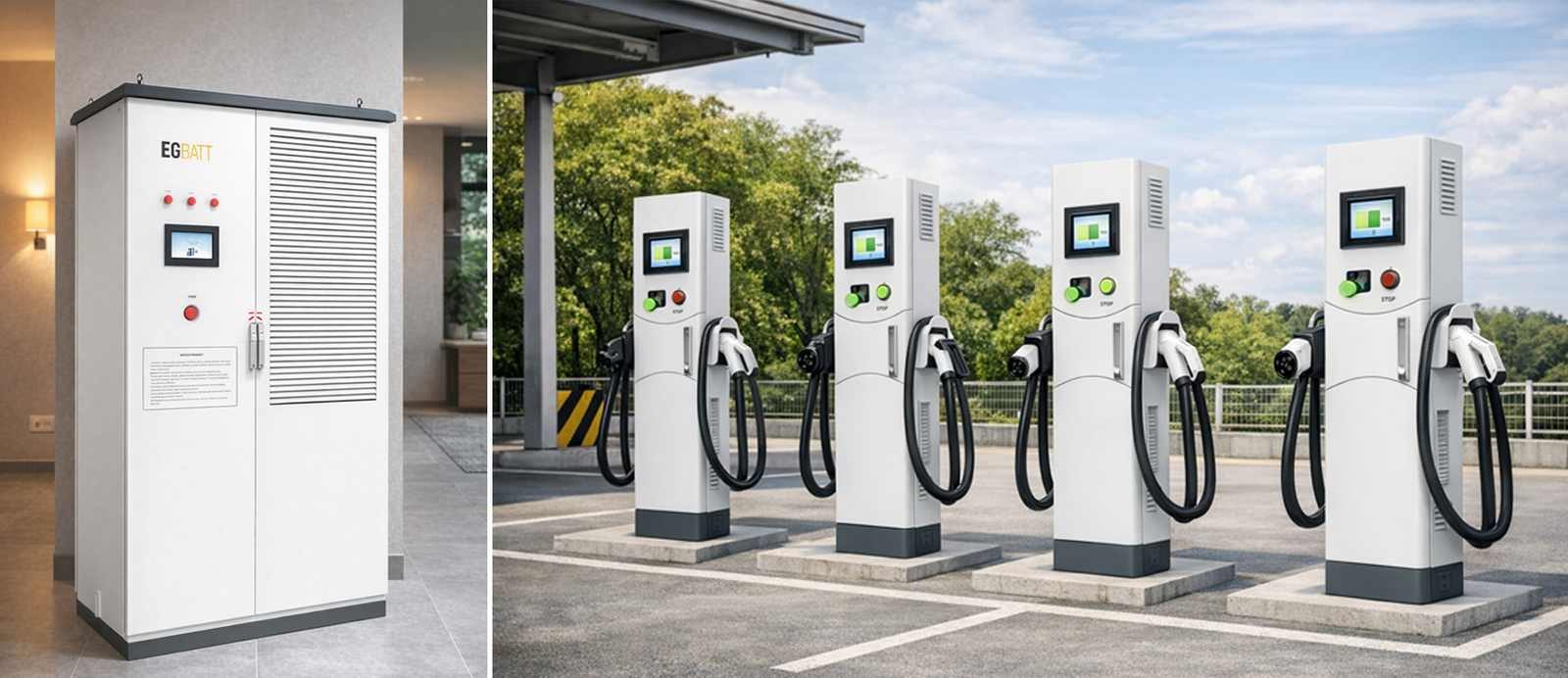
The integrated charger takes a different approach: everything in one place. Power electronics, control unit, cable management—all housed within a single, standalone cabinet installed right next to the parking space.
It's simplicity embodied. One unit, one connection, one charging point. For the right setting, this straightforward approach is not just adequate—it's ideal.
Beyond the Basics: What Really Matters for Your Business
Let's move beyond definitions and explore the dimensions that actually impact your bottom line and customer experience.
1. Installation Reality: Trade-Offs You Need to Know
- Split-Type: More Complex Setup, Smarter Long-Term Layout
Yes, installing a split-type system requires more upfront planning. You're coordinating wiring between the central cabinet and multiple dispensers. But this initial complexity buys you something valuable: a cleaner, more adaptable site design. Dispensers can go exactly where vehicles park, without being tethered to a bulky cabinet. The power unit can be tucked away, freeing up prime real estate. - Integrated: Simple Start, Fixed Positions
Integrated units are the definition of straightforward. Position the cabinet, connect power, and you're operational. The trade-off? You're locked in. Each unit occupies a full parking space footprint, and moving or rearranging them later is a major undertaking.
2. Maintenance Reality: The Hidden Cost of Downtime
This is where the split-type architecture reveals its true genius.
- Split-Type: Service One, Keep Others Running
Because all the sensitive electronics are centralized, maintenance becomes remarkably efficient. A technician can service the power cabinet without touching a single dispenser. If a dispenser fails, it's often a quick swap—minutes of downtime, not hours. Your station stays operational while repairs happen in the background. - Integrated: One Failure, One Outage
When an integrated unit goes down, that charging point is completely offline until service is complete. In a busy location, that's lost revenue and frustrated customers. And because all components are exposed to the elements, weather-related wear can accelerate maintenance needs.
3. Scalability Reality: Growing Without Starting Over
- Split-Type: Designed to Expand
Demand grows. Can your infrastructure keep up? With split-type systems, expansion often means simply adding dispensers to your existing power cabinet. You increase capacity without reinventing your electrical infrastructure. It's a system built for evolution, not replacement. - Integrated: Scaling Means Duplicating
To add capacity with integrated chargers, you install entirely new units. Every new charging point requires its own cabinet, its own connection, its own footprint. For small expansions, this works. For significant growth, costs multiply quickly.
The Financial Lens: Upfront Investment vs. Lifetime Value
Let's talk numbers—not just initial price tags, but the full financial picture.
| Factor | Split-Type DC Fast Charger | Integrated DC Fast Charger |
|---|---|---|
| Initial Investment | Higher due to separate components and wiring complexity | Lower with simpler, all-in-one installation |
| Operational Costs | Lower over time—modular design reduces maintenance and replacement expenses | Stable initially, but single-unit failures can mean full replacement costs |
| Expansion Costs | More efficient—add dispensers without new cabinets | Less efficient—each new point requires a complete new unit |
| Downtime Impact | Minimal—centralized service keeps most of the station running | Significant—failed unit means complete loss of that charging point |
Where Each Architecture Shines: Real-World Applications
Split-Type Excels In:
- High-Traffic Public Charging Hubs: Maximizing uptime and serving multiple vehicles efficiently is the name of the game.
- Fleet Operations: Bus depots, logistics centers—places where predictable, high-volume charging meets centralized management.
- Urban Parking Facilities: Space is premium; clean, minimalist dispensers tucked between cars create a premium user experience.
- Locations Planning for Growth: If you expect EV adoption to surge, split-type gives you room to breathe.
Integrated Excels In:
- Destination Charging: Hotels, restaurants, shopping centers offering guests a convenient top-up while they shop or dine.
- Workplace Charging: A straightforward employee benefit with predictable, daily usage patterns.
- Small to Medium Businesses: A cost-effective way to offer charging without complexity.
Rural or Low-Demand Areas: Where one or two reliable chargers meet community needs perfectly.
Making Your Decision: Questions to Ask Yourself
Before you choose, consider:
- What's today's demand? How many vehicles do you expect daily, weekly?
- What's tomorrow's demand? Will this number grow? How quickly?
- How critical is uptime? Can you afford a charger being offline for days?
- What's your space situation? Do you need to maximize every square foot?
- What's your growth timeline? Are you planning for 1 year, 5 years, or 10 years ahead?
Your answers will point clearly toward one architecture or the other.
Final Thoughts: Infrastructure as Investment
Choosing between split-type and integrated DC fast chargers is ultimately a choice between simplicity today and flexibility tomorrow. Both have their place. Both serve important roles in the evolving EV landscape.
Integrated chargers offer an accessible, reliable entry point for locations with stable, predictable demand. They're the workhorses of destination and workplace charging.
Split-type chargers represent something more: an infrastructure investment designed to grow, adapt, and perform as the electric future unfolds. For operations built on throughput, efficiency, and long-term vision, they are not just a choice—they are the strategic advantage.
The right technology is out there. The question is: What future are you building for?


