
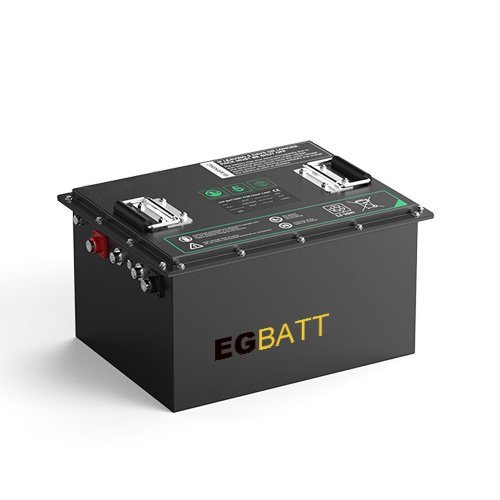
48V 100Ah lithium Golf Cart Battery Long Range Fast Charging Replacement
Cost to replace golf cart batteries with 48V 100Ah lithium battery
The 48V 100Ah Lithium golf cart batteries provide up to 4000+ cycles, consistent power delivery, fast charging, and a reliable range of 40–50 miles per charge. Switching to lithium is a smart investment that reduces downtime and maximizes value over time.
The cost to replace golf cart batteries with a 48V 100Ah lithium option is higher upfront than lead-acid alternatives. However, lithium batteries deliver a longer lifespan, lower maintenance needs, and superior performance, which often saves money in the long run.
Model: EG-51105G
Nominal Voltage: 48V (51.2V)
Nominal Capacity: 100 Ah
Stored Energy:5.37 kWh
Dimension (L×W×H) In Inch: 18.1×13.2×9.7 inch
Dimension (L×W×H) In Millimeter: 460×334×247 mm
Weight lbs. (kg) No Counterweight: 95 lbs. (43.2 kg)
Typical Mileage Per Full charge: 64-81 km (40-50 miles)
IP Rating: IP67
48V 100Ah Golf cart lithium battery Smart Replacement for Lead-Acid
The 48V 100Ah lithium battery for golf carts delivers powerful, long-lasting performance with minimal maintenance. Designed for up to 4000+ cycles, it offers stable power, fast charging, and extended range, making it the ideal upgrade over traditional lead-acid batteries.
If you’re considering upgrading your golf cart, the question on your mind is likely: “How far can a golf cart go with a 48 volt 100Ah lithium battery?” Let’s break it down and show you why a 48 volt 100 Ah golf cart lithium battery built with premium LiFePO4 cells is the ultimate upgrade for power, performance, and range.
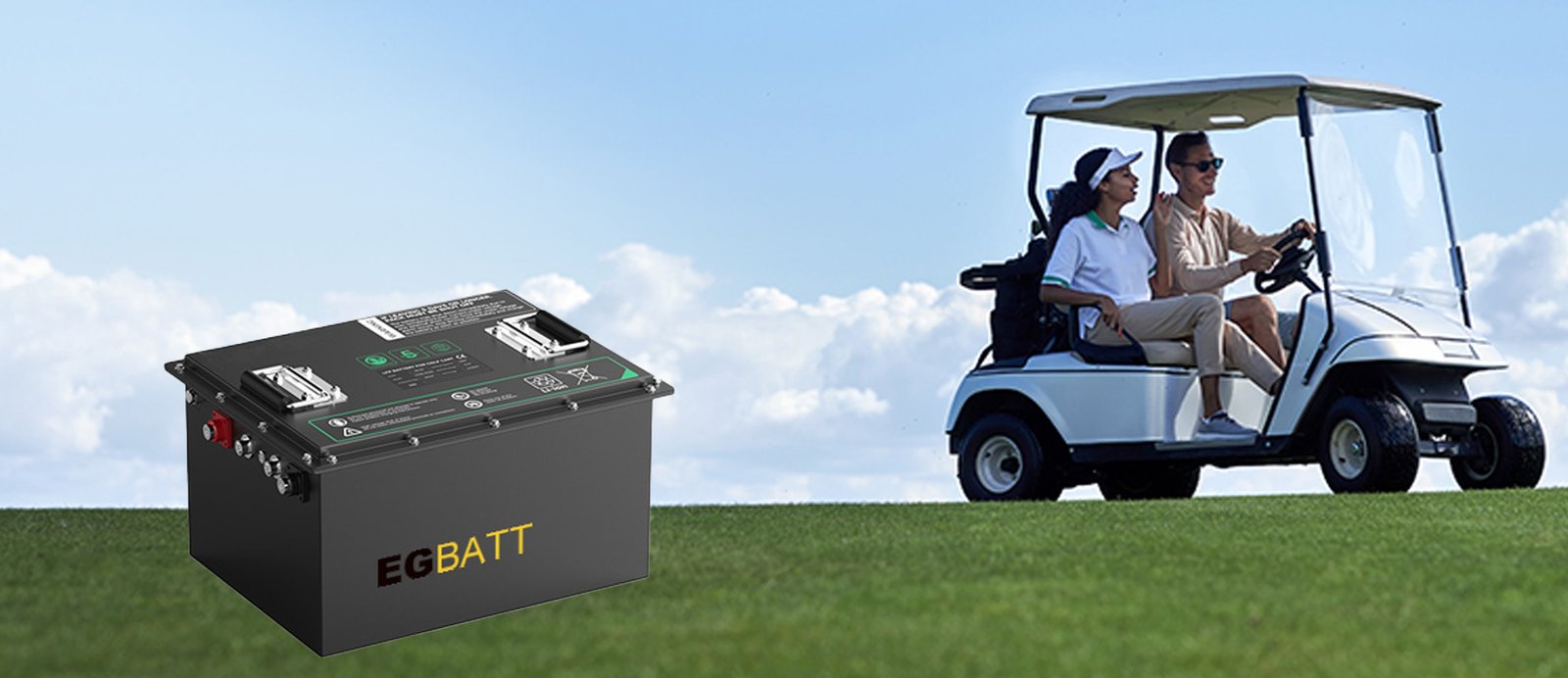
Key Factors that Influence Golf Cart Range
1. Battery Type & Capacity
The 48V 100Ah golf cart lithium battery is the core component that determines your driving range. A 48V 100Ah LiFePO4 battery offers superior energy density and efficiency, providing an average range of 25 to 40 miles per charge under typical conditions.
Want more? With optimized systems, low rolling resistance tires, and light loads, some users report up to 50–60 miles per charge with a 48V 100Ah setup.
2. LiFePO4 Cells – Built for Performance. Compared to traditional lead-acid batteries, LiFePO4 lithium cells are:
Lighter – Less strain on your golf cart’s motor
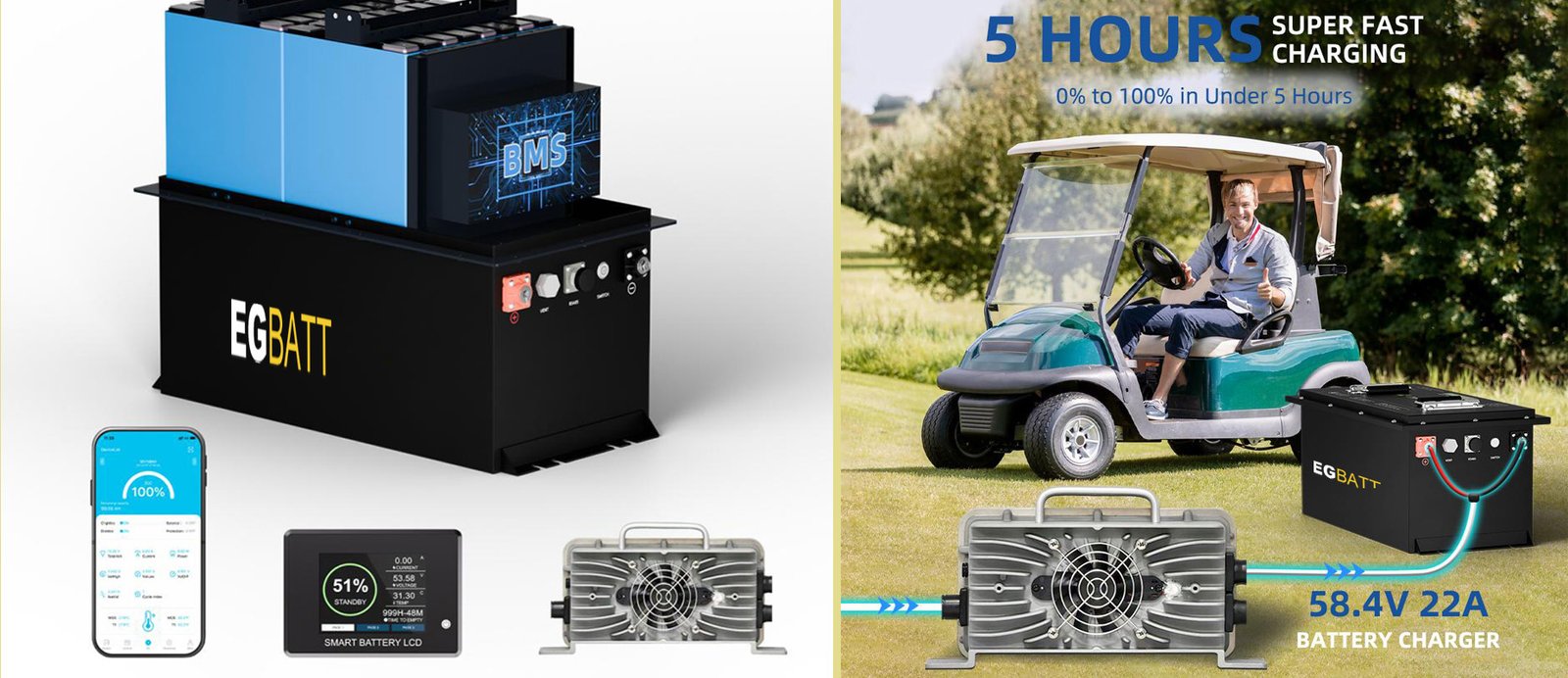
Faster charging – 100% charge in 4–6 hours
More stable in extreme temperatures – Great for year-round use
Longer lasting – Over 4,000+ cycles at 80% DOD
When you install a 48V 100Ah lithium battery for your golf cart with top-grade LiFePO4 cells, you’re investing in up to 10 years of reliable power.
Factors That Affect Real-World Range
Terrain: Hilly or off-road terrain consumes more energy
Load: Heavier cargo or passengers reduce mileage
Driving Habits: Rapid starts and stops waste power
Tire Pressure: Underinflated tires increase rolling resistance
Weather: Cold can reduce efficiency, though LiFePO4 handles cold better than lead-acid
Pro Tip: Drive smoothly, keep your tires properly inflated, and avoid overloading the cart to maximize your 48V golf cart lithium battery’s range
48V 100Ah Golf cart Lithium Battery vs Lead-Acid
Charging & Maintenance Tips
Use a dedicated 48V lithium charger to ensure fast, safe charging
Avoid fully draining the battery; recharge when it drops to 20–30%
Store in a cool, dry place when not in use
No need to check water levels—LiFePO4 golf cart batteries are maintenance-free
Common Questions Answered
Q: How long will a 48V 100Ah Golf cart lithium battery last per charge?
A: Typically 25–40 miles, depending on terrain, load, and speed.
Q: Can I replace my lead-acid battery with a 48V lithium battery?
A: Yes! Our 48V 100Ah LiFePO4 battery is a plug-and-play replacement in most carts. Some setups may need a minor controller or charger upgrade.
Q: Is the 48V 100Ah golf cart lithium battery safe?
A: Absolutely. Our 51.2V 100Ah Golf cart lithium batteries include advanced Battery Management Systems (BMS) to prevent overcharging, overheating, and deep discharging.
Specification:
Why Choose Our 48V 100Ah Golf Cart Lithium Battery?
Uses premium Grade-A LiFePO4 cells
Built-in Smart BMS for safety and performance
Delivers consistent power with zero voltage drop
Eco-friendly, non-toxic, and 100% recyclable
Compact, lightweight design = easy installation
Go Farther. Drive Smarter.
Upgrading to a 48V 100Ah lithium battery for your golf cart is a game-changer. With LiFePO4 technology, you’ll enjoy longer range, faster charging, lighter weight, and maintenance-free operation.
Whether you’re cruising the course or exploring your community, a golf cart lithium battery gives you power you can trust—mile after mile.
Cost to Replace Golf Cart Batteries
When considering the cost to replace golf cart batteries, upgrading to a 48V 100Ah lithium golf cart battery is one of the smartest investments you can make.
Although the upfront cost may be higher than traditional lead-acid batteries, lithium batteries offer longer lifespan, lower maintenance, and significantly improved performance.
If you’re comparing the cost to replace golf cart batteries, factor in the benefits of lithium: up to 4000+ charge cycles, stable power delivery, fast charging, and no need for regular watering or maintenance.
Over time, lithium batteries can actually save you money while delivering a smoother ride and better range. Switching to a 48V 100Ah lithium golf cart battery ensures reliable power for longer trips, more consistent performance on hills, and reduced downtime.
Custom Lithium Battery Solutions for Golf Carts
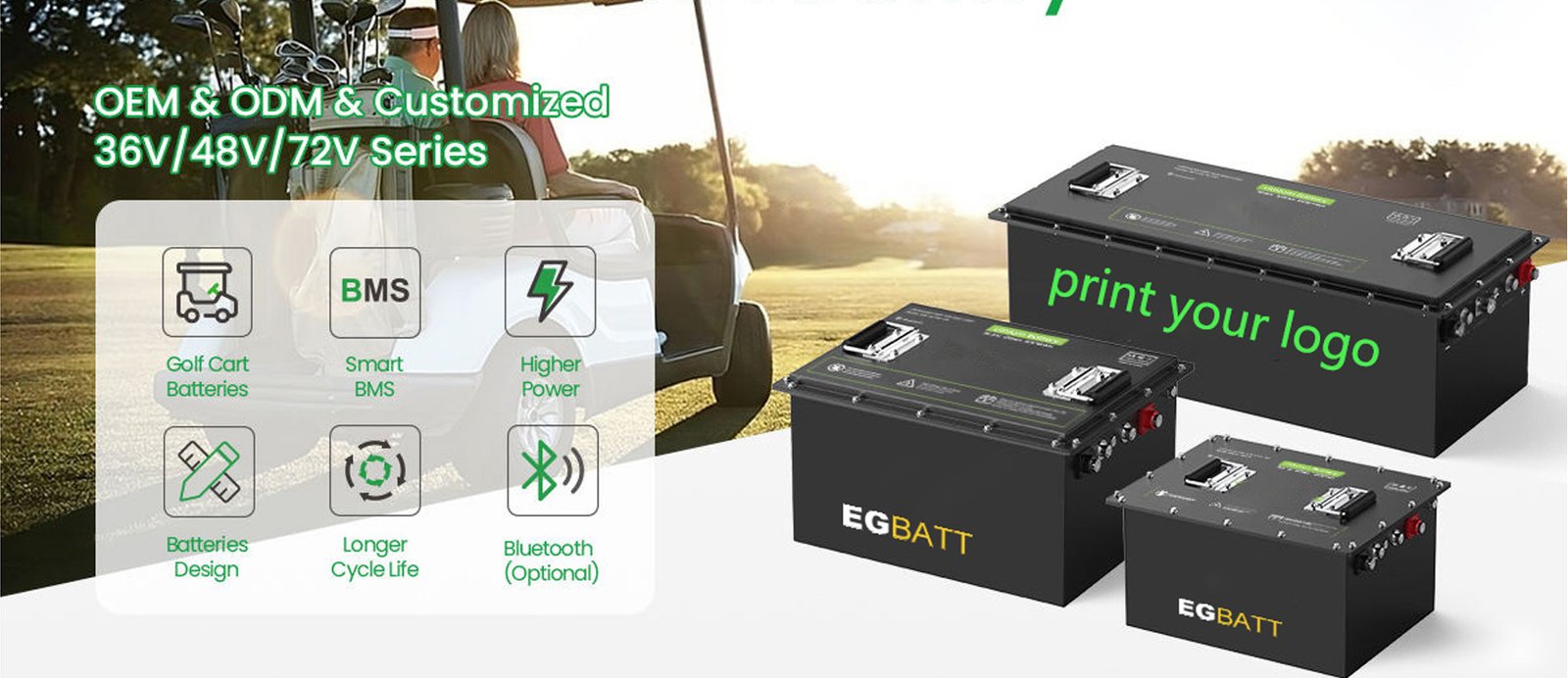
Upgrade your golf cart performance and efficiency with EGBATT’s advanced LiFePO4 lithium battery series — available in 36V, 48V, and 72V options. Each battery is built with Grade A LiFePO4 cells, delivering over 6000 cycles at 80% DOD, and equipped with an intelligent BMS for maximum safety and performance.
Inquiry
If you’re interested in this 48V 100Ah Lithium battery for your Golf carts. Contact us to learn more about the real cost to replace golf cart batteries and why lithium is the best choice.
Feel free to fill out the form. Our sales team will get in touch with you shortly
You must be logged in to post a review.


























Related products


48V 105Ah Golf cart Lithium battery
48V 105 ah Lithium battery for golf carts
This 48V 105Ah golf cart lithium battery offers exceptional performance, long lifespan, and built-in safety features that make it the best battery for golf carts. With over 4000 deep cycles, lightweight design for better handling, and fast charging capability, it outperforms traditional lead acid batteries in every way. This battery lets you drive farther on a single charge, delivers stable power even on rough terrain, and removes the hassle of maintenance. Upgrade now and enjoy a worry-free, more powerful ride every time you hit the course.Model: EG-51105L
Nominal Voltage: 48 V (51.2 V) Nominal Capacity: 105 Ah Stored Energy: 5.12 kWh Continuous Charge / Discharge Current: 30 A / 130 A Maximum Charge / Discharge Current: 55 A / 315 A Dimension (L×W×H) In Inch: 22.17 x 12.99 x 9.98 inch Dimension (L×W×H) In Millimeter: 565 x 330 x 253.6 mm Weight lbs. (kg) No Counterweight: 105.82±4.41 lbs. (48±2 kg) Typical Mileage Per Full charge: 40-50 miles (64-80 km) IP Rating: IP67

48V 105Ah Golf cart Lithium Battery
48V 105Ah LiFePO4 Lithium Battery for Golf Carts
Upgrade your golf cart with our 5.3kWh 48V 105Ah golf-cart lithium battery, engineered to deliver higher performance, longer lifespan, and maximum safety. We design this battery to provide stable and consistent power output, allowing your golf cart to drive farther on a single charge. In addition, the lightweight LiFePO4 construction significantly reduces overall vehicle weight, which improves acceleration and efficiency while reducing strain on the motor. With over 4,000 deep charge cycles, this 48V 105Ah golf cart lithium battery dramatically outlasts traditional lead-acid batteries. As a result, you replace batteries less often and lower your long-term ownership costs. Moreover, fast charging capability helps you get back on the course or road quickly, with minimal downtime. Most importantly, we integrate an advanced smart BMS to actively protect the battery from overcharging, over-discharging, overheating, and short circuits. Therefore, you enjoy safe, reliable, and maintenance-free operation in daily use. Designed specifically for golf carts, this 48V 105Ah golf-cart lithium battery delivers higher efficiency, zero maintenance, and long-term reliability, so you can drive farther, charge faster, and worry less every time you ride.Model: EG-51105O
Nominal Voltage: 48 V (51.2 V) Nominal Capacity: 105 Ah Stored Energy: 5.10 kWh Dimension (L×W×H) In Inch: 15.34 x 10.83 x 10.63 inch Dimension (L×W×H) In Millimeter: 389.6 x 275.1 x 270 mm Weight lbs. (kg) No Counterweight: 10.23±4.41 lbs. (50±2 kg) Typical Mileage Per Full charge: 40-50 miles (64-80 km) IP Rating: IP67

72V 100Ah Lithium Battery for Golf Cart buil-in Grade A LiFePO4 Cells
72V 100Ah Lithium Battery for Golf Cart buil-in Grade A LiFePO4 Cells
72v 100ah lithium ion Golf Cart battery provide longer range, faster charging, and zero maintenance with this high-performance LiFePO4 battery. Built with Grade A EV cells, smart BMS, Bluetooth monitoring, and rugged IP67 casing, it delivers up to 70 miles per charge — perfect for upgraded golf carts and utility vehicles. Factory-direct pricing and 5-year warranty included.Model: EG-72105P
Nominal Voltage: 72V (76.8 V) Nominal Capacity: 100 Ah Stored Energy: 8.06 kWh Dimension (L×W×H) In Inch: 29.1×12.6×9.7 inch Dimension (L×W×H) In Millimeter: 740×320×246 mm Weight lbs. (kg) No Counterweight: 159 lbs. (72 kg) Typical Mileage Per Full charge: 97-113 km(60-70 miles) IP Rating: IP67

CN Stock Pre-Sale 36V 100Ah 3.84KWh LiFePO4 Plug & Play Battery Pack for Golf Cart
36V Lithium Golf Cart Battery 100Ah Replacement Of Lead Acid
This 36 Volt lithium battery for golf cart is 100% usable capacity, half the weight, double the capacity, and built-in BMS can prevent LiFePO4 battery from the most common battery failures problems, such as overcharge, over-discharge, overheating, overcurrent, and short circuit is the best choice for lithium golf carts. We will also work hard to provide the safest batteries and the most professional service to every customer.Model: EG-38100G
Nominal Voltage: 36V (38.4V) Nominal Capacity: 100 Ah Stored Energy: 3.84 kWh Dimension (L×W×H) In Inch: 15.34 x 10.83 x 10.63 inch Dimension (L×W×H) In Millimeter: 389.6 x 275.1 x 270 mm Weight lbs. (kg) No Counterweight: 94.80±4.41 lbs. (43±2 kg) Typical Mileage Per Full charge:48-64 km (30-40 miles) Cycle Life: >4,000 Times IP Rating: IP67


Reviews
There are no reviews yet.