

Blog
How to Choose Home Energy Storage System: 10kWh Wall-Mounted vs 16kWh High-Capacity Battery Guide

My Honest Journey Choosing a Home Energy Storage System
Last month, a typhoon swept through and our neighborhood lost power. While neighbors were frantically posting in group chats about their refrigerators defrosting, my house was business as usual. Lights on, fridge humming, even phones charging. That feeling of energy security? Two years ago, I couldn't have imagined it.
Back then, we'd just moved to a house on the outskirts. Grid outages were a regular headache, especially during stormy weather. We eventually installed photovoltaic panels, which helped, but then we ran into a new problem: all that excess solar generation during the day went straight to the utility grid for free, while we ended up buying expensive grid electricity at night. It took me a while to realize the missing piece wasn't more solar panels—it was a reliable home battery backup for the house.
Today, I want to share the real, unfiltered story of how we picked our residential energy storage solution. Hopefully, it helps anyone else stuck in that same confusing spot.
Step 1: Getting Real About How Much Power We Actually Need
I made this mistake first. My initial thought was, "Bigger is better!" I wanted a high-capacity home battery that could power the whole house. Then a friend who's an electrical engineer gave me some simple advice that changed everything:
List the essentials. The things you absolutely cannot have off during a grid failure. For us, that list was:
The refrigerator (gotta run 24/7, draws about 150W).
The WiFi router (no internet = chaos, a mere 10W).
A few LED lights for the evening (around 100W total).
Charging phones and tablets occasionally.
I crunched the numbers and figured we needed about 4-5 kWh per day to cover those basics during a power outage. That simple number became the foundation for everything else. I learned that my daily household electricity consumption for essential loads was my key metric.
Step 2: The Tug-of-War Between Two Great Solar Battery Options
Once I knew my target capacity, I started looking seriously at lithium iron phosphate battery options. I got stuck between two models from a reputable lithium battery manufacturer, and the decision was tougher than I expected.
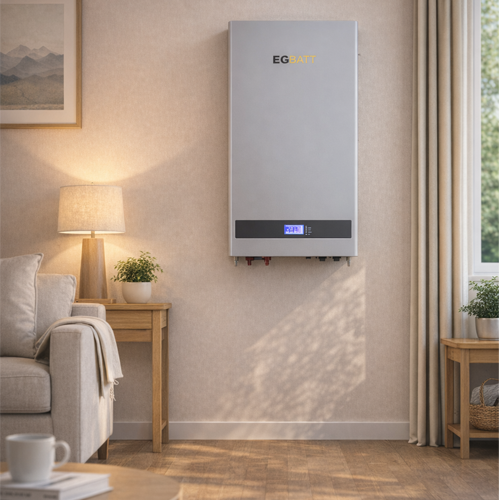
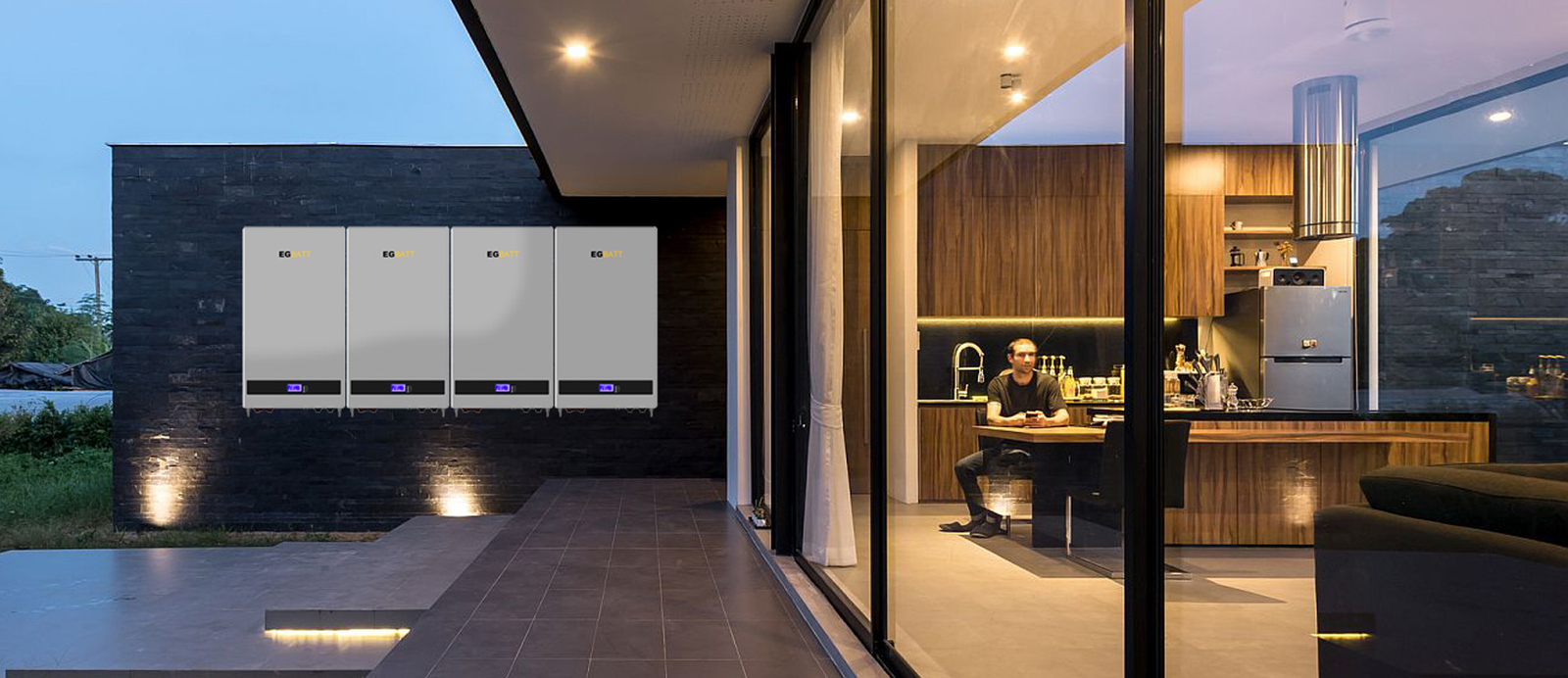
Option 1: The 10kWh Wall-Mounted Powerwall
Honestly, the first thing that hooked me was its design as a wall-mounted lithium battery. The installer said it could mount right on the garage wall without taking up any floor space – a perfect space-saving energy storage solution. I even went out and measured—it's way slimmer than I expected. It wouldn't look like a giant industrial box stuck on the wall.
The real selling point for me was its weatherproof battery rating. My garage isn't perfectly sealed; it gets a little damp when it rains. Knowing this LiFePO4 powerwall has an IP65 waterproof and dust-tight rating meant I didn't have to stress about the environment. The installer said its weather resistance meant it could even go under an eave outside, so I knew the garage would be fine.
I also liked that it's an expandable battery system. You can connect up to 16 of them in a 48V battery bank, scaling from 10kWh all the way to 160kWh. It felt like buying a Lego set – I could start with one, and if we ever needed more capacity (like if we finish the basement and add a home theater), I could just parallel connection another unit later. That future-proof home battery aspect felt good.
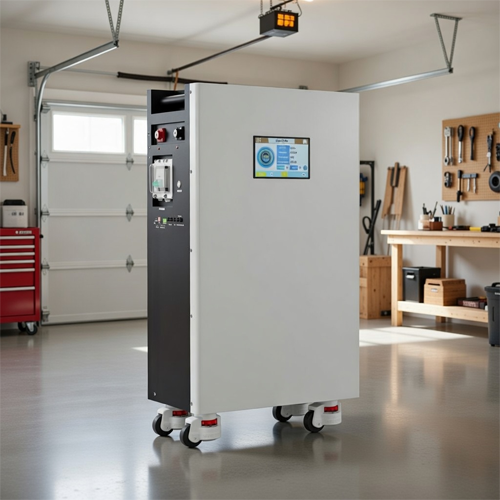
Option 2: The 16kWh High-Capacity Home Backup System
When I went to see this one in person, that 7-inch LCD touchscreen display immediately caught my eye. Standing there, you can see exactly your battery state of charge, how much energy you're using, and your estimated backup time. My wife joked I looked like a kid watching an energy meter, but honestly, having that clear, instant data through the mobile app monitoring? It feels empowering.
The lifespan is what really stood out on the spec sheet. They claim up to 9,000 charge cycles. I asked the salesperson to repeat it just to be sure. For our family, charging and discharging once a day, that translates to a theoretical long-life battery of nearly 25 years. Even with the 10-year warranty, those extra years feel like a bonus of pure peace of mind.
At 16kWh, the usable energy capacity is overkill for our current needs. Based on my math, it could run our essentials for three or four days. But a friend made a good point: "What if you decide to get a small window AC unit for the bedroom later?" He was right. Needs change. This high voltage lithium battery (operating at 51.2V nominal) offered serious deep cycle capability for future loads.
Step 3: What Finally Made Me Decide (Inverter Compatibility Matters!)
I went back and forth for almost two weeks. What finally made me pull the trigger on the 10kWh wall-mounted version wasn't another spec sheet. It was one sentence from the installer on the day of setup.
My garage wall space is limited, and I liked the idea of starting with one unit, seeing how it performed, and adding a second next year if we felt the need. The installation itself was surprisingly simple – the plug-and-play installation meant the installer handled the mounting by himself easily.
While he was connecting it to our inverter, he casually said, "We install these all the time. They talk to pretty much every major inverter brand without needing a bunch of custom setup." Hearing him say its inverter compatibility was seamless was the best confirmation I could have asked for. He mentioned it works via CAN and RS485 communication protocols and is compatible with all major 48V inverters like Victron, Growatt, Deye, and GoodWe. For those of us who aren't tech wizards, the biggest fear is buying something that doesn't play nice with the gear you already have. Knowing it was basically plug-and-play for my renewable energy system was the ultimate relief.
My Honest Advice If You're Researching Home Battery Backup Too
After going through all this, here's the simple advice I'd give a friend looking for solar energy storage solutions:
Start with your non-negotiables. Don't get distracted by huge numbers. Figure out what you must keep running during an emergency backup power situation. That's your target for home battery capacity.
Think about your future self. If you might add appliances later, or if your family is growing, make sure whatever you pick can be expanded via parallel capability. If you just need to solve today's problem, getting something that fits your current needs perfectly is fine. Consider your off-grid power supply goals.
Pay attention to the real-world details. Where will it go? Is that spot damp? Will it connect easily to your inverter? Check the battery management system (BMS) quality.
Look for maintenance-free operation and thermal stability – these practical things matter more day-to-day than most of the numbers on a datasheet.
Give yourself permission to start small. I was so focused on getting it right the first time. But I've learned that building a residential solar storage system can be a gradual thing. Install one, live with it for a year, and if you need more, add another. There's something satisfying about growing your clean energy independence along with your needs.
Now, whenever the power goes out and our house stays lit while the neighborhood goes dark, I remember the installer's parting words: "Think of this as your home's big solar battery backup. You'll forget it's there until you really need it." And he was right. The low self-discharge means it's always ready, and the Grade A LiFePO4 cells give me confidence it will last.
If you're researching lithium home batteries, whether you're curious about the space-saving wall-mounted 10kWh model with its IP65 protection or thinking about going big with the 16kWh large capacity option featuring the 7-inch touchscreen, feel free to ask questions in the comments. I was completely lost in all this not long ago. If sharing my energy storage selection guide helps you avoid one headache, it's worth it.


